









































The Council for Scientific and Industrial Research (CSIR) wants small businesses, government and industry partners to support the development, manufacturing and distribution a locally designed mobility device aimed at transforming the lives of people living with cerebral palsy.
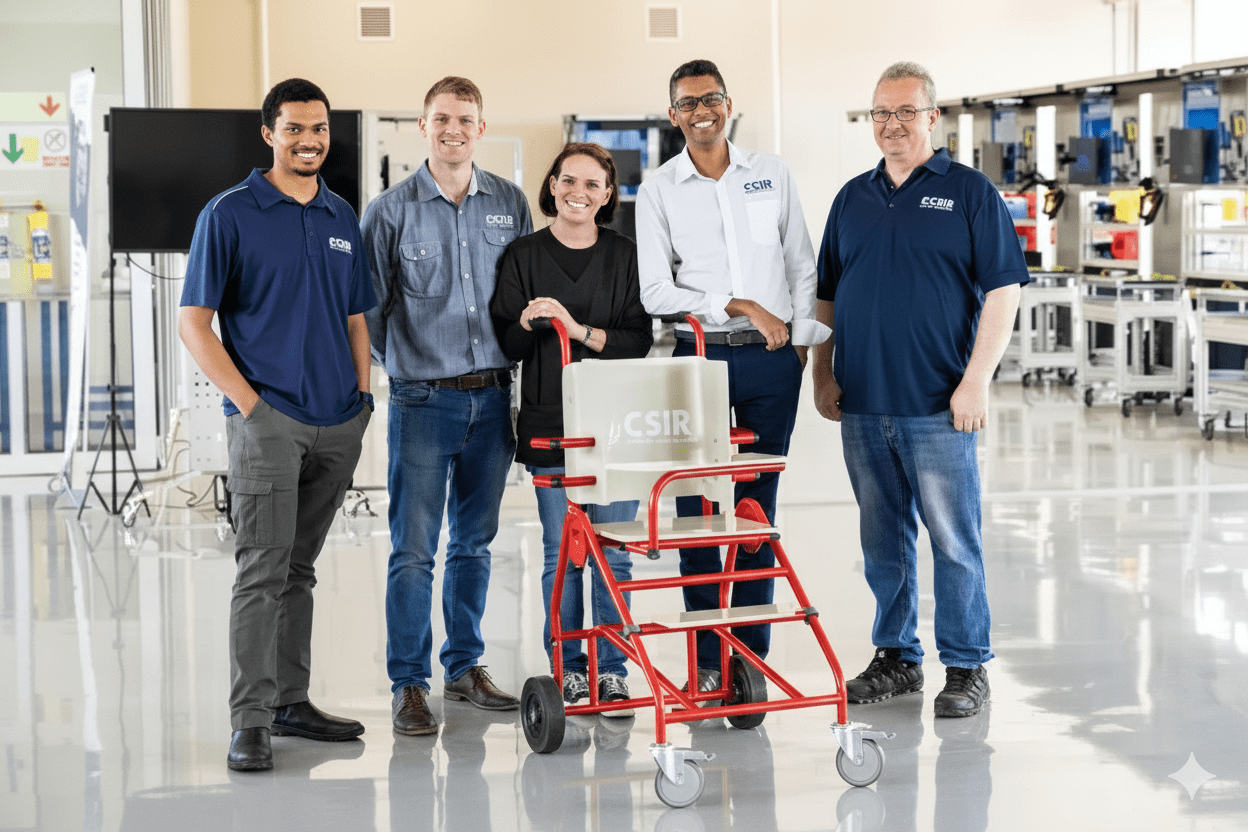
Developed by CSIR robotics engineers, Buddy4Life is a low cost, rugged and reconfigurable device designed to support children, adults and caregivers. Destined for local manufacture, it seeks to improve access to appropriate seating and mobility support while reducing preventable deformities caused by poorly fitted or unavailable assistive devices.
According to CSIR lead robotics researcher Dr Sunveer Matadin, most existing devices have fixed sizes, forcing families to repeatedly purchase new equipment as a child grows.
“The size of these expensive devices is fixed, so children outgrow them and may develop deformities if they cannot access a larger, appropriately sized wheelchair at the next stage of life,” he said.
Adding to the challenge, most mobility devices only cater to toddlers from around the age of two, leaving infants without proper postural support during critical developmental stages.
“This is a major cause of deformity,” Matadin explained. “By the time a child is fitted for a device, their muscles may already have developed imbalances or grown at different rates compared to their skeleton.”
Buddy4Life addresses these gaps. Unlike conventional devices, it can seat a child from infancy and be reconfigured as they grow, potentially supporting users from early childhood through adulthood.
“There is nothing like this in the local market,” Matadin said. “It is designed to last a lifetime.”
The idea was inspired by a heartfelt plea in 2024 from community health worker and disability consultant Ruth Stubbs, who works with families affected by cerebral palsy through The Paige Project. Stubbs stresses the importance of early intervention to prevent secondary complications.
“If we do not intervene early, deformities start setting in,” she said. “You see scoliosis, kyphosis, pelvic obliquity all of which lead to further complications on top of the existing diagnosis.”
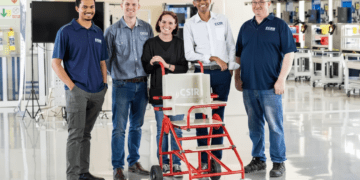
A working prototype was unveiled last month.
“All the ideas and discussions we have had over the past few months, not one thing has been left out,” Stubbs said. “It is like a magic wand.”
The prototype features adjustable trunk supports, a footrest, tray table and brakes, all designed for easy caregiver adjustment. Phase one of the project focuses on practical relief in resource constrained communities, using lightweight, durable, low cost materials engineered for local manufacture.
“This is about helping children and adults with cerebral palsy and their families,” Matadin said. “But it is also about enabling small businesses to generate income by manufacturing the product locally.”
A key design feature is its manual, tool free system. Caregivers adjust the side supports by loosening and tightening built in screws, avoiding complex mechanisms that require specialist maintenance.
“Designing something simple to solve a complex problem really tested our engineering skills,” Matadin said. “It is easy to make something functional with fancy mechanics, but creating a lightweight, robust and easy to use device that provides all necessary support is far more challenging.”
Stubbs adds that simplicity is one of the device’s greatest strengths. “It grows and expands with the child,” she said. “It is economical, practical and allows families to be actively involved in the seating process.”
Phase two will integrate smart features like pneumatics and artificial intelligence to support caregivers and reduce specialist callouts, while keeping simplicity and robustness at the core of the design.
Field trials are planned to assess comfort, posture support, transportability and suitability for small living spaces. Stubbs explained:
“Does it support good head and trunk control? Can the child interact, self feed and sit comfortably? Will it fit into an RDP house or a shack? Can a caregiver easily move it through the streets?”
Ultimately, the CSIR envisions Buddy4Life as a scalable platform for both resource limited and affluent communities.
“This is not only for poor communities,” Matadin said. “With a standardised platform like this, everyone can benefit.”
The CSIR is now inviting partners to support the development, manufacturing and distribution of Buddy4Life. As with other CSIR developed technologies, the design will eventually be licensed to local manufacturers, ensuring long term sustainability and economic impact.
Azwi@vutivibusiness.co.za