












































Township funeral businesses across South Africa are quietly reshaping how they operate as rising costs, shrinking margins and fierce competition place pressure on a sector once viewed as recession-proof.
South Africa has an estimated 18 000 to 20 000 funeral parlours, most of them small, community-based operators concentrated in townships and rural areas. While large, insurance-linked funeral groups dominate policy administration, SMEs handle most day-to-day burials, often operating on thin margins.
Undertakers say the cost of doing business has risen sharply over the past five years. Fuel prices have increased by more than 50% since 2019, while coffin prices, vehicle maintenance and municipal compliance costs have also climbed. Yet the average funeral policy payout — typically between R15 000 and R30 000 has not kept pace.
“You can bury five people in a week and still struggle to break even,” said an undertaker in Soweto who has been in business for over a decade. “People think funerals are expensive, but they don’t see what it costs us behind the scenes.”
To survive, some township funeral businesses are diversifying beyond traditional burial services.
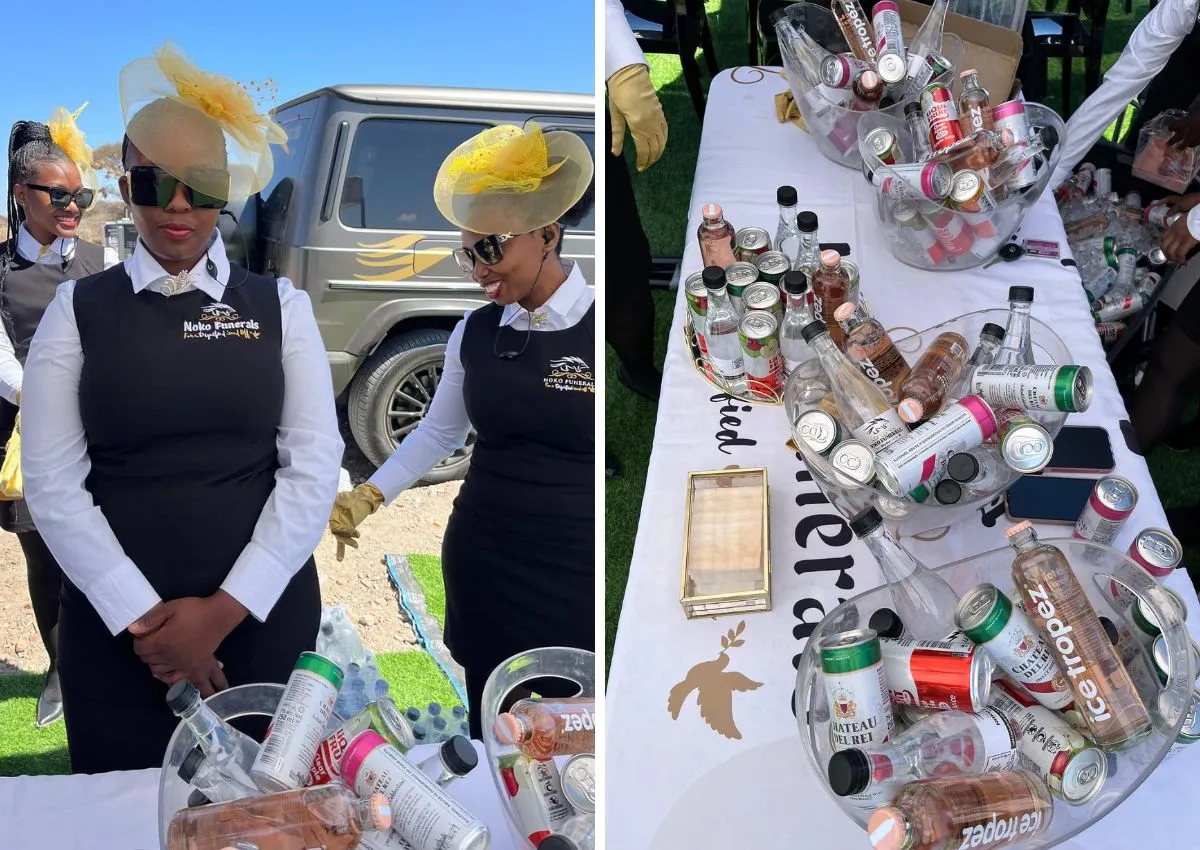
One growing trend is the formalisation of “after-tears” gatherings as optional, paid services. Instead of families arranging food, tents and sound systems themselves, funeral parlours are offering coordination as an add-on, often earning R2 000 to R5 000 per funeral through partnerships with local suppliers.
“In the township, you can’t just raise burial prices, people will go next door, so you look for other services around the funeral where you can make small margins without losing customers.,” said Skhumbuso Sbiya, a Tembisa based funeral parlour owner.
However, the shift is controversial within the industry.
“Abongile Majola, director of Ngceshe Funerals, said he doesn’t like the idea.
“We have principles and values. Where is the respect for the dead if people drink alcohol on the spot? After the funeral, people can go and drink elsewhere. To formalise it as part of the service is wrong.”
Other undertakers share these concerns, warning that commercial pressure is pushing some operators too far. Mphelani Mahlalela, an undertaker in Mbuzin, said: “If you lose the community’s trust, your business is finished. We survive on reputation. One funeral that looks like a party can destroy years of work.”
Beyond after-tears services, many funeral SMEs are pursuing less contentious income streams. Some are converting their parlour offices into multi-purpose spaces, offering waiting lounges with coffee, Wi-Fi and charging points for families who spend long hours finalising arrangements. Others are renting out tents, chairs and sound equipment during the week, generating steady side income outside of funeral days.
Younger undertakers are also embracing digital tools, using WhatsApp, Facebook and TikTok to market services, share price lists, and communicate with clients who increasingly shop around before committing.
For township undertakers, diversification is often not about expansion, but survival. said Africa Mashaba, a Tonga based undertaker: “The business is changing whether we like it or not, the question is how far you go without losing your values.”
As costs rise and competition intensifies, township funeral businesses are being forced to act more like entrepreneurs than undertakers, balancing culture, dignity and economics in an industry where trust remains the most valuable asset.