










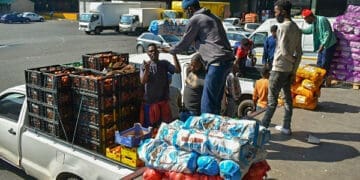
































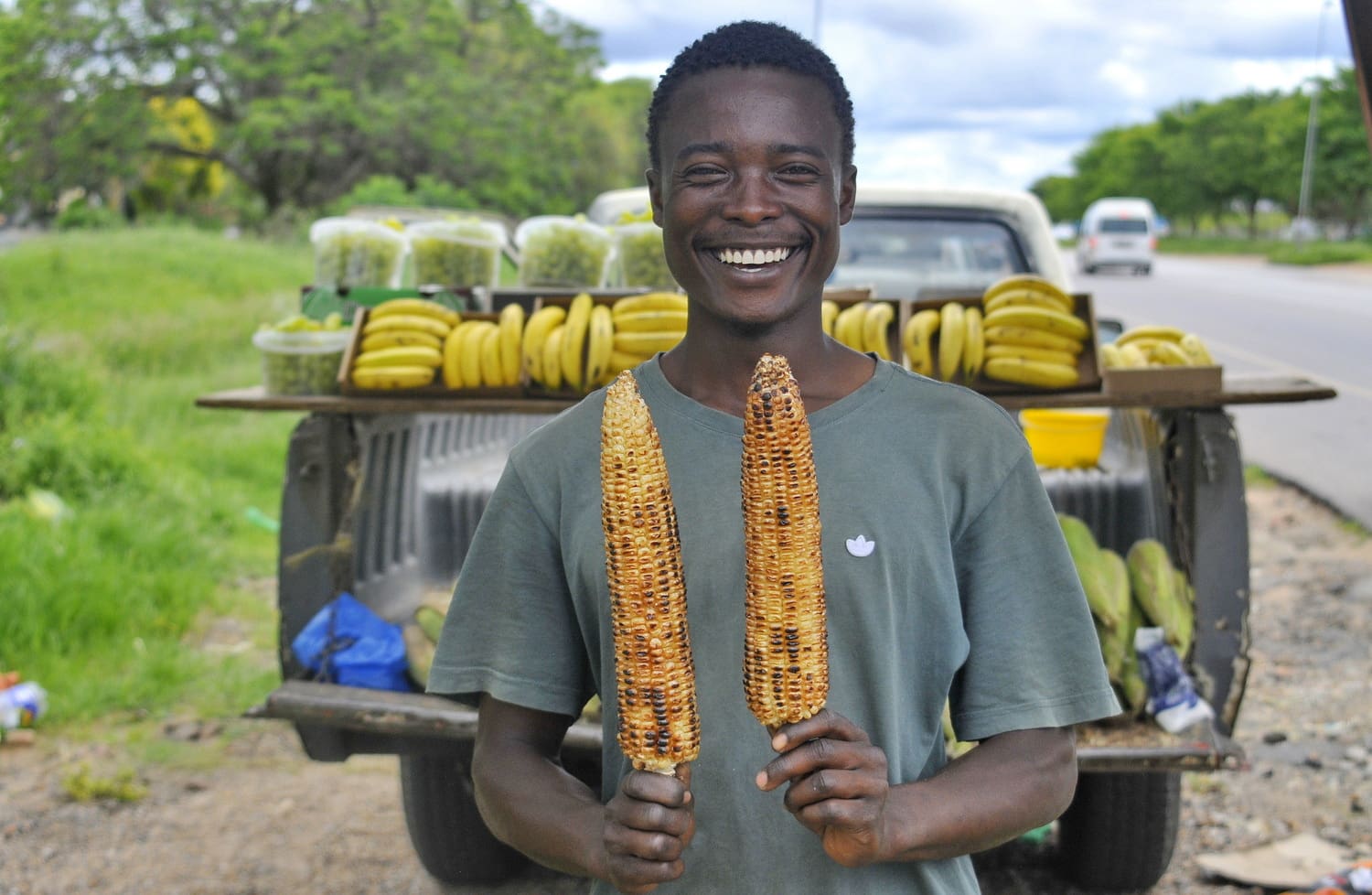
On busy pavements near taxi ranks and roadsides, the aroma of roasted and boiled maize hangs in the air. Large aluminium pots simmer steadily over drum fires as customers queue with coins in hand.
Known as tshikoli in Tshivenda, mmidi in Northern Sotho and milies in Afrikaans, maize has long been a staple food. The hustle has evolved into a reliable income stream for SMMEs and informal traders navigating persistent unemployment.
Steam rises from a pot balanced above crackling firewood as commuters slow their pace. For 52 year old Mmboniseni Tshifhiwa, this is not a side hustle but survival.
“I have been selling tshikoli for almost eight years,” she said, lifting a cob from the pot.
“When my husband passed on, this became my job. If people are moving, they will buy maize,” she explained.
Every day, thousands of vendors rely on maize sales to survive. According to Statistics South Africa, the informal sector employs about 5.5 million people, with street food making up a significant share of that workforce. Food traders contribute more than R87 billion annually to the economy.
Maize, which is inexpensive to source, simple to prepare and consistently in demand, remains one of the most reliable products sold.
For vendors, location is everything. Taxi ranks,busy city streets and busy pavements serve as their best market shopfronts.
Johannes Ndlovu, who sells mielies in the Pretoria CBD, starts his day at sunrise.
“If you get a spot where people pass all day, you don’t go to bed hungry,” he said.
“Mielies move fast because people want something cheap, hot and filling,” he told Vutivi Business News.
Daily earnings vary with location. With mielies selling for between R5 and R15, many vendors sell between 60 and 150 cobs a day, generating up from R600 to R1 200.
In Polokwane, Thabiso Mokgadi sells mielies near bus terminals and shopping centres.
“If people are passing, I can make money,” she said. “I get my maize from Venda farmers who arrive early in the morning.”
Those smallholder farmers form an essential link in the maize economy. In Nzhelele Ha Mapila, Tondani Mushothi sells maize and butternut to both households and vendors.
“Tshikoli is open now. I take orders and deliver. Vendors buy in bulk from me at R5 each,” Mushothi said.
In Basani village, young farmer Uzwothe Singo sells maize and butternut along a busy roadside.
“I sell tshikoli for R5 and butternut for R60 per 10kg. I sell to passing customers and local families,” Singo said.
Similarly, in Lwamondo, small block farmer Phumudzo Netshivhale supplies both villagers and reselling vendors.
“I sell maize for R5 each and also take delivery orders for yellow maize. Most of my buyers are vendors who resell in towns,” Netshivhale said.
As household budgets tighten, many micro entrepreneurs are turning to simple, high demand food products like mielies to secure daily income.
From early mornings at taxi ranks to late afternoons at busy intersections, maize vendors are tapping into a market that requires minimal start up capital but delivers consistent demand. With little more than a drum fire, a pot of water, a small supply of fresh maize and access to high foot traffic, traders convert farm produce into steady daily cash flow.
While these businesses operate on pavements and village roadsides, they are part of a much larger maize economy.
According to Wandile Sihlobo, chief agricultural economist at Agbiz, South Africa remains a net exporter of maize, supported by a strong harvest.
“We are expecting about 2.4 million tons of maize exports in the current marketing year,” Sihlobo said. “This is up from earlier estimates because the country has a large crop.”
He said South Africa harvested approximately 16.44 million tons of maize, the second largest crop on record, ensuring ample domestic supply.
“These supplies allow us to export maize while still meeting local demand,” Sihlobo said.
Sihlobo said stable supply is critical for informal traders, who rely on maize being both available and reasonably priced. He said exports are lower than last year due to reduced regional demand rather than local shortages.
“The Southern African region is not experiencing the same drought conditions as last year. Exports are lower than the 2.8 million tons recorded previously, but the country still has sufficient maize,” he said.
On the ground, demand is also being shaped by food culture. Tshifhiwa said bulk orders from caterers and small food businesses have become a growing part of her income.
“Now people call me. I don’t only wait for customers,” she explained .
This season, demand has been boosted by the rapid rise of seafood boils trend on social media platforms.
Once popular mainly in international food videos, seafood boils have become a township and rural favourite, especially during summer gatherings and festive celebrations. The dish, made with prawns, mussels, crab, sausage and heavy seasoning, almost always includes boiled maize as a signature side.
Restaurant consultant Lerato Moatshe said the trend is reshaping supply chains.
“Seafood boil menus have become a craze this season. Restaurants and township chefs are buying mielies in bulk because the dish feels incomplete without corn. Vendors supplying fresh maize are making extra money from larger orders,” Moatshe said.
Some restaurants reported increasing maize purchases by up to 40 percent since October as festive bookings rise and seafood boils dominate social media.
In Limpopo, the trend has reached rural villages too. Vendor Fhatuwani Ratshikhopha said the shift has expanded her customer base.
“My customers love my spicy roasted mielies. But now I also supply a woman in my village who makes seafood boils. She orders up to 50 mielies at a time, especially on weekends,” she said.
For traders like Tshifhiwa, maize remains more than food. It is income, dignity and a dependable way to survive in a tough economy.
“If people are moving, there is always a chance to sell,” she concluded.
Azwi@vutivibusiness.co.za