












































Hospitality industry body FEDHASA paints an optimistic picture with expectations of moderate growth across the accommodation sector.
According to Brett Tungay, national chairperson of FEDHASA, the festive season is projected to deliver overall revenue growth of around 5% compared with last year, although performance will vary by region.
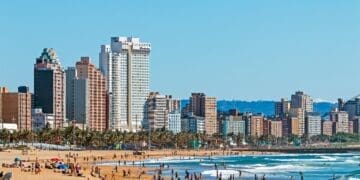
“Cape Town is expected to post solid occupancy levels, while the greatest gains are likely in Durban, where improving infrastructure and beachfront upgrades are supporting renewed visitor confidence,” Tungay told Vutivi Business News.
He added that Gqeberha is also showing encouraging signs of recovery following reinvestment along its waterfront.
In preparation for peak season demand, accommodation providers across the country have scaled up operations. FEDHASA estimates an average staffing increase of about 10% over the festive period as businesses recruit and train seasonal workers to maintain service standards.
However, challenges persist. Traffic congestion in Cape Town and road access issues in parts of KwaZulu-Natal and the Free State continue to affect travel flows. Despite this, Tungay says overall readiness remains high.
“The prevailing sentiment among FEDHASA members is one of optimism, with most regions positioned to benefit from a strong holiday period driven by leisure travel, improved infrastructure, and steady consumer demand,” he said.
But for smaller establishments in areas such as Richards Bay in northern KwaZulu-Natal, the festive season remains a period of uncertainty, underscoring the uneven recovery facing some SMEs as business travel begins to outweigh traditional holiday demand.
Small accommodation businesses in Richards Bay are experiencing a subdued festive season, with operators reporting fewer leisure travellers and a noticeable shift towards business-related bookings, reflecting uneven recovery patterns across South Africa’s tourism sector.
Fikile Lindiwe Shandu, director of Nafisha Bed and Breakfast, says the festive period traditionally marks a planned shutdown for the family-run establishment. The B&B usually closes its doors from December 16 until the first week of January to accommodate family visits and staff annual leave.
“Normally, we do not take guests during the festive season. Our bookings end on the 16th of December every year, and it becomes a full shutdown for the business,” Shandu explained.
This year, however, the nature of demand has changed. While holidaymakers were a dominant feature in previous festive seasons, Shandu notes that current enquiries are mainly from business travellers rather than vacationing guests.
“This year, we did not have guests who were on vacation like last year. The guests we are seeing are mostly those coming for business,” she said.
One of the challenges facing Nafisha B&B is turning away potential guests during the shutdown period.
“There are guests who require accommodation, and we will not be able to accommodate them,” Shandu added, highlighting the difficult balance between operational planning and missed revenue opportunities.
A similar sentiment was echoed by Mesda B&B managing director Nana Mthembu, who says bookings have been slower than expected despite preparations for an influx of guests.
“We have contracted four casual employees just to be ready should we have many guests,” Mthembu said. “But this year it is a bit down. We have no bookings yet.”
While the outlook is less robust compared with previous years, Mthembu remains cautiously optimistic.
“We notice that it is not as good as other years, but we are hopeful that people will still make bookings,” she said.