














































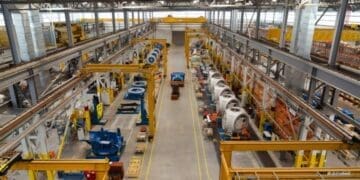


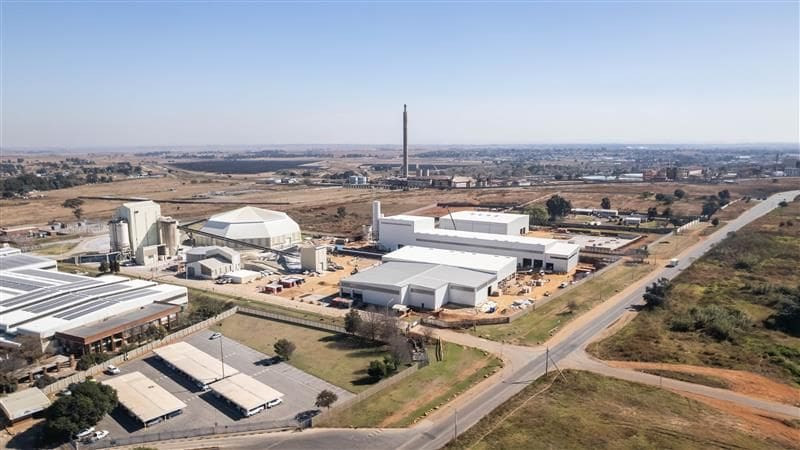
The opening of Saint-Gobain Africa’s new fibre cement manufacturing plant in Ekurhuleni is being positioned not only as a major industrial investment but as a potential catalyst for SMEs across South Africa’s construction value chain.
Fibre-cement products are used in various sectors of construction, which include industrial, agricultural, domestic and residential buildings, mainly in roofing and cladding applications, for new constructions and refurbishment projects.
The French group officially inaugurated the R500 million facility in late January, expanding its local production of fibre cement flat sheets and fascia boards. Saint-Gobain, which has operated in South Africa for more than 90 years, said the Ekurhuleni plant marks an important milestone in its local manufacturing footprint.
“This investment of more than R500 million is not simply about expanding capacity; it is a clear demonstration of our long-term belief in South Africa as a key industrial hub for the continent,” said Saint-Gobain Africa chief executive Aymeric d’Ydewalle.
The plant forms part of Saint-Gobain’s Make it in Africa to Build Africa strategy, which prioritises local manufacturing, skills development and supplier participation.
According to the company, the facility was designed to meet international quality, safety and environmental standards while strengthening domestic supply and reducing reliance on imports. D’Ydewalle said local production plays a critical role in building a more resilient industry.
“Producing locally allows us to support job creation, supplier development and skills transfer,” he said. “It also ensures a more consistent and reliable supply for customers in the region.”
Local manufacturing typically creates demand for a broad network of suppliers, service providers and contractors, many of which are small businesses. SMEs operating in logistics, maintenance, technical services and materials handling are likely to see new opportunities linked to the plant’s ongoing operations.
A stronger local supply base can improve predictability, shorten lead times and make it easier for SMEs to plan projects and manage cash flow.
“When materials are imported, prices change suddenly, and deliveries take longer than promised. If supply is local and more stable, it helps small contractors like us quote more confidently and finish jobs on time,” said contractor Mbuyiseni Jaceni.
Beyond building materials, the plant is also expected to stimulate demand for a range of supporting services typically provided by small firms. These include transport and logistics, plant maintenance, packaging, catering, cleaning and specialised technical services.
Saint-Gobain has highlighted skills transfer as a key part of the investment, with training and development built into its local manufacturing approach. Industry analysts note that skills gained at large manufacturing facilities often filter through the sector, strengthening the overall labour pool available to smaller firms and helping them meet higher quality and compliance standards.
Azwi@vutivibusiness.co.za