
















































Financing through banks is one of the most essential facilitators of growth for small and medium enterprises (SMEs), although a large number of applications still get rejected every year. The banking institutions and SME development organisations have clearly shown that a large number of rejections relate to improper preparation.
Chief Investment Officer of business Partners Limited, Jeremy Lang said banks typically review loan applications based mainly on three elements, namely, compliance, financial performance, and financial sustainability. According to SME South Africa, a loan application may be slowed down or rejected if there is a lack of some essential supporting documents, for instance, proof of registration with CIPC, identification documents for directors, and business addresses, as well as related business licences.
Business Funds brings to attention that banks normally call for financial statements, six- to 12 months business bank statements, SARS tax clearance certificates, as well as VAT returns where applicable. The above documents enable one to assess whether they have enough cash flow to repay the loan.
Previously, the establishment has emphasised that in many respects, fixed and predictable funds turnover is more important than the actual turnover when the issue of affordability is involved. Funding experts of Fundrate ensure that the chances of the borrower SMEs, having a loan application turned down are high if there is a deficiency in explaining the reason why money is being borrowed or if the rate of growth is not of a similar measure as that of the actual position.
The reasons for availing the loan, how the growth rate is attained, and how the borrowed money will be repaid interest the banks. Lang also explained that credit history remains an integral factor in this context, and this applies especially to smaller companies, where the entrepreneur in effect is required to personally underwrite the company in terms of credit history.
According to Swiftbanker, bad credit history, whether business or personal, will spoil an application despite high sales performance.
An example where the ability to acquire additional finances in terms of preparation and product fit can be observed is in the Catering Shop Online business enterprise. This is a retail online business enterprise and at the moment is located in Centurion, in South Africa.
Business expert, Paul Meyer said the reason why the online retail enterprise requires financing is the fact that the online retail enterprise has been facing problems in securing finances in terms of preparation and product fit.
Asiem Alli, founder of Catering Shop Online said when he first began, he approached some banks for funding and it was really tough.
“Nowadays, with the help of Bizflex, it is easy. Just a click of a button, and your money will be in your account,” said Alli.
Being able to develop their business in regard to their products with the success of their system, Bizflex, shows that preparation is indeed a factor towards successful growth.
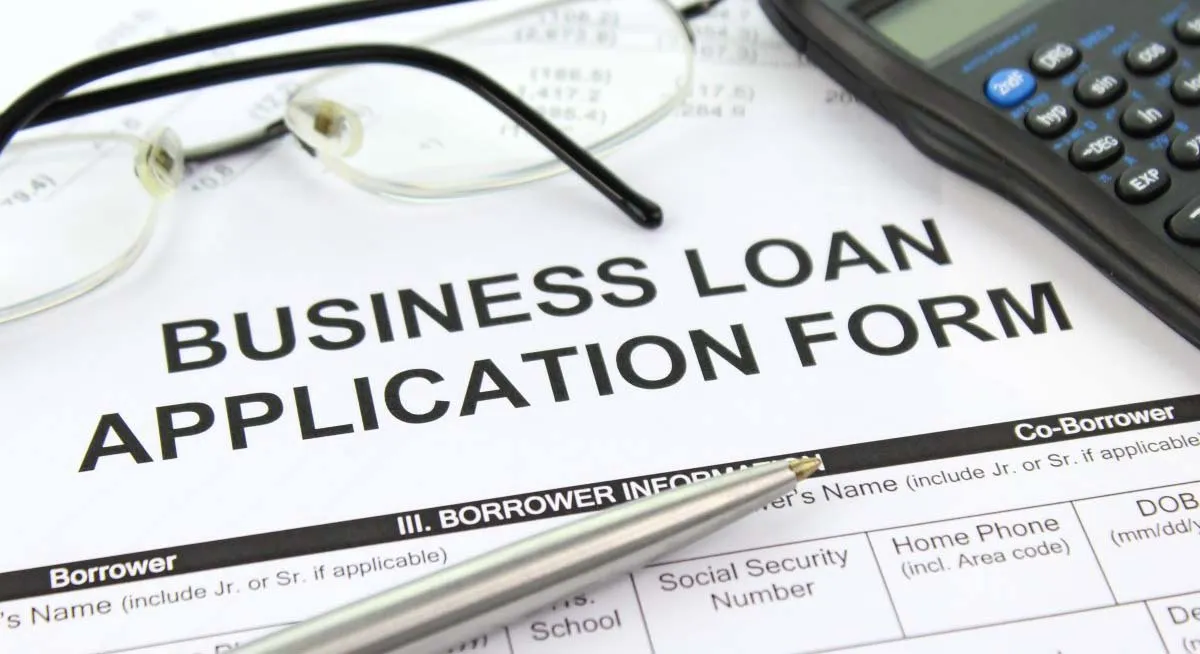
SME loan preparation requirements in advance could thus result in faster processing approval and avoid application rejection. The core documents that are required in all banks include valid identification for all the owners or directors, proof of the business address (which should not be more than three months old), and the registration documents issued by the CIPC. Other core documents include the SARS tax clearance certificate and the VAT return, where applicable.
In addition, the bank requires the customer to provide six to twelve months’ bank account statements, financial statements, or management accounts. Standard Bank requires financial statements, cash flow projections, proof of registration, personal surety information, and details about any collateral provided. FNB requires financial information, cash flow projections, and bank statements.The requirements are slightly different for existing FNB clients.
For some of its SME funding products, Absa requires proof of contracts or purchase orders, supplemented with business profiles, financial records, and an Absa transactional account.
To give a more consolidated understanding of SME funding requirements, the checklist for a successful business loan application from SME South Africa gives practical insights into how to prepare bank-ready loan applications.
Emily@vutivibusiness.co.za