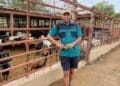






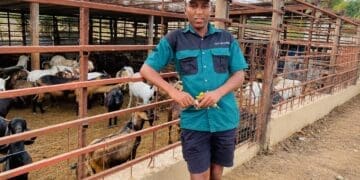









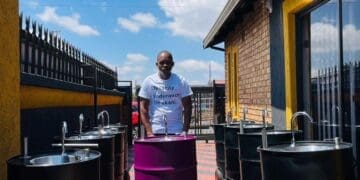


















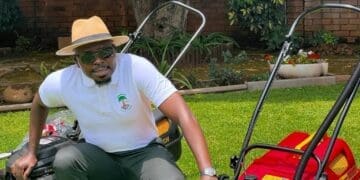


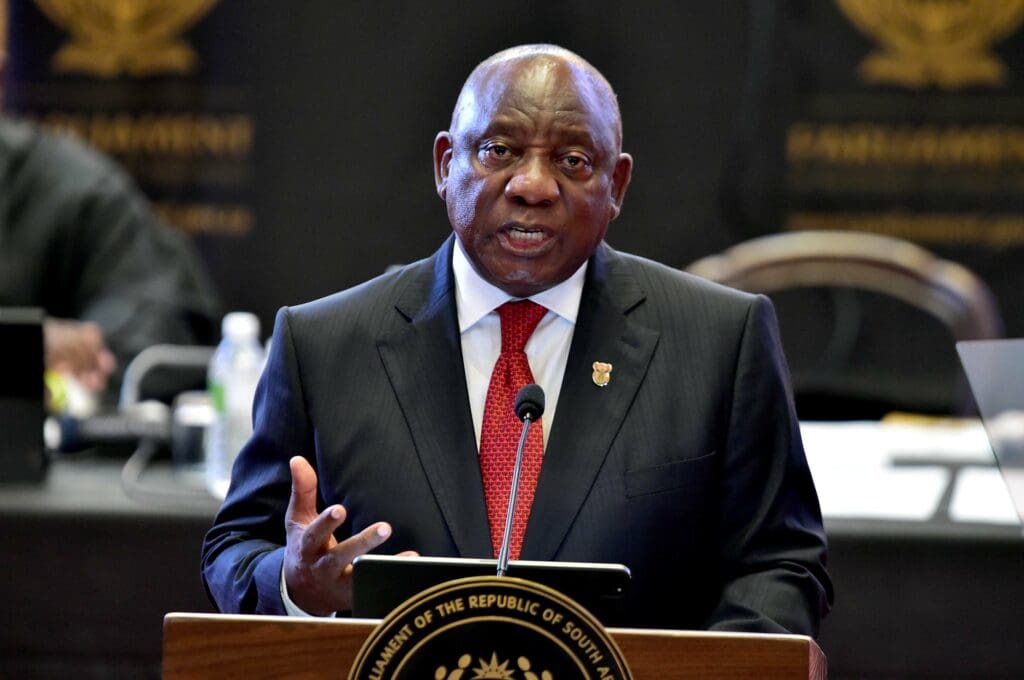
Emerging commercial farmer Realeboga Mangwegape has highlighted the need for inclusivity for entrepreneurs with disabilities ahead of President Cyril Ramaphosa’s SONA on Thursday,
“I think the President should help us or should make sure that, especially us people with disabilities who are into business, we are not overlooked and our voices are being heard so that we can contribute to food security,” Mangwegape said.
He explained that people with disabilities require dedicated support systems, including funding, training, and market access.
“There must be a fund that is allocated for us so that we mustn’t apply or be in a queue with the people they say are normal,” he added. “We want them to trust that people with disabilities can also run a sustainable business, create jobs, and participate in the growth of our local economy.”
Land access is another major concern. Mangwegape said backyard farming limited his growth potential.
“I hired two people who were working with me, and the backyard was also limiting me to grow, to become a commercial farmer,” he said.
“When I applied for a farm, I never got an answer, but I always applied. That thing killed me and enables me to grow as a businessman or run a sustainable business. If I could grow, I’d be able to hire more people and run a profitable business.”
He emphasised that access to formal farmland and structured support could allow experienced but informal farmers to operate commercially, contributing to local economies and creating jobs.
Small farmers urged clear funding commitments
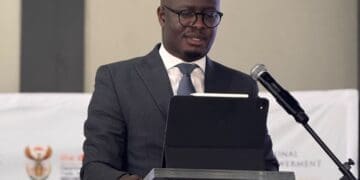
Paul Bango, owner of Bango Poultry Farm, said SONA presents an important opportunity for the president to address the challenges facing small and emerging farmers.
“I would like to see clear and practical commitments around access to funding for small farmers, especially those who are not yet fully formalised but are contributing meaningfully to local food production and job creation,” Bango said.
He explained that many small businesses still struggled to access affordable finance due to strict requirements.
“Government-backed funding with simplified processes would make a real difference,” he added.
Bango also emphasised energy stability and rural infrastructure as priorities.
“I would like to hear strong commitments on reducing load shedding impacts, improving rural infrastructure, and supporting local producers through procurement opportunities,” he said.
He noted that policies prioritising local procurement for schools, hospitals, and government institutions could significantly strengthen small farming businesses. Bango also stressed that past SME commitments require more effective implementation.
“While there have been positive announcements in the past aimed at supporting SMMEs, implementation on the ground has often been slow or inconsistent. We need not only promises, but measurable implementation with accountability and visible impact at grassroots level.”
Rising input costs and competition from larger established players continue to challenge small agricultural businesses.
“The most urgent challenges included rising feed costs, electricity instability, limited access to affordable land, and competition from large established players who dominate the market,” Bango said.
“Small businesses are ready to grow and create employment, but we need a stable and enabling environment. Clear policies, improved infrastructure, reduced bureaucracy, and practical financial support would empower many entrepreneurs to expand their operations and contribute more significantly to the economy.”
Azwi@vutivibusiness.co.za