
































Bafana Bafana’s early exit from the Africa Cup of Nations (Afcon) tournament earlier this week has had a noticeable impact on small businesses near football viewing spots. Taverns and nearby food outlets are reporting fewer customers since South Africa was knocked out, even though the tournament is still underway.
Bafana Bafana were eliminated after a 2–1 loss to Cameroon on 4 January 2026.
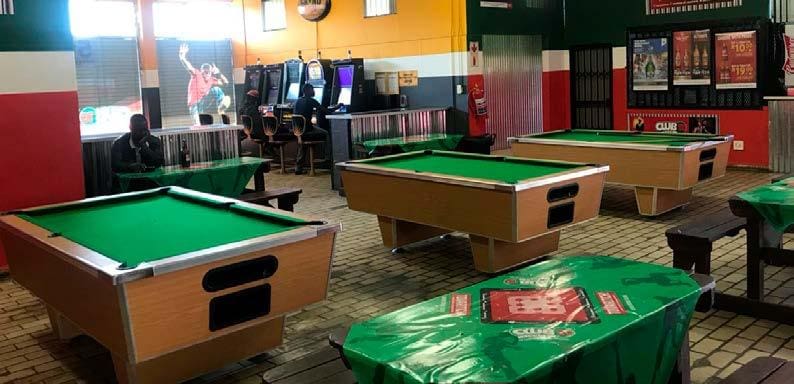
At Tavern Lethabong Busy Corner in Pretoria West, owner Themba Mabasa said business has slowed down a lot since South Africa was knocked out.
“Now there are fewer people coming,” Mabasa said. “Even today (6 January) there was a match on, but no one showed up. People just lost interest. Before, even when South Africa wasn’t playing, they would still come to see other teams and check who was winning. It used to be really busy.”
Mabasa said the drop in customers is not due to January or after-festive spending.
“This time it’s not January,” he said. “It’s because South Africa is out. When Bafana Bafana was still playing, people were coming.”
Most of the tavern’s customers during AFCON were casual fans who mainly came to watch the national team. The decline in customers has also affected Busy Corner’s food container, a separate business located next to the tavern that sells meals. Both the tavern and the food container rely on game-day crowds to boost sales and the drop in visitors has had a noticeable impact.
Evenings which used to be the busiest period, are now quiet. Overall the tavern and food container report that revenue has fallen by roughly 30% since South Africa’s exit, compared to similar periods last year when Bafana Bafana were still competing.
A similar pattern is being felt at Victor Chillers in Phomolong, Tembisa, owned by Victor Magoda. The tavern is usually a popular spot where people watch football, socialise, drink and buy food.
“Since Bafana Bafana was knocked out, fewer people are coming to watch the games,” Magoda said. “Before even when other teams were playing, people would still come just to see what was happening. Now it’s quiet and sales have dropped by roughly 25%.”
Magoda added that football matches usually bring short-term boosts in revenue, letting taverns stock extra food and drinks, sometimes hire temporary staff and stay open late. With the national team out, those extra sales just aren’t happening anymore.
For small businesses in townships, tournaments like the Afcon provide important short-term income opportunities.
Research by Standard Bank’s Township and Informal Economy Report, along with broader SME sector studies in South Africa, shows that many township and informal businesses depend heavily on daily foot traffic for income.
When customer movement drops, sales fall quickly because these businesses do not rely on long-term contracts or guaranteed orders. The research also shows that crowd-driven activities such as major sports tournaments often provide short-term revenue boosts for taverns and food outlets, which disappear when interest declines.
Bafana Bafana’s early exit has left business owners adjusting by managing stock carefully and running operations more cautiously as the rest of AFCON continues.
“We are just trying to manage,” Mabasa said. “But it’s very slow. We hope the remaining matches bring people back, but for now, it’s quiet.”
The situation highlights a larger reality for township SMEs, national sporting events are more than entertainment, they are crucial for revenue. When the national team performs well, businesses benefit. When it exits early, the ripple effect is immediate, showing that careful planning and flexibility are essential for survival in these communities.
Sporting activities are a vital part of sports tourism which according to UN Tourism, is a fundamental axis, generating around 10% of the world’s expenditure on tourism. The authority says sports tourism has an estimated growth rate of 17.5% between 2023-2030 (according to Sports Tourism Market Size, Share & Trends Analysis Report), moving masses intra and intercontinentally. “Sports tourism can promote social, economic and environmental action, it accelerates development and can leave a long-lasting positive legacy,” the UN Tourism adds.