











































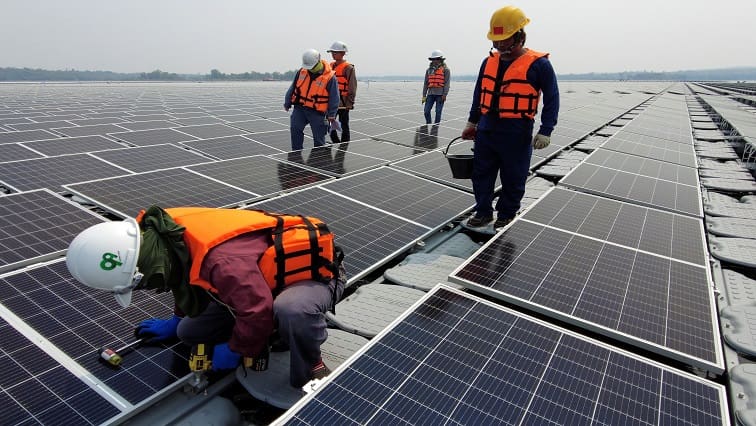
Small businesses in Gauteng are recording increased demand for solar installations, energy-efficiency upgrades and recycling services as the province’s green transition accelerates.
Industry observers say SMEs are becoming the primary implementers of low-carbon solutions due to their flexibility, competitive pricing and reach in township markets.
Tembisa-based solar installer Tshepo Mahlangu said the number of installations handled by his company has grown significantly since early 2024.
The expansion is linked to sustained load shedding, rising electricity tariffs and growing interest in hybrid solar systems among households and small retailers.
SMEs remain dominant in the rooftop solar space, with most installation and maintenance carried out by small firms rather than large companies.
Market analysts note that SMEs are better positioned to complete rapid, small-scale installations and service a wider base of price-sensitive customers.
Thandi Radebe from Freedom Park has expanded her electrical maintenance business to include energy-efficiency audits and lighting retrofits after participating in a green-skills programme run through the Innovation Hub.
“The shift reflects a broader trend in which SMMEs diversify their offerings to meet business clients’ need to cut electricity costs,” she said.
Training supported by the Gauteng City Region Academy has enabled multiple SMEs to introduce services such as energy assessments, solar system sizing and water-efficiency installations — creating new revenue streams and increasing competitiveness in tender processes.
Recycling cooperatives in Ekurhuleni are expanding into formal value chains following a municipal initiative to support registration, compliance and market access. More than 300 waste pickers have transitioned into registered cooperatives that supply plastics, paper and metals directly to manufacturers.
“Some of us have also invested in small-scale processing equipment, enabling me to produce pellets and reusable materials, which attract higher prices and more stable contracts,” said Radebe
Economy analyst Dr Mpho Skosana said corporate sustainability requirements are playing a growing role in shaping SME offerings.
“Compliance requirements within supply chains are pushing small businesses to adopt greener practices and specialise in services that support corporate energy-efficiency and waste-reduction targets.”
The trend is expected to intensify as more companies prepare for stricter environmental reporting standards.
Industry monitoring indicates that SMMEs are benefiting from consistent, year-round demand for solar maintenance, efficiency upgrades and recycling supply — rather than depending on once-off installation projects. Small firms increasingly view the green transition as a stable, long-term market rather than a temporary opportunity.
jannifer@vutivibusines.co.za