












































The Seda Technology Programme (STP) Incubation Programme is being positioned as a key intervention as South Africa battles high small business failure rates, but entrepreneurs say scale, funding and rural access will determine whether it truly shifts the needle.
As part of the 37 Days of Opportunity campaign, attention has turned to the STP Incubation Programme, administered by the Small Enterprise Development and Finance Agency (SEDFA).
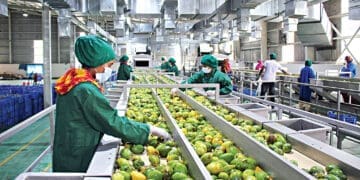
The programme targets enterprises in manufacturing, ICT, agriculture and the green economy, offering technical support, product development assistance, market testing and small-scale production infrastructure, areas widely recognised as early-stage pressure points for SMEs.
South Africa’s small business sector remains under strain, with early-stage enterprises particularly vulnerable to cash-flow gaps, compliance costs and weak product-market fit.
According to policy insights from the Western Cape Department of Economic Development and Tourism, structured incubation, when combined with compliance and market access support, has been associated with improved commercialisation outcomes.
‘Support works, if you can access it’
Sipho Jacobs, a small-scale manufacturer based in Gauteng, said joining the incubator changed his production model.
“Before incubation, I was outsourcing everything. Through the programme, I accessed shared machinery and reduced production costs by nearly 30%. That made my pricing competitive,” said Jacobs.
However, he said many township-based entrepreneurs remain unaware of available support.
“Information doesn’t always reach informal operators. If you’re not already in certain networks, you don’t hear about these opportunities,” Jacobs said.
Ayanda Maseko, a green technology entrepreneur operating in Mpumalanga, echoed the access concern.
“The model is strong, but location matters. Travel costs and time away from operations make it difficult if the incubator is far from your business. Virtual support helps, but not for technical work,” Maseko said.
Incubation vs survival
Incubation programmes globally tend to improve survival rates compared to unsupported start-ups. However, they caution that the scale of South Africa’s SME challenges requires broader ecosystem reform.
Lindiwe Khumalo, an enterprise development consultant working with emerging manufacturers, said incubation often strengthens governance and compliance capacity, critical factors when applying for funding.
“Investors and financiers look for systems. Incubation helps entrepreneurs formalise operations, document processes and improve financial discipline. That improves funding readiness,” Khumalo said.
Yet Khumalo argues that limited intake capacity means only a fraction of struggling enterprises can benefit at any given time.
“The demand far exceeds available slots. That’s the structural gap,” Khumalo added.
Scale and visibility
While incubation has demonstrated impact at enterprise level, analysts argue its macroeconomic influence will depend on expansion and stronger communication strategies.
For now, the STP Incubation Programme represents one of the country’s more structured attempts to bridge the gap between innovation and income generation.
But as South Africa’s SME sector continues to navigate high failure rates, the real test will be whether incubation moves from isolated success stories to systemic economic impact.
Related content
Seda support programmes overview: https://www.seda.org.za
Business incubation support in South Africa: https://www.seda.org.za/BusinessIncubation
Contact: news@vutivibusiness.co.za
Excerpt
Government-backed incubation through the Seda Technology Programme is helping select SMMEs improve technical capacity and commercial readiness, but entrepreneurs warn that challenges could blunt its national impact.