












































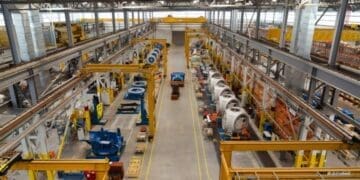



British American Tobacco South Africa (BATSA) has announced it will close its Heidelberg cigarette manufacturing plant by the end of 2026, a decision that is set to affect both plant employees and SMEs connected to the factory and the wider economy.
The Heidelberg plant has been operating since 1975 and produces brands such as Dunhill and Peter Stuyvesant.
At its peak, the factory employed more than 1 000 people, though staff numbers have steadily declined over the past decade, largely because of the rapid rise in illicit tobacco products.
BATSA estimates that illegal cigarettes now account for roughly 75% of the South African market. Today, the plant runs at just 35% of its capacity, making continued local production financially unviable.
Johnny Moloto, Head of Corporate and Regulatory Affairs at BAT Sub-Saharan Africa, described the decision as “incredibly difficult” for the company and its workforce.
“We have explored multiple options to sustain the Heidelberg operation, but the scale of illicit trade has made continued local production no longer viable,” he said, adding that illegal cigarettes “undermine formal market operators, distort supply chains, and reduce tax revenue, creating challenges for businesses operating legally.”
Senior Business Communications Manager Stephanie Venter emphasised that the factory’s long history and role in the community made the decision far from easy.
“The scale of the illicit tobacco market has significantly undermined the viability of local manufacturing, leaving the business with limited options,” she said.
Venter explained that the consultation process with employees and representatives would be conducted fairly and responsibly, with support provided to those affected.
She also stressed that BATSA is not exiting South Africa.
“We will retain our secondary listing on the Johannesburg Stock Exchange and continue supplying the local market through an import-based supply model,” Venter said.
She added that the company remains committed to collaborating with the government and law enforcement to combat illicit trade through stronger enforcement, improved capacity at the South African Revenue Service, and more effective excise policies.
“The closure is expected to have wider economic consequences for the Lesedi area, as the factory has supported not only direct employment but also contractors, suppliers, and service providers,” she noted.
The closure will directly affect around 230 employees, with consultations under the Labour Relations Act already underway. While the immediate impact is on plant workers, local retail SMEs, including spaza shops, informal traders, grocery stores, and takeaway outlets, are likely to feel the effects first. Reduced household income could lead to lower sales and cash flow for these businesses.
Transport SMEs, such as taxi operators and small logistics contractors, may also experience limited contracts as factory operations wind down, putting pressure on narrow-margin businesses.
Service providers supplying cleaning, security, maintenance, packaging, printing, and logistics support could lose long-term contracts, forcing some to scale down or seek alternative clients.
The company said it has engaged with government and law enforcement for many years over the growth of illicit tobacco trade. It added that measures such as the 2020 COVID-19 tobacco sales ban, higher excise duties and proposed new tobacco laws have made conditions more difficult for legal manufacturers.
The South African Revenue Service has previously cautioned that some measures could further entrench illicit trade if not carefully implemented.
Despite the closure, BATSA will continue operating in South Africa through imports, although this is unlikely to benefit most SMEs in Heidelberg and Lesedi, as centralised supply chains involve fewer local service providers.
The closure highlights how illicit trade threatens jobs, businesses, and the sustainability of South Africa’s manufacturing sector.