





































Table grape farmers have expressed optimism after the announcement of a new export deal between South Africa and the Republic of Korea – echoing a widespread buzz among operators in the sector.
Minister of Agriculture John Steenhuisen announced that South Africa officially gained market access on 23 January 2026, after the Republic of Korea confirmed the completion of its import approval process, a development that will enable local producers to begin exporting table grapes to the East Asian market.
“Expanding export markets is critical to strengthening the sector’s contribution to economic growth, employment creation and foreign exchange earnings,” Steenhuisen said previously.
Farmers express excitement over deal
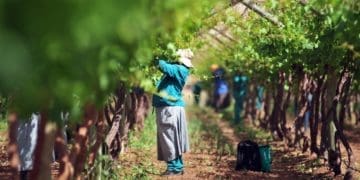
Rangani Nemahase, who farms table grapes in the lush rolling hills of Vhembe in Limpopo, welcomed the development.
“I heard Korea is offering market access to growers and got excited. This is exactly what growers need, and I will also try to get supply networks to bigger exporters in the province. I grow purple grapes that I sell to street vendors around here,” Nemahase said.
Beverly Rossouw, a black/purple emerging commercial table grape farmer from Hex River Valley in the Western Cape, is optimistic about this market, said access to new markets is critical for transformation in the sector.
“When markets expand, it creates space for more growers to participate. For smaller farms like mine, exports like this mean growth, jobs and a real chance to build sustainable farming businesses by being part of the export value chain,” Rossouw said.
Protracted negotiations
The agreement was concluded after 20 years of negotiations, supported by consistent technical engagements between South African and Korean authorities. A physical field verification visit conducted by Korean officials in South Africa in February 2025 was instrumental in finalising the phytosanitary import requirements.
South Africa ranks among the top five global exporters of table grapes, with the sector playing a vital role in rural employment and export revenue.
According to the South African Table Grape Industry (SATI), about 55% of exports are destined for the European Union, while roughly 20% go to the United Kingdom.
Season progressing well due to favourable weather
The 2025/26 table grape season is progressing well, with harvesting commencing slightly earlier than last season due to warmer weather. However, this has not altered the overall national outlook, positioning South Africa well to maintain a reliable supply to global markets.
“The season is on track, and South Africa remains well placed to deliver a consistent, high-quality crop that meets global consumer preferences across all markets,” said Mecia Petersen, CEO of SATI, speaking last month.
Export volumes for the season are projected at 79.4 million 4.5-kilogram cartons, a 0.6% increase over the previous season.
Petersen added that good fruit quality across most production areas positions the industry well to global markets.
What producers need to know
Producers and packhouses interested in this market must be registered with the Department of Agriculture and obtain DoA-allocated production unit codes (PUC) and packhouse codes (PHC).
These codes are required to ensure traceability, quality control, and compliance with South Korea’s phytosanitary requirements.
Compliance remains key
Producers must comply with strict phytosanitary and food safety requirements. Exporters, production units and packhouses are required to register with the Department of Agriculture and obtain the relevant production unit codes (PUCs) and packhouse codes (PHCs).
Registered growers are urged to implement Good Agricultural Practices (GAP), including orchard sanitation and integrated pest management, to meet Korea’s quarantine pest standards. The Department of Agriculture emphasised that strict adherence to these conditions is essential to protecting the newly opened market and ensuring its long-term sustainability.
Azwi@vutivibusiness.co.za