













































South Africa’s South East Asia outreach programme under the Department of Tourism has positioned the region as a strategic growth corridor for the country’s tourism economy however SMEs worry they will only benefit if implementation moves beyond diplomacy.
Minister of Tourism Patricia de Lille’s visit covered Singapore, Malaysia, and Indonesia, focusing on expanding airlift, easing travel, and strengthening tourism cooperation.
Tourism arrivals from the region are showing upward momentum. South Africa recorded 9,827 arrivals from Singapore, reflecting 4.7% year-on-year growth. Malaysia delivered 7,773 arrivals, marking a strong 17.3% increase. Indonesia contributed nearly 3,000 arrivals, which the government sees as a foundation for future expansion.
In Singapore, De Lille engaged with Minister of National Development Alvin Tan and the Changi Airport Group on expanding air connectivity and improving affordability. In Malaysia, discussions with Minister of Tourism, Arts and Culture Dato’ Sri Tiong King Sing explored increased airlift, including potential low-cost carrier participation.
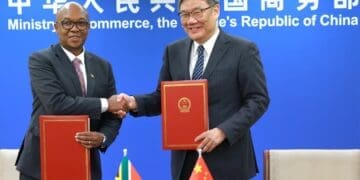
In Indonesia, De Lille signed a Tourism Memorandum of Understanding with Minister Widiyanti Putri Wardhana. The MoU establishes cooperation across sustainable tourism, skills development, marketing, tourism investment, and service standards.
The government also highlighted the Electronic Travel Authorisation system, which allows Indonesian travellers to apply online within 24 hours and exempts them from visa fees.
The real work starts after MOU signing
While welcoming diversification efforts, Brett Tungay, National Chairperson of the Federated Hospitality Association of South Africa (FEDHASA), cautioned that MoUs do not automatically translate into bookings for hospitality SMEs.
“FEDHASA welcomes South Africa’s push to diversify its tourism source markets, and the Indonesia MoU is a step in the right direction. However, from what our members experience on the ground, MoUs rarely translate into immediate, measurable business for hospitality SMEs. The real work starts after the signing,” Tungay told Vutivi Business News.
He argued that three elements are critical for SMEs to see tangible gains, which are meaningfully improved airlift, properly funded joint marketing, and a simpler visa process.
“Without those, the agreement stays on paper,” he said.
Tungay noted that meaningful SME returns usually only materialise once a market reaches between 40,000 and 50,000 annual arrivals. “To get there from where we are now will take years and consistent investment,” he said.
He added that SMEs will require market intelligence, insight into Indonesian traveller preferences, and improved platform connectivity to compete effectively. FEDHASA is urging the government to attach clear arrival targets and annual review milestones to the MoU to give the hospitality sector planning certainty.
Opportunity for diversification
At the provincial level, Limpopo tourist guide Gedion Mokwena described the South Africa-Indonesia MoU as a significant step towards boosting tourism between the two countries.
“Past tourism MoUs have shown mixed results, but there is potential for growth. However, I still believe that the agreement could increase tourism revenue and create jobs,” Mokwena said.
He believes the agreement could support market diversification, particularly given Indonesia’s growing middle class and rising interest in African travel.
Mokwena pointed to Limpopo’s cultural tourism and eco-tourism offerings as experiences that could appeal to Indonesian travellers. However, he stressed that tangible gains require deliberate implementation.
He highlighted the need for easing visa requirements, increasing connectivity between South Africa and Indonesia, collaborative marketing campaigns, upskilling local guides and operators, and investing in tourism infrastructure such as accommodation and transport.
“I think these steps could help unlock opportunities for SMEs and tourist guides in Limpopo Province and South Africa as a whole,” he said.
Looking ahead – from diplomacy to demand
For the government, the focus now shifts to converting engagement into arrivals, arrivals into spend, and spend into jobs.
However, according to SMEs, success will depend on scale, sustained marketing investment, and measurable targets. Without direct connectivity, funded promotion, and market intelligence support, small hospitality operators may struggle to tap into South East Asia’s potential.
If implemented effectively, the South East Asia strategy could help diversify South Africa’s tourism base and create new revenue streams for SMEs. If not, industry players warn, the benefits may remain largely at the policy level rather than filtering through to small businesses on the ground.
Related content:
Minister of Tourism, Patricia de Lille concludes South East Asia Outreach Programme
news@vutivibusiness.co.za