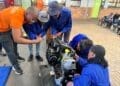
























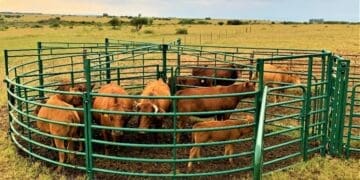













Livestock farmers are adopting silage-making as a practical way to reduce feed costs and improve productivity, following a recent hands-on training session aimed at small-scale and emerging farmers.
The study group, facilitated by agricultural extension officers from the Department of Agriculture, Rural Development, Land and Environmental Affairs in Mpumalanga, focused on teaching farmers how to produce silage using crops such as maize, sorghum and Napier grass.
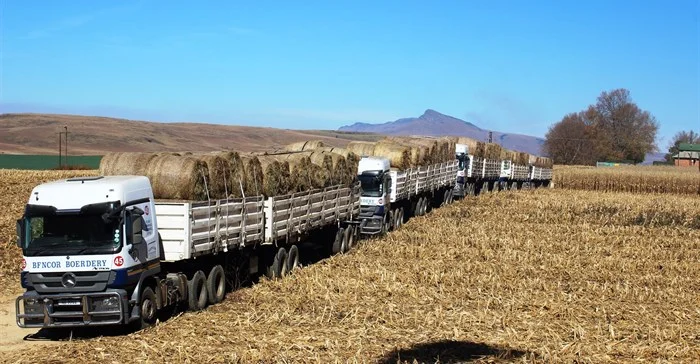
Silage is made by chopping green crops and storing them in airtight pits or silos, where they ferment and can be preserved for several months.
Cutting costs for local farmers
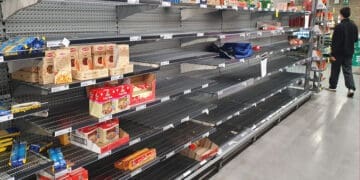
For many farmers, buying commercial feed is one of the biggest challenges, especially during winter when grazing is scarce.
Sibusiso Nkosi, a local cattle farmer who attended the training, said feed costs often put pressure on small-scale farmers.
“During the dry season, we spend a lot of money buying feed because there is not enough grass for the animals, and sometimes the prices are very high. If we can make silage ourselves using crops like maize or sorghum, it means we don’t have to rely so much on buying feed, and that can really help us save money and plan better for the season,” Nkosi said.
Agricultural extension officers from the Department of Agriculture, Rural Development, Land and Environmental Affairs estimate that producing silage can cost between R500 and R900 per ton, depending on the crop used, labour and storage method applied.
In comparison, commercial livestock feed can cost between R1,500 and R3,000 per ton, particularly during periods of high demand and told farmers that producing silage allows them to harvest crops at peak quality and store them for later use, reducing the need for expensive feed purchases.
Saving time during difficult seasons
Farmers also highlighted the time-saving benefits of having feed readily available.
Nomvula Zulu, a small-scale farmer from the Mkhondo area, said sourcing feed during winter can be difficult and time-consuming.
“In winter, you can spend a lot of time trying to find feed or organising transport to bring it to the farm, especially if suppliers are far away. If you already have silage stored on your farm, you don’t have to go through that process. You can focus on your livestock and other work, which makes things much easier,” Zulu said.
A practical solution for small-scale farmers
Farmer organisations say silage-making is a simple but effective way for small-scale farmers to become more self-sufficient.
Dr Siyabonga Ndlala, from the South African Farmers Development Association (SAFDA) said techniques like silage can help farmers better manage their operations.
“It allows farmers to take control of one of their biggest costs, which is feed, instead of depending entirely on external suppliers, they can produce and store their own feed, which improves sustainability and helps stabilise their farming operations over time,” Ndlala said.
Building resilience at local level
With changing weather patterns affecting grazing conditions, local farmers say adopting silage could help them cope with uncertainty.
The training marked a shift towards more sustainable and cost-effective livestock farming.
“We are learning how to prepare ahead instead of reacting when there is already a shortage, if we use these methods properly, we can protect our animals, reduce our costs and make sure our farms continue to operate even during difficult seasons.,” said Nkosi