


















































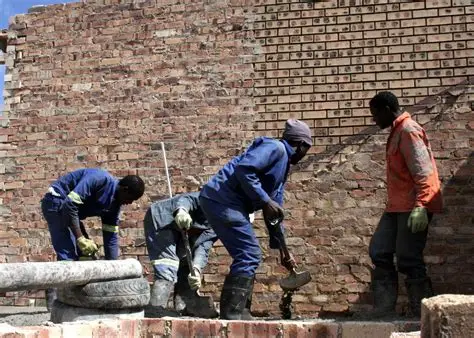
Across South Africa’s townships and peri-urban areas, a quiet housing economy is growing, not through large developers, but through families buying vacant land and building their homes in stages. At the centre of this incremental construction boom are bricklayers and small construction teams operating as micro-enterprises, often without formal registration, access to finance, or long-term contracts.
From Block B to Ruth First in Nkomazi, homeowners are choosing to build one room at a time, matching construction to their income flows. For bricklayers, this has created steady, if uneven, work. Jobs are usually secured through word-of-mouth, WhatsApp referrals, and local reputation rather than formal contracts. Payment is often made in cash, based on trust.
Arnold Naringa, a bricklayer from Ruth First, said that doing a good job calls more customers “You build for someone’s cousin, then the neighbour calls you, If your work is good, you don’t stay long without a job.”
Most teams are small, typically two to five workers who handle everything from foundations to roofing. Some return to the same clients over years, building incrementally as households can afford it.
Despite their contribution to housing, these builders operate largely outside the formal system. Under South African law, anyone building homes for profit must be registered with the National Home Builders Registration Council (NHBRC).
This ensures compliance with building standards, allows homes to be enrolled for mandatory warranty protection, and makes the builder legally accountable. Informal or unregistered bricklayers are not recognised by the NHBRC, meaning homeowners cannot access inspections, statutory warranties, or protections against structural defects.
Rising material costs and inconsistent municipal approvals further complicate the work. The price of cement, bricks, and roofing materials have all increased sharply, often forcing homeowners to pause construction. When work slows, bricklayers have no safety net, no unemployment insurance, no guaranteed income, and no access to affordable credit.
Some initiatives aim to bridge this gap. The NHBRC runs training and accreditation programmes to formalise small builders, though participation requires registration and can be costly. Policy discussions are ongoing around ways to recognise experienced artisans and provide easier access to compliance pathways, insurance, and technical support.
For now, bricklayers remain largely invisible in policy debates, even as their work reshapes neighbourhoods one room at a time. In an economy where formal jobs are scarce and housing demand continues to rise, these small construction teams have become the backbone of a housing system built on patience, trust, and cement, laid brick by brick.