
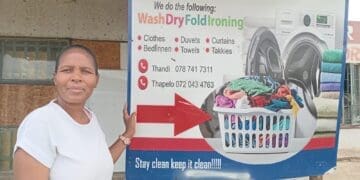






























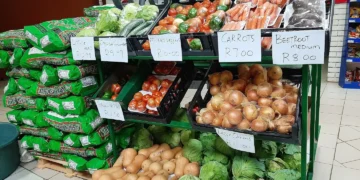




















Small businesses across South Africa are intensifying concerns about the proposed Business Licensing Bill, warning that the draft legislation could increase compliance costs and administrative burdens rather than simplifying the regulatory environment.
The Bill would require all businesses, including informal traders and micro enterprises, to obtain a licence from their local municipality.
Licences would be valid for up to five years, and inspectors would have the authority to demand proof of compliance, issue fines, and confiscate goods in cases of non-compliance.
While the government has framed the legislation as a move toward regulatory uniformity, business organisations argue that it risks duplicating existing requirements and creating further barriers to entrepreneurship.
President acknowledges regulatory burden
Addressing Parliament during the 2026 State of the Nation Address, President Cyril Ramaphosa acknowledged the challenges facing small enterprises.
“Nearly all small and medium enterprises have to contend with a multitude of regulations, bylaws, licensing requirements and bureaucratic hurdles,” Ramaphosa said.
“We take seriously the public comments on the draft Business Licensing Bill and will ensure that the final Bill makes it easier, not harder, to start and run a small business in South Africa,” he added.
His remarks follow widespread submissions from industry bodies warning that the current draft does not yet meet that objective.
Industry raises legal and practical concerns
In its formal submission to the Department of Small Business Development on 28 November 2025, the South African Property Owners Association (SAPOA) said the township economy is valued at over R900 billion annually.
It noted that 57% of township businesses have no formal accounting systems, while 77% manage their finances manually due to customer preference and limited digital literacy.
“Licensing requisites are difficult for governments to administer and properly enforce in general,” SAPOA stated. “Undoubtedly, the requisites of the draft Bill will cause a costly compliance nightmare for a majority of these businesses and will, in all likelihood, simply be ignored.”
SAPOA further argued that the Bill is vague and impractical to implement, warning that it may not withstand constitutional scrutiny. The association also questioned municipal capacity, citing the Auditor General’s Consolidated General Report on Local Government Audit Outcomes 2023 to 2024, which found that only 16% of municipalities received clean audits.
“In light of these findings,” SAPOA said, “the significant funds to be generated by the issuing of business licences cannot, at this stage, be entrusted to local government.”
The National Employers’ Association of South Africa (NEASA) has taken a similarly firm stance. In its submission, NEASA stated that licences should be given to requiring businesses
“Licenses should be given to any business that requires one, and no requisite as a measure for preference should be applied in determining those businesses which can or cannot benefit from being licensed.”
The association warned that introducing preference based criteria into business licensing would distort market functioning and add to existing regulatory pressures.
Concerns raised at business engagement breakfast
The proposed bill was also discussed at a recent business breakfast hosted by the Department of Small Business Development on 3 March 2026, where business bodies, stakeholders and small business representatives engaged on the draft legislation.
For small business owners, the issue is immediate and practical.
A spaza shop owner in Pretoria West said he already complies with local trading permits and health inspections.
“If this becomes another licence with another fee and more paperwork, it will hurt small businesses,” said Malebo Molepo from Atteridgeville.
As consultations continue, the debate now centres on whether the Business Licensing Bill will streamline oversight or entrench additional red tape for South Africa’s small business sector.
https://www.gov.za/sites/default/files/gcis_document/202509/53440gon6683.pdf