


















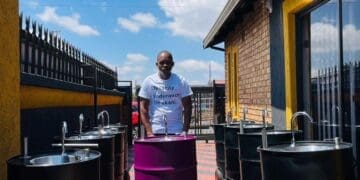



























Eastern Cape farmer Mzimasi Jalisa, cofounder of Jay Jay farming, started working on a single hectare planting cabbage before gradually expanding into large-scale grain production.
Jalisa, who studied agriculture at university before returning home to start his business, said the lack of farming activity in parts of the Eastern Cape motivated him to build a commercial operation in the province.
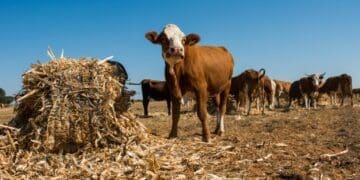
“At the moment, we are doing 600 hectares of maize and about 130 hectares of soybeans. We started very small, but partnerships and access to funding helped us grow,” Jalisa said.
He said one of the biggest challenges facing young farmers is securing early-stage finance.
“Funding is difficult. People must start somewhere first before they can scale,” he said.
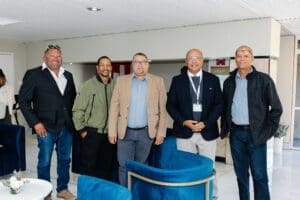
However blended funding partnerships and guaranteed market access are helping some black farmers expand into commercial agriculture.
But land ownership barriers and limited access to traditional finance continue to slow transformation across the sector.
Farmers participating in the Kgodiso Development Fund say funding support has allowed them to scale production, absorb rising operational costs and focus on productivity instead of survival.
The fund was established following PepsiCo’s acquisition of Pioneer Foods. It includes R400 million allocated towards farmer development and R200 million towards education and skills development.
Industry stakeholders say the model is becoming increasingly important as emerging farmers face high input costs, climate risks and tightening lending conditions from traditional financial institutions.
Operational funding reduces pressure
Northern Cape raisin farmer Clinton Visagie said Kgodiso funding has helped farmers manage operational expenses over longer production cycles.
“Kgodiso helps tremendously because it allows farmers to run the operational costs of a farm for a year without constantly worrying about funding,” said Visagie.
“It gives you space to focus properly on productivity and improving the farm instead of always stressing about where the next money is coming from,” Visagie said.
He added that patient funding structures were critical in agriculture because farmers often carry expenses long before generating revenue from harvests.
Land ownership still blocks financing
Farmer Llewelyn Adams said many black farmers still struggle to access commercial loans because they do not have title deeds.
“One of the biggest struggles for many farmers is still title deeds,” said Adams. “Without title deeds, banks do not have surety that farmers will be able to repay the money and that makes it difficult for many people to access loans.”
Stakeholders in the agricultural sector have repeatedly identified collateral requirements as one of the biggest obstacles preventing emerging farmers from commercialising successfully.
Department of Trade, Industry and Competition Chief Director for Transformation and Competition, Takalani Tampani, said the government is working on a Transformation Fund aimed at improving access to finance for black-owned businesses and small enterprises.
Agriculture needs younger participants
Kgodiso Development Fund chairperson Diale Tilo said agriculture needs greater youth participation to strengthen long-term food security and economic inclusion.
“We need to encourage youth not to see agriculture as a sector of last resort because it is important for our food security,” said Tilo.
Industry leaders say stronger collaboration between government, private sector funders and commercial supply chains will be necessary if South Africa wants to accelerate the growth of black commercial farmers and improve transformation within agriculture.