
















































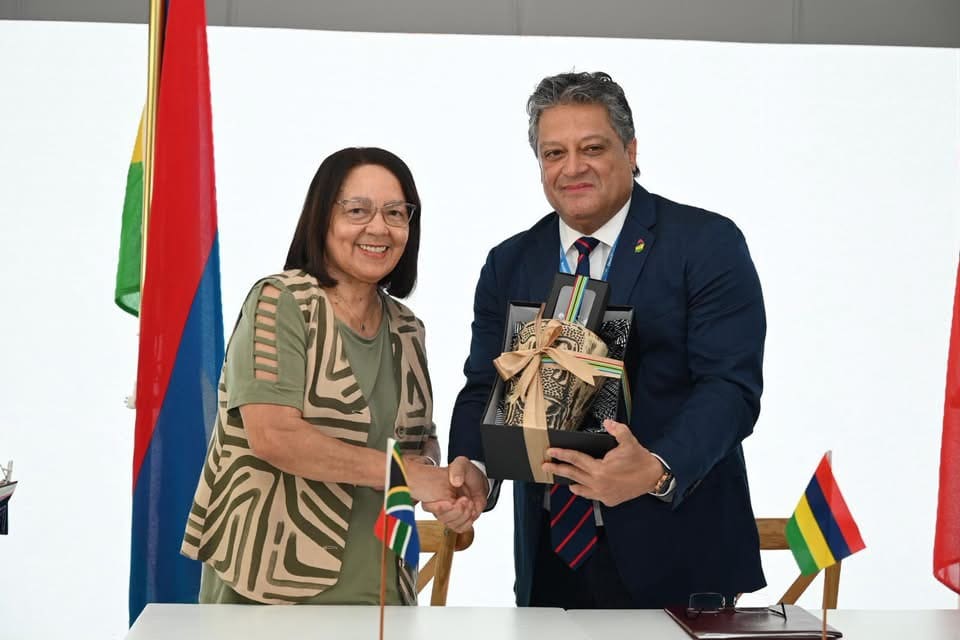
South Africa and Mauritius have signed a landmark tourism cooperation agreement aimed at strengthening regional travel, improving connectivity, and expanding collaboration across the tourism value chain.
The Memorandum of Understanding (MoU) on Cooperation in the Field of Tourism was signed at Africa’s Travel Indaba 2026 by South African Tourism Minister Patricia de Lille and Mauritian Tourism Minister Richard Duval.
The agreement marks a renewed push to deepen regional tourism growth, improve travel facilitation, and unlock new opportunities across key tourism sectors.
It covers sustainable tourism development, cruise tourism, cultural tourism, medical tourism, adventure tourism, destination management, tourism training, and technical cooperation.
It also promotes collaboration in the Meetings, Incentives, Conferences and Exhibitions (MICE) sector to attract business events and international conferences.
De Lille said the agreement is designed to move tourism cooperation from planning into implementation and provides a practical framework for cooperation between the two countries.
The agreement also aims to improve travel flows between South Africa and Mauritius while strengthening regional tourism integration across Southern Africa.
Duval said South Africa remains a key tourism partner for Mauritius.
“South Africa remains a very important market for Mauritius. It is our fifth largest tourism market and one of our most loyal ones,” he said.
He noted that Mauritius is repositioning its tourism offering beyond its traditional beach image, with increased focus on inland tourism, ecotourism, cultural tourism, and authentic visitor experiences.
“In this regard, South Africa has a lot of experience. You have succeeded in developing inland tourism and nature-based tourism in a remarkable way,” he said.
Duval also highlighted the importance of regional travel links.
“There’s nothing wrong if you come to South Africa, go to Botswana, go to Lesotho and Mauritius. We have now made that public commitment,” he said.
He added that Mauritius is also seen as a destination with strong cultural and emotional ties to South African travellers, describing it as “a feeling of peace, belonging, safety and serenity.”
Will SMEs benefit from the agreement?
While the agreement is positioned as a step toward stronger regional cooperation, attention is now turning to whether smaller tourism businesses will benefit in practice.
The agreement is expected to strengthen tourism flows, improve connectivity, and support cross-border travel experiences between Southern African destinations.
However, industry stakeholders say the key challenge remains whether these commitments translate into opportunities for small operators such as lodges, guesthouses, tour guides, and community tourism enterprises.
Small tourism businesses often operate under pressure from rising costs, limited marketing reach, and strong competition from larger established tourism companies.
Tourism operators say that while regional agreements may increase demand for travel, the real test is whether SMEs are included in the value chain of new tourism flows.
Shepherd Tourism Tours CEO Mfundo Ngcangca said tourism platforms play a key role in connecting smaller operators to international buyers and partners.
“The platform offers us a chance to showcase our offerings to buyers and tourism partners,” he said.
However, other operators note that participation costs and limited resources often prevent SMEs from fully benefiting from such opportunities.
Corrystroo3 Holdings CEO Gopolang Makgotho said financial constraints remain a barrier.
“Limited financial resources and high participation costs often prevent SMMEs from fully benefiting,” she said.
Although the agreement signals stronger tourism cooperation between South Africa and Mauritius, its long-term success will depend on implementation.
De Lille said technical teams from both countries are expected to begin drafting practical implementation plans, with officials tasked to move quickly from agreement to action.
For SMEs, the central question remains whether regional tourism growth will translate into real market access and measurable business opportunities, or remain concentrated among larger industry players.