












































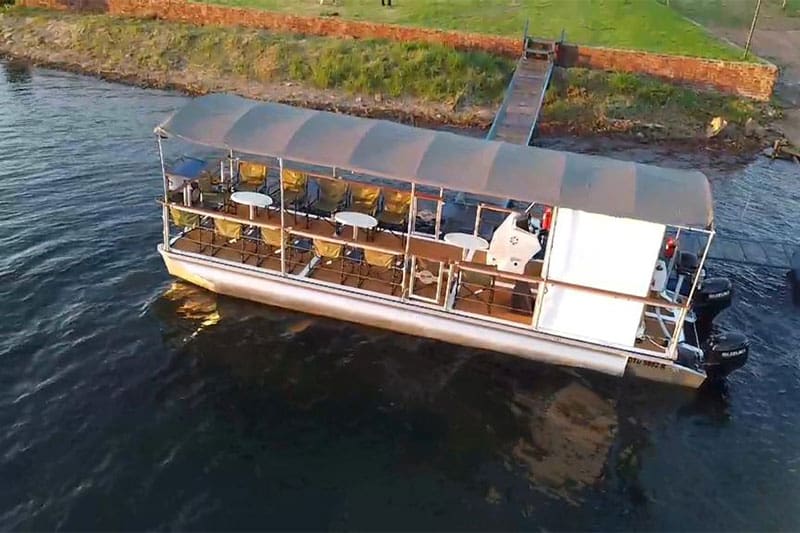
Small businesses operating around South Africa’s state-owned dams are facing potential disruption under new draft regulations that could restrict access, increase compliance costs and destabilise local economies built on water-based tourism and recreation.
Businesses situated along more than 320 state dams could be deemed unlawful if new proposed regulations to the National Water Act 36 of 1998 are adopted.
The draft rules, published by Minister of Water and Sanitation, Pemmy Majodina, introduce strict requirements for permits, leases and formal agreements for activities on and around dams such as the Nandoni Dam, Vaal Dam and Hartbeespoort Dam. These include tourism operations, boating, fishing, events and even commercial photography.
The regulations define “commercial activity” as any use of water or surrounding land to generate income. This means many small businesses operating near dams could be required to formalise agreements with the state or risk being declared illegal.
The compliance burden
Existing businesses would have six months to comply. In some cases, this could involve entering into complex public-private partnerships (PPPs), a process typically associated with large-scale infrastructure and often beyond the capacity of small enterprises.
Tshifhiwa Tshivhengwa, CEO of the Tourism Business Council of South Africa, criticised the scope of the regulations and warned of excessive red tape.
“It’s draconian. You will need a permit for this and a permit for that. Even taking photographs will be subject to state approval!” he said.
Without approval, even basic activities like taking photographs, boating, fishing or swimming could result in fines or imprisonment. Raising alarm among businesses that rely on open access to water.
Tourism SMMEs in the firing line
Across dam regions, entire local economies depend on visitor activity. While small enterprises including guesthouses, restaurants, boat hire services and fishing guides are relying on consistent foot traffic.
Berry Everitt, CEO of Chas Everitt International Property Group, described the scale of this dependence.
“There are lots of tiny enterprises that depend for a living, and communities depend for a living, on having free access to this water,” Everitt said.
Any restrictions on access could reduce tourism flows, directly affecting revenue streams for SMMEs operating on thin margins.
Impact on fishing communities and informal livelihoods
For communities living near dams, access to water is not just recreational but a source of income and food security.
In areas surrounding Nandoni Dam, informal traders and small-scale fishers rely on daily access to sustain their livelihoods. This includes selling fish, bait and refreshments, as well as providing services to visiting anglers.
Residents who already operate under fishing licence systems fear the proposed regulations could add another layer of approvals, limiting when and how they access the water.
One local informal fisher, Ntshavheni Budeli explained the reality facing many residents.
“If the dam is next to your home, it means you can fish and feed your family. If access becomes difficult or restricted, people will struggle because this is how we survive,” he said.
Value chains and livelihoods at risk
Fishing and recreational sectors say the impact will extend beyond individual businesses to entire value chains.
Andries Maree, president of the South African Angling and Casting Confederation, cautioned against the regulations.
“The regulations could impose additional costs… to give us access and to allow us to use the water resource,” he said.
This could discourage landowners from granting access, placing pressure on anglers, informal traders and small operators who depend on dam-based activity.
Civil society organisation AfriForum, and the Democratic Alliance have also cautioned that long-standing practices may be criminalised under the new framework. Raising concerns for communities that depend on fishing for survival.
With the public comment period now closed, the Department of Water and Sanitation is expected to review stakeholder input before determining the next steps.
For SMMEs operating around South Africa’s dams, the outcome will tell whether these businesses can continue to operate or face an uncertain and heavily regulated future.