










































South Africa’s poultry sector is entering a new phase focused on localisation, export expansion and broader participation across the value chain, with the government integrating small farmers and micro enterprises into the industry.
“We want big commercial South African farmers to produce and supply South Africa with chicken alongside small and rural farmers,” said Deputy Minister of Trade, Industry and Competition Zuko Godlimpi, reinforcing the shift toward a more inclusive poultry value chain.
Godlimpi said during a recent executive oversight committee meeting in Bronkhorstspruit that Phase 2 of the Poultry Master Plan is aimed at local production while ensuring participation across the sector.
“The next phase is aimed at deepening localisation, expanding exports and ensuring broader participation across the poultry value chain,” said Godlimpi.
The renewed commitment was signed by stakeholders, including the South African Poultry Association (SAPA), Association of Meat Importers and Exporters, Emerging Black Importers and Exporters South Africa, Food and Allied Workers Union, Astral Foods, Rainbow Chicken, Country Bird Holdings, Daybreak Foods and the African Farmers Association of South Africa.
Government pushes for stronger SMME participation
At the centre of the renewed commitment is a stronger push to integrate SMMEs and smallholder farmers into a sector traditionally dominated by large commercial producers.
“We want more chickens produced locally by more South Africans”, he said.
Godlimpi stressed that the long term goal is to reduce dependence on imports while expanding local production capacity across all scales of farming.
“The long and short of it is that we do not want to import chicken from other countries anymore. We want local companies to grow more chickens,” he said.
“Part of what we are doing is to ensure that chicken is produced by as diverse a group of South Africans as possible.”
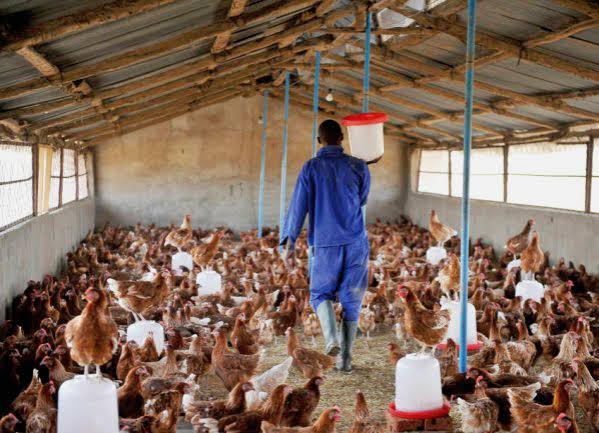
The shift signals growing opportunities across the poultry value chain for SMMEs. These include feed production, poultry rearing, logistics, packaging, processing and distribution.
R87.95bn industry records production and export gains
According to government data, South Africa’s poultry slaughter rate has increased to 23 million birds per week, while imports have declined to 22% of domestic consumption. Export performance has also improved by 9%.
Godlimpi said the gains demonstrate the value of coordinated action between government and industry.
“The achievements of the first phase bear testimony to what we can do when we work together,” he said.
The poultry industry remains the largest contributor to South Africa’s agricultural sector, with a total annual gross value of production of nearly R87.95 billion in 2024. This includes R72.09 billion from meat and R15.86 billion from eggs.
The sector accounts for 19.1% of total agricultural gross value and 44.4% of animal product output, reinforcing its importance in food security and rural economic activity.
Between 2019 and 2025, aggregate chicken meat exports, including fresh, frozen, whole birds, cut portions and offal, recorded a 9% increase, reflecting steady gains in international competitiveness.
A key highlight of the event was the awarding of certificates of excellence to black-owned poultry businesses, including contract growers, hatcheries, feed mills, abattoirs and processors.
Godlimpi said the achievements of emerging black farmers show the potential of collaboration between established commercial producers and smaller rural farmers.
“The achievements of these black farmers confirm the ground we can cover when big commercial farmers work together with small farmers, supported by government and its agencies.”
Godlimpi urged the replication of this model across all 52 district municipalities.