










































What began as a community stokvel funded through the R370 Social Relief of Distress grants has evolved into one of Gauteng’s most unconventional township business experiments, raising new questions about whether social grants can become tools for collective ownership rather than short-term survival.
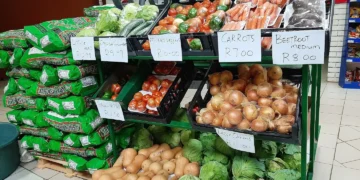
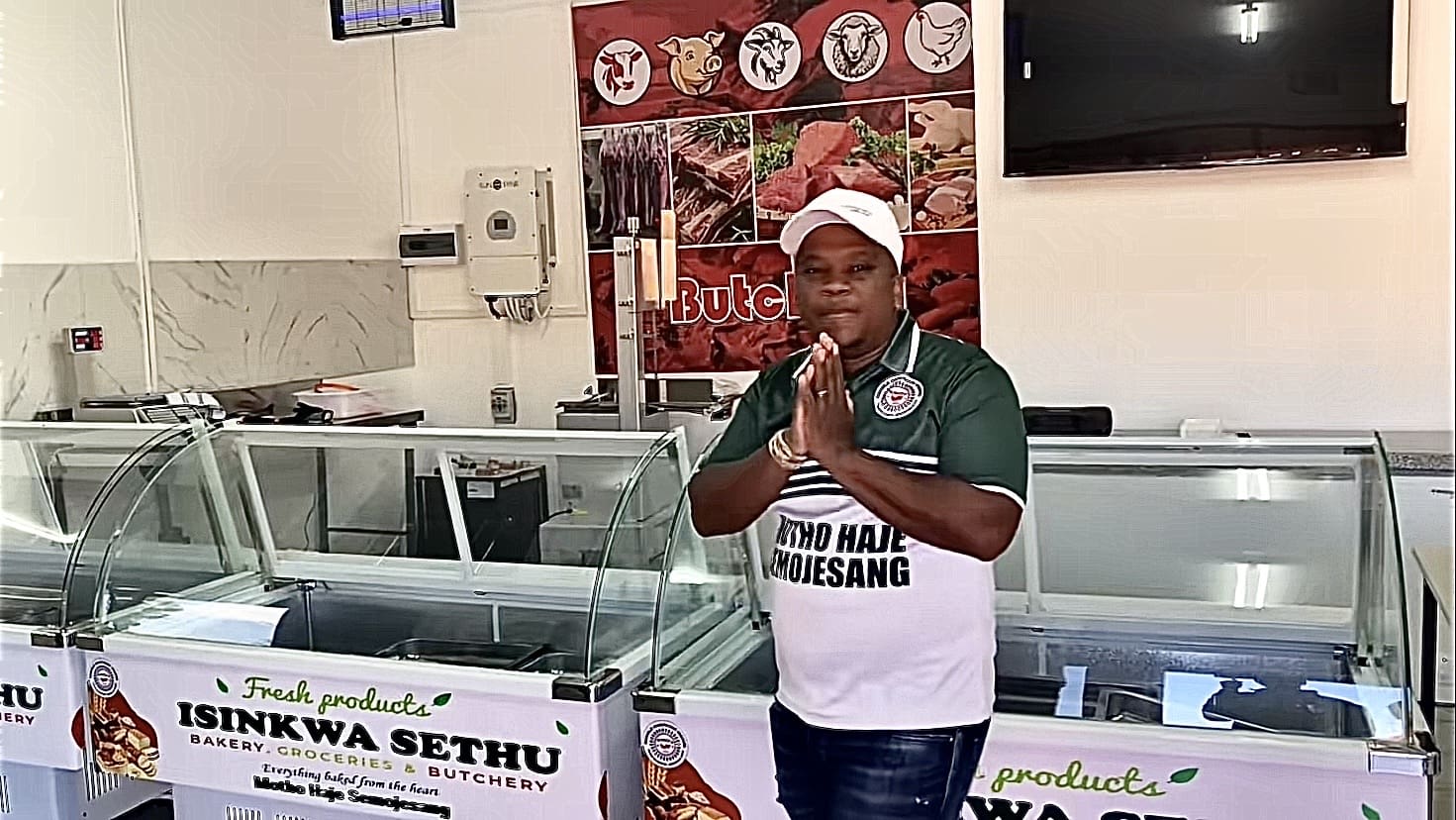
In Evaton, south of Johannesburg, more than 1 200 grant recipients have pooled portions of their monthly SRD payments through the Isicholo Investment Stokvel to help fund a bakery, supermarket and butchery operating under the Isinkwa Sethu campaign founded by businessman Sibusiso Ntsele.
The initiative has gained national attention at a time when South Africa continues to debate the long-term future of the SRD grant, which currently supports millions of unemployed citizens amid worsening economic pressure and persistently high youth unemployment.
Ntsele said the idea emerged after witnessing how quickly grant money disappeared in communities battling unemployment, substance abuse and deep financial insecurity.
“When I established the Isinkwa Sethu Campaign, it was to end poverty because a lot of people are unemployed here. The only money that we can use when we start something for the people is the R370 grant because that is the only money they have,” he said.
Turning grants into business capital
The model operates through collective contributions from grant recipients who effectively become small-scale investors in township businesses. According to Ntsele, the businesses now employ workers from the same community while also paying dividends to investors.
The project began with the acquisition and refurbishment of a struggling local bakery, then expanded into grocery retail and meat trading. Ntsele said the group spent more than R480 000 acquiring the property and an additional R100 000 on repairs, electricity upgrades and solar infrastructure.
Unlike traditional stokvels that mainly focus on groceries or burial support, the Isicholo Investment Stokvel has positioned itself as a township investment vehicle aimed at building locally owned businesses.
The initiative is also exposing the growing desperation among unemployed South Africans seeking alternatives to dependency and to unstable informal work. For many members, the stokvel represents one of the few available opportunities to participate in ownership structures without access to formal banking finance.
Building township-owned production
Ntsele believes township economies continue losing money to large retailers while residents remain excluded from ownership.
“When you realise how much we spend on bread daily, you will then understand that we are only giving money away to big, established corporates and we are not benefiting anything in return,” he said.
He added that the broader vision extends beyond retail trading into local manufacturing and food production.
“We should be people who can do things for themselves. Right now, we are selling generic products found at any other supermarket in South Africa, but we need to move away from that and manufacture and produce our own food, which is locally sourced and made, so we can build ourselves,” Ntsele said.
The stokvel reportedly grew to more than 8 000 members before the launch of the bakery operation, highlighting both the scale of unemployment and the appetite for community-owned enterprises in township economies.
A new financing model for excluded communities
The initiative is increasingly drawing attention because it intersects with a broader national debate around whether social grants should merely provide relief or become instruments for economic participation.
Finance Minister Enoch Godongwana has previously indicated that the government is exploring how income support could evolve into employment-linked or entrepreneurial support mechanisms rather than remaining purely consumption-based.
Economists and development specialists have repeatedly pointed out that many township entrepreneurs remain excluded from traditional finance because they lack collateral, formal credit histories and established business records.
In that vacuum, community-funded models such as stokvels are increasingly becoming alternative financing channels for small township enterprises.
While the long-term sustainability of the Isinkwa Sethu model remains uncertain, the project has already reignited debate around the role of social grants in economic development, particularly in communities where formal employment opportunities remain scarce.
For employees like former security guard Fannie Mpembe, who found work through the initiative after years of unemployment, the project represents more than a stokvel.
“I have four children to feed, so this job helps me a lot,” he said.