












































Progress in Limpopo’s Special Economic Zones (SEZs) is expected to unlock new opportunities for small businesses, attract billions in investment and create thousands of jobs as the province advances its industrialisation agenda.
Limpopo MEC for Economic Development, Environment and Tourism, Tshitereke Matibe, said during the tabling of the department’s 2026/27 budget at the Limpopo Legislature in Lebowakgomo on Thursday, that the Musina-Makhado SEZ and the Fetakgomo-Tubatse SEZ are moving from planning to implementation, with infrastructure development already underway
The province’s combined investment pipeline across both SEZs includes 46 companies valued at about R52.6 billion, with the potential to create more than 16,000 long-term jobs. The department has been allocated a total budget of R1.814 billion for the 2026/27 financial year.
Musina-Makhado SEZ advances with infrastructure rollout
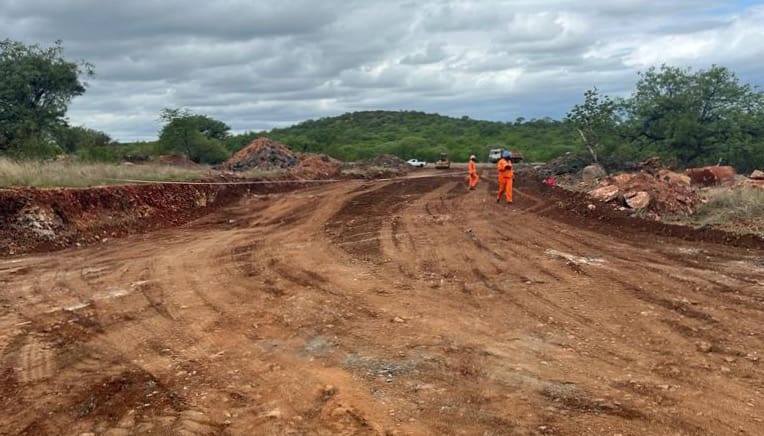
Matibe said significant progress has been made at the Musina-Makhado SEZ after earlier delays.
Construction is underway on two bulk water infrastructure projects, while five more are planned for the 2026/27 financial year.
A total of 3,500 hectares has been transferred to the province to unlock development.
“The investment pipeline exceeding R2 billion has been confirmed by the Industrial Development Corporation, enabling the next phase towards gazetting,” said Matibe.
He added that an additional R60 billion in renewable energy investments is expected.
The government has also secured land for a solar project to support the zone and surrounding communities, while water supply concerns have been resolved through an agreement with Zimbabwe.
The Government Communications Information Services (GCIS) revealed on Thursday that the cabinet “was appraised and supported the intention of the Minister of Trade, Industry and Competition to designate the proposed Fetakgomo Tubatse Special Economic Zone (FTSEZ) located in Sekhukhune District of Limpopo Province.”

“The FTSEZ is a strategic component of [the] Limpopo Development Plan that is aimed at fostering industrialisation, stimulating economic growth, and generating employment by attracting investments in mining, mineral beneficiation, energy, agriculture, and automotive sectors. The FTSEZ will be implemented in three phases,” the GCIS revealed.
More than R400 million has been invested in bulk infrastructure through partnerships involving LEDET, the Department of Trade, Industry and Competition, Sekhukhune District Municipality and Fetakgomo-Tubatse Municipality.
A 75-hectare security infrastructure project is also nearing completion to support water, electricity and road infrastructure rollout.
“By 2028/29, at least two operational factories are expected across both SEZs, marking a shift from planning to production,” Matibe said.
Business forum calls for stronger township support
Abby Lehola of Makhado Business Forum says township and rural economies must be prioritised through stronger government support, improved regulation, and targeted interventions for small businesses.
Lehola said informal traders and street hawkers play an important role in the local economy, but continue to operate under unsafe and unsupported conditions.
“Street traders and hawkers contribute significantly to the local economy, but they are operating in environments that are not always safe or properly supported. Their needs must be prioritised and heard,” he said.
He added that township entrepreneurs continue to face challenges in accessing opportunities and competing in a highly pressured informal trading environment, including issues linked to undocumented traders, calling for stronger government action to support local business development.
Lehola also raised concerns about corruption, saying it continues to undermine small business growth and economic development.
“We need stronger accountability and proper governance to ensure township economies are supported, and small businesses can grow sustainably,” he said.
He further called for improved support systems for informal and township traders, including better infrastructure, access to finance, and structured economic programmes.
Ledet has assisted 60 enterprises under township and rural programmes and 145 under retail support initiatives. A total of 18,176 enterprises were formalised through the Limpopo Economic Development Agency (Lieda) in the last financial year.
Industrial park upgrades in Seshego and Nkowankowa, along with a R12 million investment in the Limpopo Jewellery Business Incubator, are expected to boost SME participation in manufacturing.