














































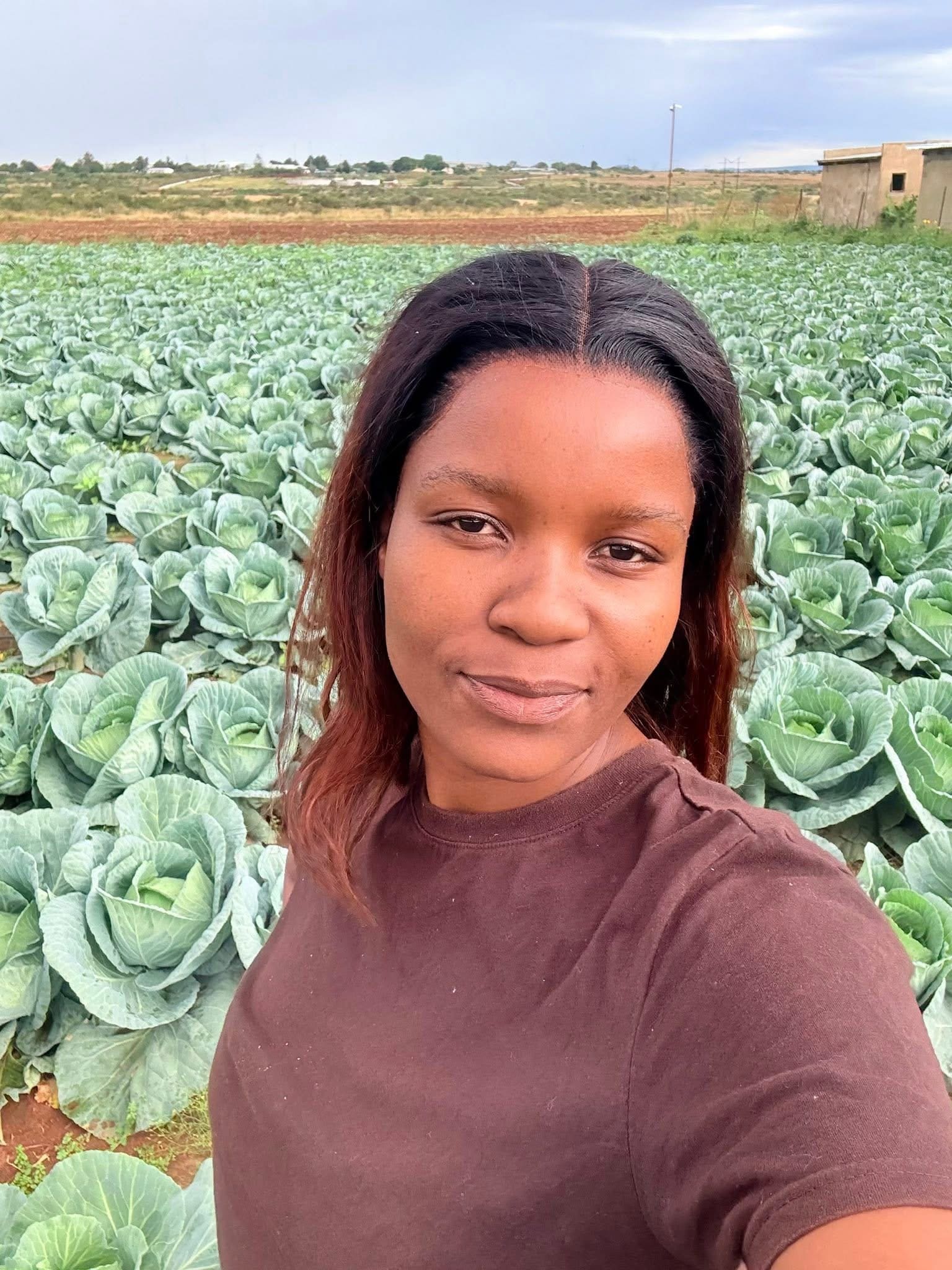
Wendy Moshakga, a farmer from Serage Farms in Moletjie Ga-Rammetloana, Limpopo, has secured supply deals with Pick n Pay, Boxer, United, and SPAR.
The development highlights how small-scale farmers are entering formal retail markets through direct engagement with retailers, improved produce quality, and consistent supply of fresh vegetables.
Moshakga specialises in crop farming, with a focus on cabbage production, while also producing mustard spinach and pickles. The farm is also expanding into tomatoes and butternut as part of efforts to diversify production and meet growing demand.
She said the opportunity to supply major retailers came after she decided to approach stores directly with samples of her produce.
“When I planted my mustard spinach, I did not have a market yet. I wanted the produce to move quickly, so I took samples directly to the stores,” she said.
Moshakga said she approached retailers and presented samples of what she was producing, asking whether they would be interested in buying from her farm.
“I showed them what I was producing and asked if they would be interested in buying from us. After that, they asked me to bring more produce,” she said.
Despite securing supply deals, Moshakga said the process of entering formal retail markets was not easy in the beginning.
She added that accessing retail markets remains a challenge for many small-scale farmers because of strict standards and the need for consistency in supply. According to Moshakga, product quality played a major role in helping her secure the deals.
“When produce is fresh and well-presented, it is easier for retailers to take interest,” she said.
She also highlighted consistency as another important factor, saying retailers prefer suppliers who can deliver produce regularly rather than once-off supply.
“Retailers want suppliers who can deliver regularly. I made sure I could meet both quality and consistency requirements,” she said.
Moshakga said most retailers require compliance with Good Agricultural Practices (GAP), which focuses on safe and proper farming methods. Freshness, quality, and reliable supply are also among the key expectations from retailers.
The retail deals have also contributed to job creation at the farm. Moshakga currently employs five permanent workers, while about ten graduates work on a daily basis alongside five students from different colleges and universities who are gaining farming experience.
“The retail contracts have helped create more opportunities for people to be part of the business,” she said.
However, she admitted that meeting retail demand consistently remains one of the biggest challenges.
“Sometimes I have to stop supplying because I do not have enough produce to meet their demand. I am still working on increasing production so that I can supply consistently,” she said.
Moshakga believes small-scale farmers need more support in accessing markets, resources, and training on retail standards.
“Many farmers produce good crops, but they struggle with accessing buyers and understanding what retailers require,” she said.
She encouraged farmers to move beyond social media marketing and engage retailers directly.
“Go directly to where you think it is impossible and present your products. Do not give up when you face rejection or attitude from buyers. As long as your product is good, you are on the right track,” she said.