










































Debates over foreign-owned businesses, informal trading spaces, and access to economic opportunities have resurfaced as South Africa moves to reform its outdated business licensing system.
On 26 May 2026, the Department of Small Business Development (DSBD) released the Business Licensing Bill, 2026 a proposed reform aimed at replacing the Businesses Act of 1991 and reshaping how businesses are registered, monitored and regulated across all spheres of government.
The legislation seeks to introduce a single national licensing framework, designed to reduce inconsistent rules between municipalities, simplify compliance for entrepreneurs, and strengthen oversight of both local and foreign-owned businesses operating in formal and informal sectors.
At its core, the Bill proposes standardised licensing principles, a national business licence database, and stricter enforcement mechanisms, including clearer requirements for businesses owned by non-citizens.
SME-focused reforms and standardised rules
The DSBD says the current system is inconsistent, with municipalities applying different rules, fees and procedures. This creates challenges for small businesses that want to expand beyond one area.
To address this, the Bill introduces uniform licensing principles based on efficiency, transparency and inclusion. All provinces and municipalities will be required to align their by-laws with national standards.
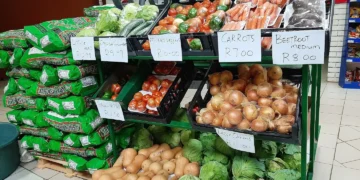
For SMEs, the Bill proposes faster approvals, lower fees, and simplified application and renewal processes. It also allows municipalities to create designated trading areas reserved for small businesses, which could support township traders and informal operators.
Stronger enforcement and compliance measures
While the Bill supports small business growth, it also strengthens enforcement.
Authorised officers will have the power to inspect business premises, request documents, issue compliance notices, and confiscate goods linked to illegal trading. They may also impose fines ranging from R500 to R10 000 for repeated non-compliance.
In more serious cases, businesses operating without licences or breaking conditions could face criminal charges, including imprisonment of up to two years for repeat offences.
Government says these measures aim to reduce illegal trading and improve compliance across the economy.
New rules for foreign-owned businesses
For the first time, the Bill formally regulates licensing for non-citizen business owners.
Foreign-owned businesses will be required to have valid visas or permits under immigration laws. Their business licences will also depend on the validity of their immigration documents.
The aim is to formalise oversight of foreign participation in the economy, especially in retail and informal trading sectors.
Digital licensing and national oversight
A national database of all business licences will be created to improve monitoring, planning and compliance tracking across provinces and municipalities.
The Bill also establishes coordination structures at national and provincial level to help align policies and support municipalities that struggle to implement licensing systems effectively.
What it means for SMEs
The Bill presents both opportunities and challenges for SMEs.
On the positive side, it could reduce red tape, lower costs and make it easier to start and grow a business. However, stricter enforcement and tighter monitoring may increase pressure on informal traders and micro-enterprises that are not formally registered.
Analysts say the success of the Bill will depend on how well government balances regulation with support for small businesses.
If implemented effectively, the reforms could modernise South Africa’s business environment and strengthen SME participation in the formal economy. However, concerns remain about whether municipalities have the capacity to enforce the new system without disrupting vulnerable traders.
The Bill is expected to undergo further consultation before being introduced to Parliament.