














































Thousands of South African salon owners, hairstylists and informal beauty traders are facing uncertainty as disruptions to hair product supply chains threaten the industry.
The disruption follows the 30 June marches and law enforcement actions that brought renewed attention to informal trading networks in South Africa. Some businesses were affected after authorities inspected premises and identified operators allegedly operating without the required documentation.
The hairdressing and beauty sector contributes an estimated R24.85 billion to South Africa’s economy, accounting for about 0.62% of gross domestic product (GDP), and supports approximately 185,000 jobs.
This is according to research commissioned by the former Department of Higher Education and Training.
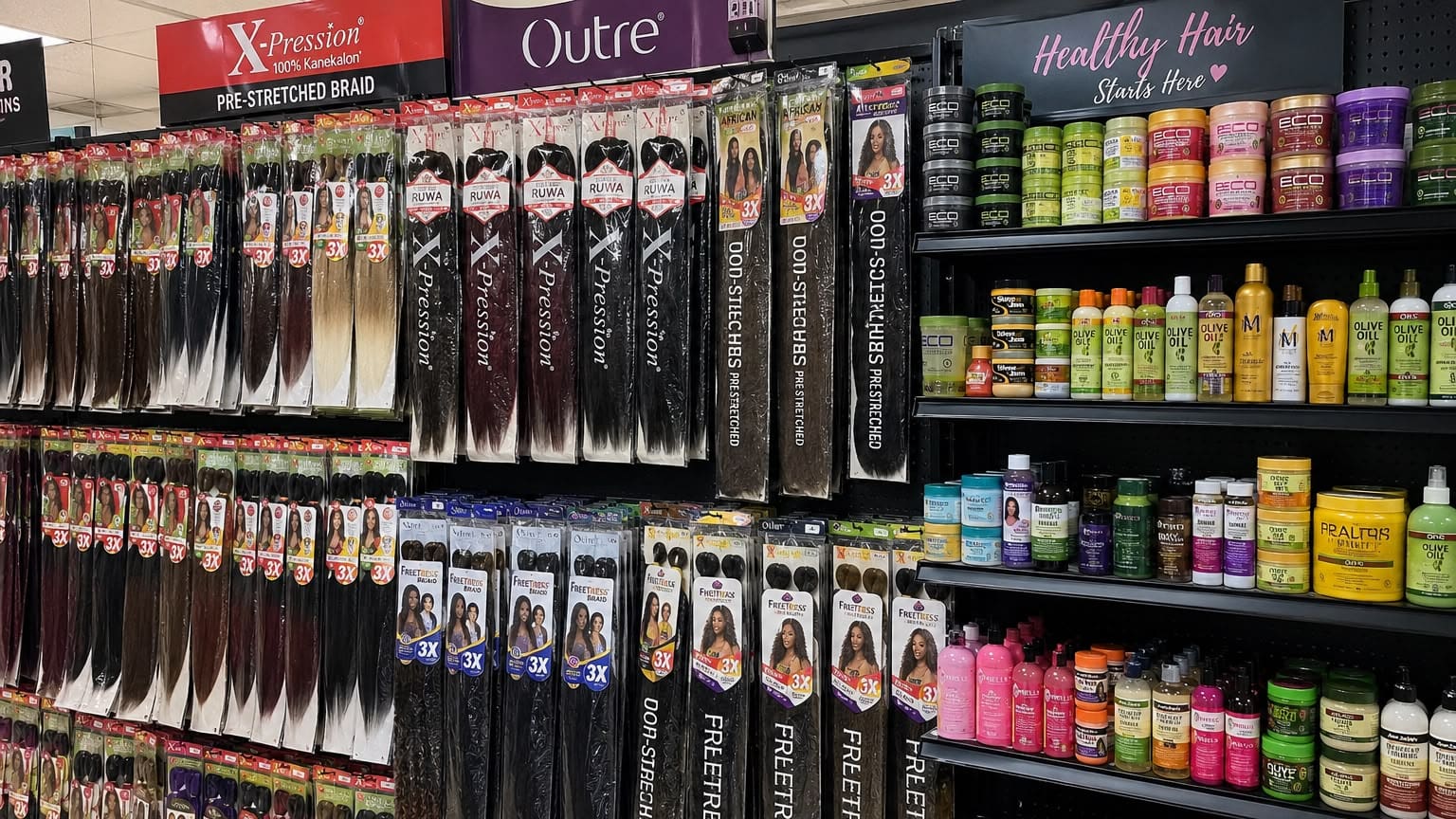
Businesses in the sector say access to essential products such as synthetic braiding hair, hair fibre, wigs and other salon supplies has become increasingly difficult, affecting their ability to serve customers and maintain daily income.
Beauty traders left stranded
Some traders say they are struggling to find reliable suppliers, with stock shortages and disruptions affecting their ability to restock.
Mathapelo Masidubele, owner of Braided by Matha in Pretoria CBD, said the challenge has made running the business increasingly difficult.
“We normally buy our hair from wholesalers, but lately it has been difficult to find suppliers with enough stock. Customers come to the salon ready to do their hair, but sometimes we cannot provide the service because we do not have the products,” she said.
Salon owners say they typically source hair products from foreign national wholesalers and distributors in areas such as Johannesburg CBD, Marabastad and other major trading hubs.
Another beauty business owner, Ratanang Ronoti, said rising supply challenges are affecting profit margins.
“When we eventually find stock, prices are higher than before. We cannot always increase our prices because our customers also have financial pressures,” Ronoti said.
For many township salons and informal traders, hair products are the foundation of their businesses. A shortage of stock can immediately translate into lost customers and lost revenue.
Disruptions add to the pressure
In some areas, closures disrupted supply chains and affected businesses that relied on those trading spaces, including local salon owners and beauty entrepreneurs who sourced products from these networks.
Cape Chamber of Commerce spokesperson Bobby Jordan said recent disruptions had placed additional pressure on SMEs, many of which depend on daily trading income.
“We received widespread reports of small business closures,” Jordan said.
He said even a single lost trading day can have a significant economic impact on businesses that rely on daily cash flow.
“When fear paralyses even a fraction of that ecosystem, forcing township traders and retailers to close their doors, millions of rands in unrecoverable daily cash flow evaporate from the communities that need it most,” he said.