


















































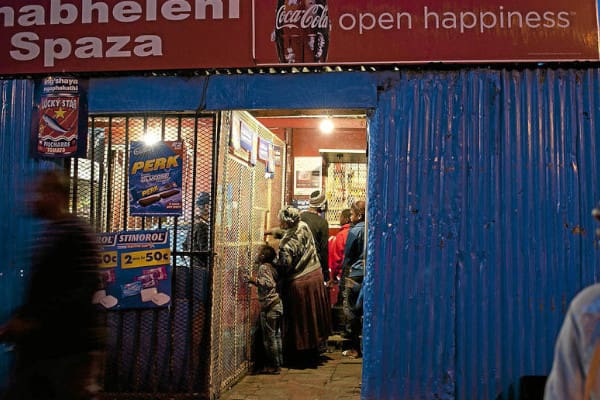
Township spaza shop owners say access to government funding remains a challenge despite the rollout of the R500 million Spaza Shop Support Fund.
Strict compliance requirements, licensing conditions and administrative delays continue to block many small businesses from accessing support intended to strengthen informal trade.
More than 4,000 applications have been assessed, but thousands of traders are still stuck in the approval process.
The fund was launched in April 2025 by the Department of Small Business Development (DSBD) and the Department of Trade, Industry and Competition (DTIC) to support South African-owned community convenience shops, including spaza shops, in townships and rural areas.
The Small Enterprise Development and Finance Agency (Sedfa) manages R150 million of the programme, allocated for stock purchases and point-of-sale systems.
As of May 2026, a total of 4,522 complete applications had been received nationally, with 4,240 assessed.
Licensing and compliance slow approval process
The government says only about 58% of applicants were linked to valid municipal trading licences or temporary permits, which remain a key requirement for funding approval.
Verification processes have also flagged around 350 applications due to non-compliance, including non-existent businesses, ownership discrepancies and inconsistencies between applicants and actual operators.
SEDFA acting CEO Nkosikhona Mbatha said site visits and municipal checks are used to confirm whether businesses are legitimate and meet programme requirements.
He said some applications fail because basic operational and ownership conditions are not met.
“To ensure the integrity of the programme, we verify that the business exists and that the applicant is the actual operator,” he said.
To date, 1,316 applications have been approved across all provinces, worth R79.6 million, while R70.4 million remains under Sedfa’s allocation yet to be distributed.
Township SMEs say access remains difficult
Some township traders say they continue to struggle to access the fund due to delays, unclear requirements and lack of feedback from authorities.
A Soweto spaza shop owner, Ntombizodwa Mzombe, said she applied months ago but has not received any response.
“I submitted my application, but there has been no response. I keep attending sessions hoping for answers, but nothing changes,” she said.
In Alexandra, informal trader Mthokozisi said many small businesses still struggle to understand the process needed to qualify for support.
“We are trying to comply, but we don’t know where to start. The system is not simple for small businesses,” he said.
These challenges reflect wider structural issues in township economies, where many businesses operate informally but remain dependent on local trading systems for survival.
National rollout highlights uneven progress
Earlier reporting in Limpopo showed a slow uptake of the fund, with only a small number of applications approved at the time due to compliance challenges, limited awareness and administrative delays.
Traders in rural areas also cited lack of information and difficulty accessing municipal services required for licensing.
Spaza shop owner Mishack Nkuna from Elim said delays in feedback have left many traders frustrated.
“I applied a long time ago and I still have no answer. We depend on this support, but the waiting is discouraging,” he said.
Another trader, Tshinakaho Nengovhela from Tshino, said access to information remains a major barrier in rural communities.
“People don’t know where to go or how to apply. Many just give up,” she said.
Despite these challenges, the government says the programme is gradually gaining traction.
Sedfa and the National Empowerment Fund (NEF) have approved 2,369 businesses nationally, with support including stock purchases, infrastructure upgrades, point-of-sale systems and business training.
The Department of Small Business Development says outreach programmes will continue from June 2026 to improve awareness and assist applicants with compliance requirements.
However, questions remain over why a significant portion of the R500 million fund is still unspent, as many applicants remain stuck in assessment or unable to meet regulatory requirements.
For now, the fund continues to highlight the gap between government support systems and the practical realities facing township and rural SMEs.