


















































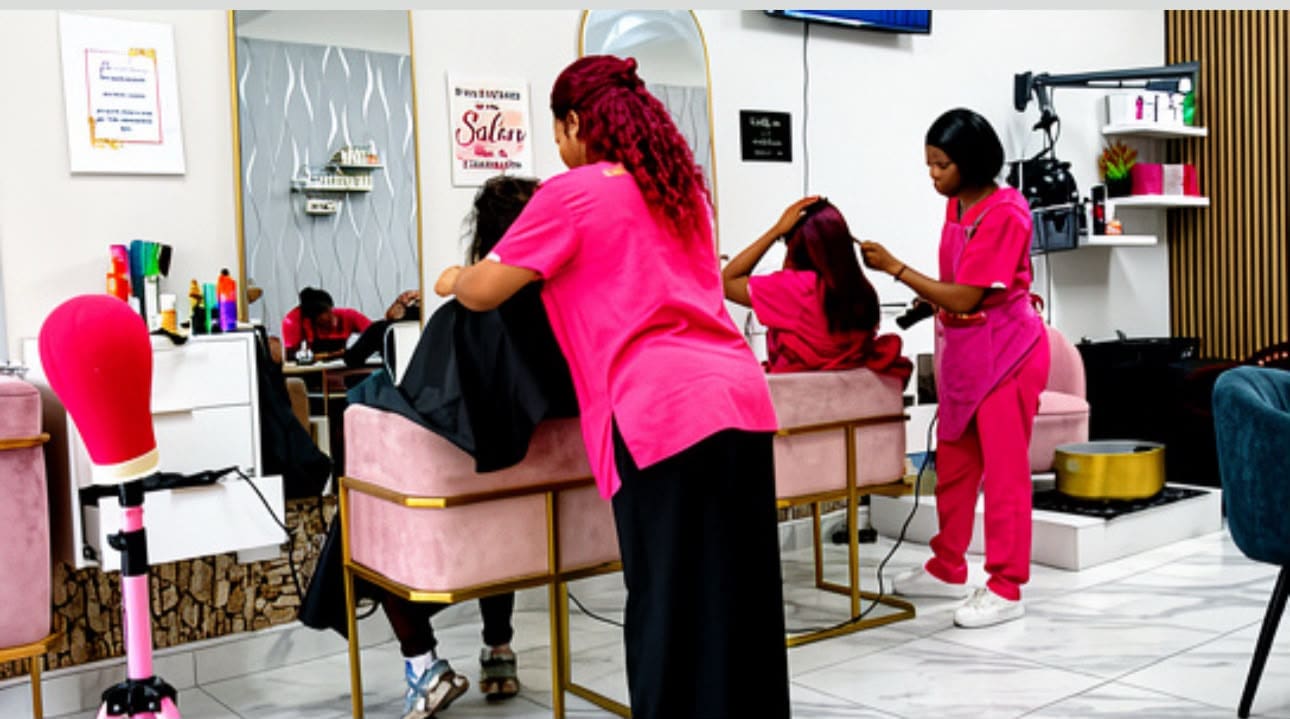
The City of Tshwane has launched a registration drive to help salon owners and beauty entrepreneurs to formalise their businesses by obtaining the permits and certificates required to operate legally under the city’s Informal Trading and Township Economy By-law.
Led by the city’s Economic Development Department, the drive comes after the closure of Navy House over non-compliance. Launched last Friday at the Sammy Marks Square Council Chambers in Pretoria, it forms part of the City of Tshwane’s broader Economic Revitalisation Strategy to help informal businesses comply with municipal regulations.
https://vutivibusiness.co.za/business/citys-blitz-on-popular-navy-house-exposes-compliance-failures/
Speaking during the launch, City of Tshwane Executive Mayor Dr Nasiphi Moya said the campaign is intended to help entrepreneurs understand compliance requirements rather than relying solely on enforcement.
“We are on a mission to ensure that businesses comply with municipal by-laws as set out in the Informal Trading and Township Economy By-law,” said Moya.
She added that municipal and SARS officials were available to provide guidance, answer questions and support business owners through every step of the registration process.
The initiative targets hair salons, barbershops, beauty therapists, nail technicians and other informal beauty businesses that often operate without the required permits.
What salon owners need
According to the City of Tshwane, businesses offering hairdressing, barbering, beauty and cosmetology services must obtain a salon permit before operating.
Applicants are required to submit several supporting documents, including a zoning certificate, certificate of occupancy, certified identity documents, a business layout plan, CIPC registration or an affidavit for sole proprietors, proof of residence, lease agreement or title deed, and a SARS tax clearance certificate where applicable.
The annual salon permit fee for the 2026/27 financial year is R948, effective from 1 July 2026 to 30 June 2027.
Salon owner Morongwa Mashotja, who attended the registration drive, said the initiative gave her a better understanding of the registration process and the importance of formalising her business.
“We have learnt a lot from the municipality about the importance of registering our businesses. We also learnt from our fellow colleagues who attended the session,” said Mashotja.
She said municipal officials guided her through the registration requirements, and explained the process on how to apply for a salon permit.
“I got help with the steps to take to register my business and information on how to get a permit. The annual fee is only about R950, and I am willing to register,” she said.
Mashotja said bringing registration services directly to business owners makes the process less intimidating and encourages entrepreneurs to comply with municipal regulations.
Compliance can unlock opportunities
Business development organisations have long argued that formal registration gives small businesses greater access to funding, supplier opportunities and government support programmes.
Registered businesses are also better positioned to apply for financial assistance through institutions such as the Small Enterprise Development Agency (SEDA), while formal documentation can improve credibility with customers, landlords and financial institutions.
The registration drive comes after concerns from many salon owners citing licensing requirements with uncertainty over which permits are required and which departments they need to approach.
By bringing officials directly to entrepreneurs, the city hopes to simplify the registration process while encouraging more businesses to enter the formal economy.
Industry stakeholders believe registration campaigns are more effective when combined with continued education, simplified application processes and ongoing business support.