












































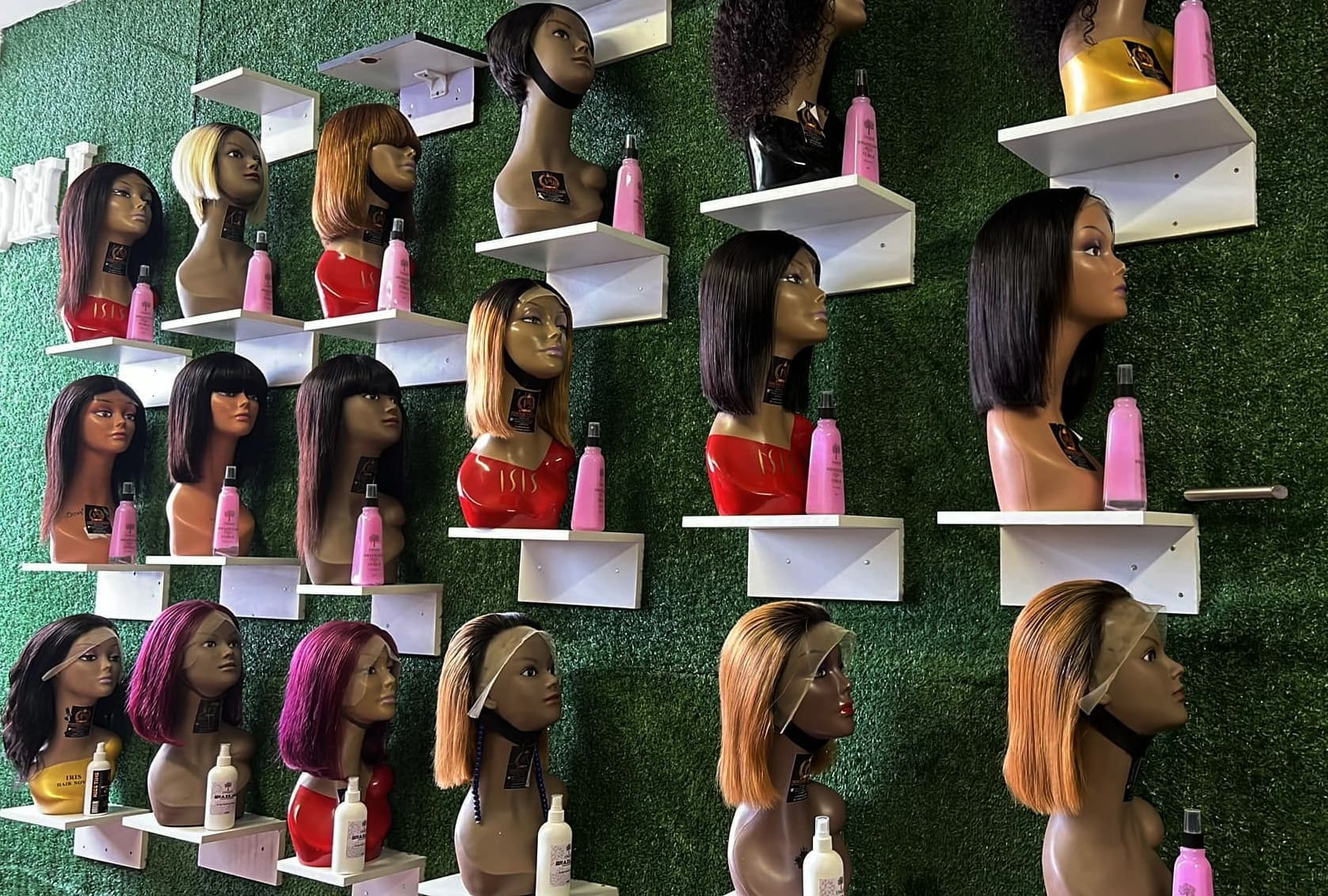
The recent shutdown of several beauty salons operating from the famous Navy House in Pretoria’s CBD has reignited debate about business compliance, informal trading, and enforcement in South Africa’s inner-city economy.
On Saturday, the City of Tshwane conducted an inspection operation at Navy House, a multi-tenant commercial building on Madiba Street known for housing dozens of small beauty businesses, particularly hair salons and braiding studios.
Navy House has become widely known as a high-density commercial building for small-scale entrepreneurs, particularly in the beauty and hair industry. The building reportedly houses dozens of salons operating in small rented spaces, often referred to as “stations” or “chairs,” forming a major informal trading ecosystem in the Pretoria CBD.
Its proximity to municipal offices has also raised questions about the visibility and enforcement of compliance regulations in the area.
Officials ordered several operators to cease trading after they were found to be operating without valid trading licences and other required municipal approvals.
Some affected salon owners told municipal officials and media observers that they were unaware that they needed trading licences to operate legally. Others said they had been running their businesses for years without receiving prior enforcement warnings or guidance from the municipality.
Their responses have sparked public debate about whether enough is being done to educate small business owners about compliance requirements before enforcement action is taken.
However, the City of Tshwane maintains that all businesses are legally required to comply with municipal by-laws before opening. According to the municipality, a trading licence is only issued once a business has met health, safety, zoning, and fire compliance requirements following inspection.
Broader compliance concerns
Beyond licensing issues, the operation has highlighted broader challenges within the informal economy. Some businesses operating in Navy House were reportedly selling snacks, beverages, and retail goods alongside salon services, which may require additional municipal permits depending on zoning and licensing rules.
Authorities also routinely inspect businesses for compliance with labour and immigration laws. Employers are legally required to ensure that all workers have valid documentation to work in South Africa, and failure to comply can result in penalties. However, enforcement is based on individual documentation checks rather than assumptions about nationality.
The shutdown has also revived discussion around tax compliance in the small business sector. While many informal businesses operate outside the formal tax system, this can place compliant businesses at a disadvantage and limit access to finance, contracts, and government support programmes.
At the same time, business development experts argue that many entrepreneurs remain informal due to limited access to information, administrative barriers, and a lack of structured support in transitioning into the formal economy.
City of Tshwane defends enforcement stance
The City of Tshwane has defended its enforcement actions, stating that trading licences and compliance inspections are necessary to ensure public safety, proper land use, and regulatory adherence.
Officials say enforcement operations across the CBD will continue as part of a broader effort to regulate informal business activity and ensure compliance with municipal by-laws.
The closures highlight growing tension between informal entrepreneurship and regulatory enforcement in South Africa’s urban economy. While many business owners cite a lack of awareness, authorities maintain that compliance is a public legal requirement that applies to all traders.
As enforcement intensifies, the incident underscores a key reality for small businesses: long-term sustainability depends not only on customers and skills but also on full legal and regulatory compliance.
What the law says about running a salon
Beauty salons in South Africa are required to meet a range of legal obligations to operate lawfully. These typically include registration with the Companies and Intellectual Property Commission (CIPC), compliance with South African Revenue Service (SARS) tax requirements, a municipal trading licence where applicable, health and hygiene compliance under municipal and national regulations, fire safety and building compliance certificates, and occupational health and safety standards.
These requirements are intended to ensure consumer safety, proper building use, and fair competition among businesses operating in the formal economy.