












































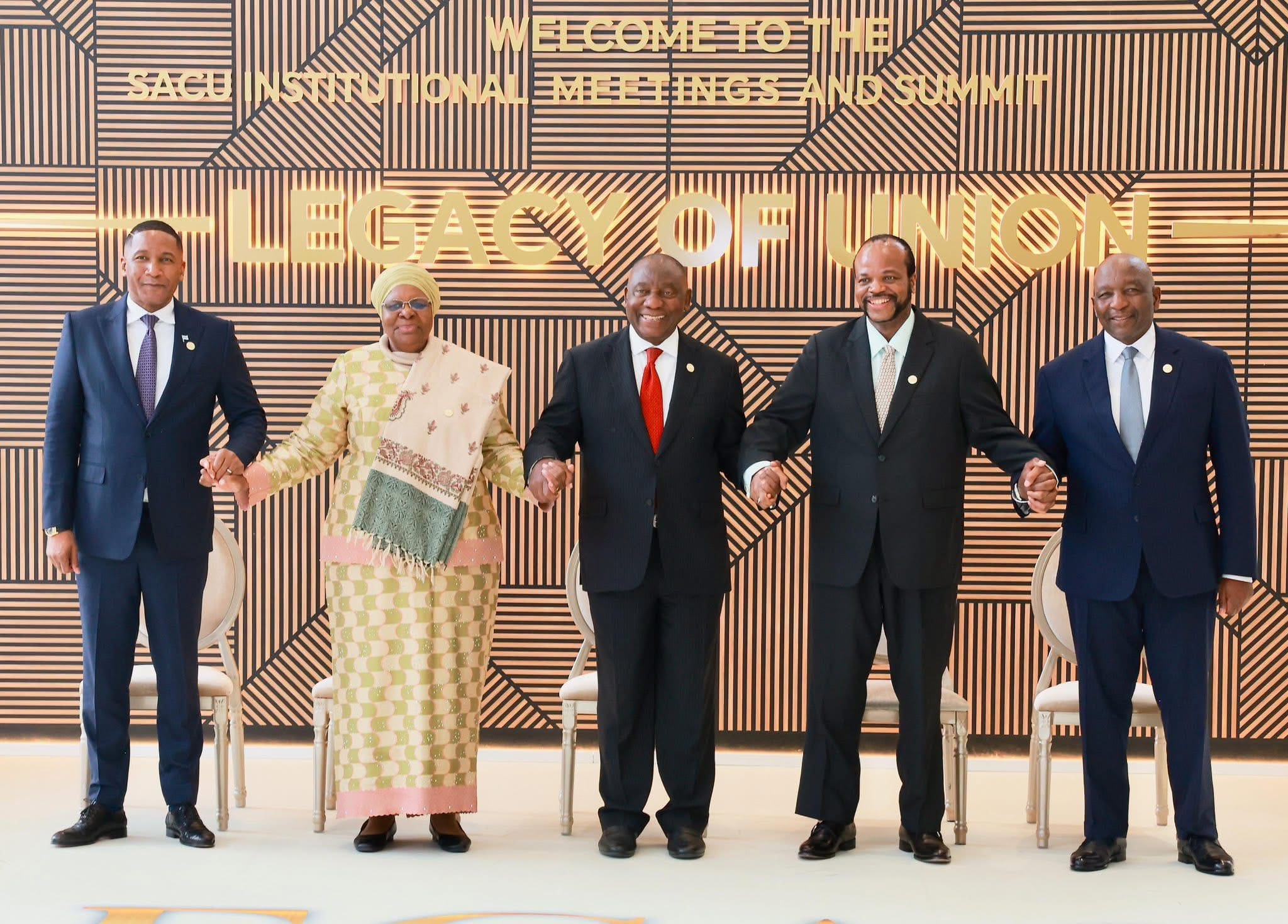
South Africa’s manufacturing small and medium enterprises must wait two years longer for the regional support promised under the Southern African Customs Union’s (SACU) industrialisation strategy after member states extended the bloc’s Strategic Plan from 2027 to 2029 because of funding constraints.
While this timeline adjustment represents standard bureaucratic paperwork for state entities, the delay exposes a persistent financing gap and postpones vital growth opportunities for smaller manufacturers seeking to expand into cross-border value chains.
The extension stems from a lack of financial resources to fund required soft and hard trade infrastructure. Consequently, core pillars of the highly publicised “re-imagined SACU initiative”, specifically the finalisation of a regional export strategy and a dedicated financing mechanism for industrialisation are officially behind schedule.
An uneven playing field on the shop floor
This two-year postponement directly affects high-value sectors that regional states intentionally frontloaded for development, including automotive parts, clothing, and green mineral beneficiation.
Under the broader continental framework of the African Continental Free Trade Area (AfCFTA), which opens up access to a market of 1.4 billion consumers and a collective GDP exceeding $3.4 trillion, these priority industrial hubs were designed to absorb local trade suppliers.
This operational lag contrasts with the idealistic messaging from state officials. Trade, Industry and Competition Minister Parks Tau stated that “by strengthening regional value chains, promoting investment, improving trade facilitation and supporting productive industries, we are laying the foundation for sustainable economic growth, job creation and shared prosperity across Southern Africa.”
However, the financial commitments lack immediate fuel.
President Cyril Ramaphosa declared that “industrialisation is the only durable path from commodity dependence to an economy capable of sustaining our growing populations,” asserting that “the next chapter in SACU’s history must be written not in customs schedules alone, but in factories that produce, laboratories that innovate, railways that connect our economies.”
The reality, however, is that the financial instruments required to back small industrial sub-contractors are delayed.
Large corporations possess the robust balance sheets and capital reserves to wait out prolonged policy timelines. Conversely, small-scale industrial operations require immediate invoice discounting, active trade finance, and predictable local procurement cycles to sustain their operations.
When state-backed industrial projects stall, the financial impact is felt on the factory floor. Industrialised SMEs often invest in specialised machinery and plant tooling years in advance to meet anticipated state contracts. Furthermore, upgrading compliance standards and securing required international health, safety, and testing certificates ties up substantial working capital.
When implementation timelines shift by 24 months, smaller firms carry the running costs of unutilised capacity and locked-up capital that their cash flows cannot easily absorb.
The realities of small scale manufacturing
Thamsanqa Gcabashe, founder of an automotive component manufacturing firm based in Rosslyn, Tshwane, said a two-year delay in state-backed project rollouts is a devastating timeline to absorb.
“For a small factory that has already invested heavily in precision tooling or compliance certifications to catch this cross-border procurement wave, we simply do not have the cash reserves to wait until 2029 for these contracts to materialise. We operate month-to-month on tight business overdrafts,” Gcabashe lamented.
Joseph Baloyi, owner of an agro-processing enterprise added that exporting value-added goods into neighbouring markets means navigating completely mismatched health and safety standard certificates.
“Without the promised regional financing mechanisms to help smaller producers upgrade testing facilities now, the commercial benefits will be absorbed exclusively by established conglomerates that already possess international frameworks and deep regulatory legal teams,” he said.
Operational bottlenecks at physical entry points further compound these constraints. Even with commitments to regional integration, administrative friction at major border posts remains an ongoing risk.
“A single day of processing delays due to unharmonised paperwork can entirely erase the profit margin of a cross-border delivery contract,” noted Lerato Nonyane, director of an independent freight forwarding firm operating near the Kopfontein border post.
“Until customs declarations and electronic transit mechanisms are fully integrated across all departments, small-scale transport operators will continue to carry the financial burden of border inefficiencies while the broader policy stalls.”