














































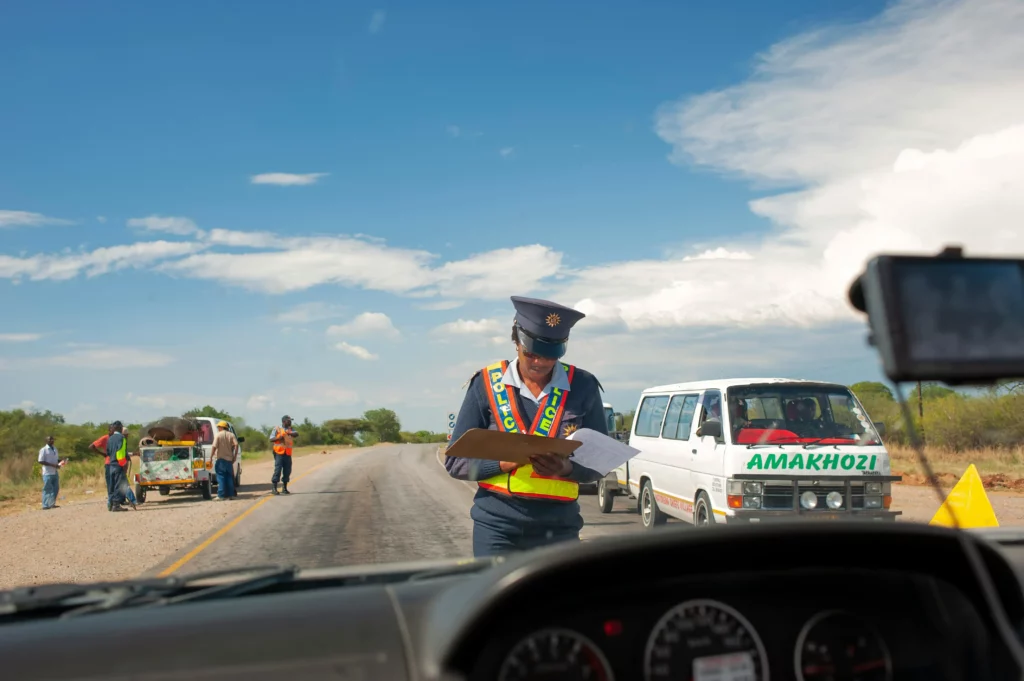
The national rollout of the Administrative Adjudication of Road Traffic Offences (AARTO) system is putting South Africa’s small transport and township delivery enterprises under intense operational pressure.
Designed to enforce road discipline through administrative penalties and driver demerit points, the legislation is exposing micro-fleets, fast-food couriers, and informal transport operators to severe financial risks where a single grounded vehicle can immediately halt daily revenue streams.
Unlike corporate fleets equipped with dedicated compliance teams, township-based delivery operators rely on lean setups and continuous vehicle availability.
Under AARTO, unresolved infringement notices rapidly escalate into enforcement orders.
These orders block the renewal of vehicle license discs and operator cards, stranding delivery motorbikes and light commercial vehicles off the road.
Road Traffic Infringement Agency (RTIA) spokesperson Monde Mkalipi emphasised that the primary responsibility for resolving notices or nominating responsible drivers rests squarely on vehicle owners.
“Vehicle owners and operators must take active responsibility for managing their fleet infringements,” Mkalipi stated. “If an owner fails to formally nominate the driver who committed the violation within the prescribed timeframe, the administrative liabilities remain against the registered owner.”
For small fleet managers, tracking who committed an offense on a specific route requires detailed logbooks that many micro-enterprises lack. Failing to nominate a driver means fine balances and demerit points accumulate against the business owner’s operator card, risking fleet-wide operator suspensions.
Nkosiyabo Bhengu, owner of a Soweto-based fast-food delivery micro-fleet, voiced concern over the administrative load.
“We run six bikes across day and night shifts, and drivers swap motorbikes depending on maintenance,” Bhengu explained. “If a fine arrives weeks late, tracing who was driving at that exact hour creates massive head-aches. If my operator card gets blocked because of a delayed nomination, my entire fleet stops working overnight.”
Demerit point threshold hits driver availability
The demerit point system presents an even greater long-term risk to driver availability.
Drivers who exceed the 15-point threshold face a mandatory license suspension of three months for every point over the limit.
For small delivery operators relying on a handful of licensed drivers, a suspended license immediately removes a crucial worker from the revenue pipeline.
Fines SA Chief Executive Officer Barry Berman warned that small transport operators who neglect fine tracking risk unexpected operational stoppages. “Managing traffic fines is no longer something small businesses can treat as an afterthought,” Berman said. “Under AARTO, unmanaged fines accumulate quickly. If a small operator loses a driver to a license suspension or cannot renew a vehicle disc due to an enforcement order, the business suffers immediate income loss while fixed overheads stay the same.”
Thandiwe Khumalo, who operates an independent parcel courier service servicing East Rand townships, noted that finding replacement drivers is costly. “Good, licensed drivers who know township routes are difficult to find,” Khumalo said. “If a driver loses their license due to demerit points even from driving their personal car off-duty, I lose an active delivery route. Small courier businesses cannot afford to keep idle drivers on payroll while waiting out a three-month suspension.”
Thin margins absorb compliance costs
The financial impact extends directly to bottom-line profitability. While paying an infringement within 32 days offers a 50 percent discount, micro-fleet owners operating on thin margins frequently lack the liquid cash flow required to settle fines promptly. As fines lapse, administrative fees accrue, quickly doubling the penalty cost.
Without affordable fleet management tools or dedicated compliance assistance, small operators face a double bind, absorb continuous administrative penalties or risk operating illegally with unrenewed licenses which is a dangerous choice that could permanently force micro-delivery fleets off South Africa’s roads.