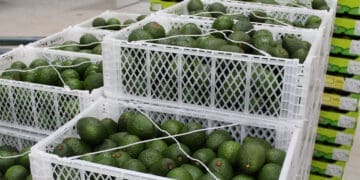










































South Africa exported a record 21 million cartons of avocados in 2026, a 16% increase on the previous year. But the bigger harvest has not translated into better returns for growers, as competition in export markets continues to squeeze profitability.
The pressure is exposing a growing challenge for the local avocado industry, producing more fruit is only part of the business. Growers also need to secure profitable markets and get their produce to buyers at a competitive cost.
Speaking at the South African Subtropical Growers’ Association (Subtrop) Marketing Symposium in Skukuza, Tracy Davids, director at the Bureau for Food and Agricultural Policy (BFAP), said even a relatively small decline in export prices could have a significant impact on farm income.
A R10 reduction in the price of a 4kg carton could reduce farmgate revenue by about R17,000 per hectare, she said.
Davids said higher freight rates and a stronger rand had eroded the benefit of slightly higher prices achieved in euros during 2026. This followed a 16% decline in avocado export prices in 2025, despite average annual price growth of 8% between 2021 and 2025.
Competition intensifies in Europe
South Africa remains heavily dependent on the European Union (EU) and United Kingdom markets, where local growers compete with fruit from Peru, Brazil, Kenya, Morocco and Spain.
The timing of competing supplies has become particularly important. South African growers have previously tried to send large volumes to Europe before Peru’s main export season, hoping to secure better prices.
Derek Donkin, chief executive of Subtrop said that the strategy did not work as expected during the 2026 season.
“Peruvian and Brazilian growers followed a similar strategy, so large volumes arrived early in the season at the same time as significant South African volumes. By week 17, the market was oversupplied and volumes remained high for a considerable part of the season, putting prices under pressure,” he said.
The overlap meant South African producers had to compete for buyers in a market receiving substantial volumes from several producing countries. Prices improved later in the season before Kenyan supplies entered the market.
Shipping delays add to costs
Competition is not the only challenge facing exporters. Moving perishable fruit through a supply chain where delays can disrupt delivery schedules and affect the condition of produce reaching overseas buyers is another challenge.
Trevor Dukes, chief executive of The Fruit Farm Group South Africa, said the company had experienced shipping delays through much of the 2026 season.
“We had to cope with shipping delays for most of the season, but at the end of the day we got the job done,” Dukes told FreshPlaza in an interview published on 5 November.
He said maintaining consistent weekly shipments to Europe after the market stabilised around week 26, had required considerable effort.
Local market absorbs part of the crop
Exporting remains central to the industry, but local buyers also absorb a significant share of production.
The National Agricultural Marketing Council (NAMC), citing South African Avocado Growers Association figures, reported that 51% of the country’s 157,590 tonnes of avocados produced in 2024 went to export markets.
The remaining 49% was sold through domestic channels, including fresh produce markets, retailers and informal traders, while some fruit was used by processors.
Dukes said The Fruit Farm Group would shift towards supplying the domestic market after completing most of its exports, with the remaining six to eight weeks of KwaZulu-Natal production destined for local consumers.
Donkin said South Africa had sent only small volumes to India and China during the 2026 season. India’s 30% import tariff remains a barrier, while access to China is complicated by phytosanitary requirements, including methyl bromide treatment.
Davids identified better yields, reducing alternate bearing and increasing the proportion of fruit suitable for export as important ways to strengthen farm returns.
Shipments to Russia, the United Arab Emirates and the Philippines are growing, but remain relatively small compared with traditional markets.