








































Unreliable municipal services are raising operating costs for businesses, with agricultural producers warning that failing infrastructure is putting production, jobs and investment at risk. The concerns come as South Africa enters a new period of coalition negotiations following the 2026 local government elections.
Izaak Breitenbach, general manager of the Broiler Organisation at the South African Poultry Association (SAPA), warned during a FairPlay Movement webinar that deteriorating municipal water, electricity and road infrastructure was threatening the competitiveness of poultry producers.
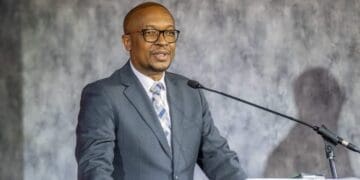
According to FairPlay’s report on the discussion, producers in some areas have had to contribute to, or take over, local water supply management to keep operations running. The scale of the problem was illustrated by Kibiti Ntshumaelo, managing director and principal civil engineer at Lekwa Consulting Engineers, whose presentation to the webinar warned about the lack of services.
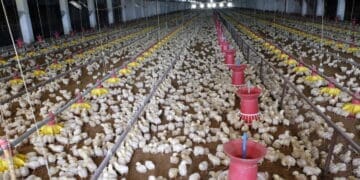
“A broiler house turns feed, water, air and electricity into protein. If one input fails for a few hours, birds die. If it fails for a few days, a business fails,” Ntshumaelo said.
Agribusiness organisation Agbiz has also highlighted the financial burden on rural businesses. In February, Agbiz chairperson Sean Walsh said failing municipalities add costs.
“Agribusinesses spend millions each year performing the functions that municipalities should fulfil. We do so because we have to, but it increases the costs and erodes our ability to operate sustainably,” he said.
Walsh identified interruptions to water and electricity supplies, as well as neglected roads and rail infrastructure, as major obstacles for agribusinesses operating in rural towns.
Business demands accountability
Business Unity South Africa (BUSA), Business Leadership South Africa (BLSA) and Business for South Africa (B4SA) also raised concerns about municipal governance in a joint statement issued in June.
The organisations called for Johannesburg’s infrastructure to be adequately funded and maintained, wasteful expenditure to be eliminated and service delivery to be measured against transparent indicators.
They argued that the city’s problems extended beyond party politics, stating: “This is not about which political party governs the City, it is about how it is governed.”
The business groups also called on political parties contesting the elections to present specific, costed plans to address Johannesburg’s financial crisis and restore municipal services.
Coalition negotiations under scrutiny
The Electoral Commission of South Africa declared the elections free and fair on 8 November, with national voter turnout reaching 52%. Of the 213 municipal councils, 127 were hung, leaving political parties to negotiate coalition arrangements.
Professor Raymond Parsons, an economist at North-West University Business School, said predictable political processes were important for investor confidence.
“Municipalities have become engine rooms of the economy that drive outcomes at the local coalface,” Parsons said in a statement following the election results.
He said coalition negotiations needed to prioritise stability if local economic development was to be maximised.
Parsons added that the incoming administrations would need to demonstrate that they could address the infrastructure problems affecting businesses and communities.
“Business cannot operate without dependable water, electricity, roads and logistics,” he
said.
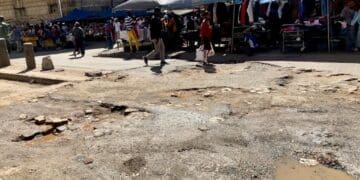
Photo caption: Unreliable municipal water, electricity and road infrastructure is adding
to operating costs for agricultural producers and other businesses.


