















































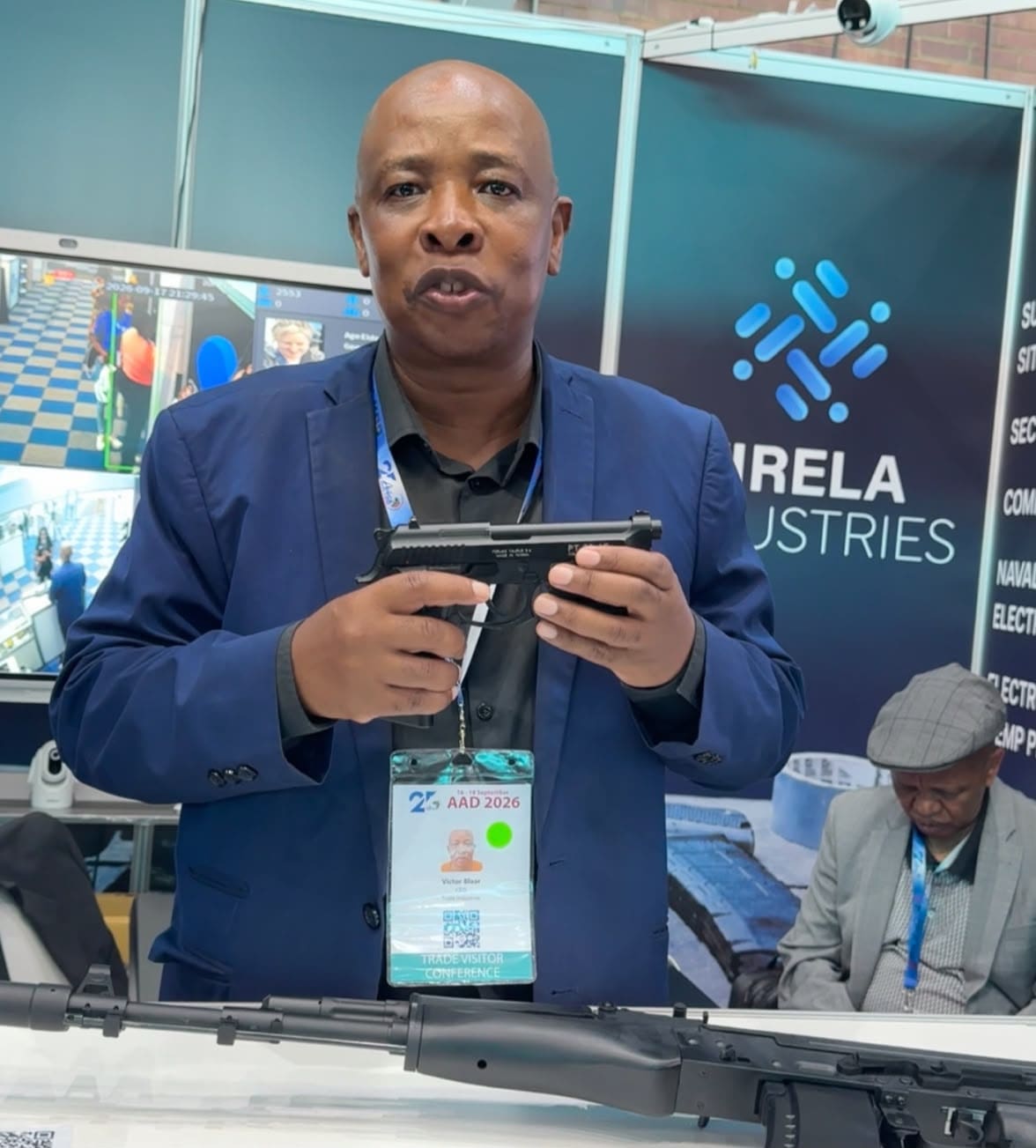
Behind South Africa’s better-known small business sectors is a less talked-about industry where entrepreneurs are developing technologies for the defence and aerospace market.
From geographic information systems and drones to firearm tracking, body cameras and cybersecurity, small businesses are building specialised products and services for an industry that rarely features in the mainstream SMME conversation.
However, the challenge extends beyond developing the technology for many of these entrepreneurs. They must navigate a highly specialised market, stringent regulatory requirements, limited funding and long procurement cycles to turn their innovations into sustainable businesses.
The gap between the technology being developed and the opportunities available to smaller companies became clear at the recent Africa Aerospace and Defence (AAD) 2026 exhibition, where South African SMMEs used the five-day event to showcase their innovations.
An industry outside the spotlight
Co-founder and managing director of Gemini GIS and Environmental Services, Andiswa Silinga, said the company, which was exhibiting at the AAD for the first time, was looking for opportunities. Silinga said the company wanted to leave AAD with more than exposure.
“We would like to receive a project from one of the people that we’ve met,” she said.
https://vutivibusiness.co.za/innovation/gemini-targets-aerospace-market-after-aad-debut/
However, converting a lead into a paying client takes time.
“In this technical sector, it takes a minimum of six to 12 months from the lead to the paying client,” Silinga said.
Tirela Industries founder and CEO Victor Blaar said AAD similarly allowed his company to connect with potential clients, suppliers and international partners.
Founded in 2012 by military veterans, Tirela develops and integrates defence technologies including firearm tracking, body-worn cameras, asset management and cybersecurity solutions.
Funding remains a barrier
While the AAD provided access to potential markets, funding remains a major concern for smaller companies.
“The biggest challenge that we have is funding. We need a hand up, not handouts,” Blaar reflected.
He said the government can help smaller defence businesses by creating procurement opportunities that allow them to build capacity and compete with established companies.
“If you look at the defence industry, you have big companies that have been there for many years. For an SMME to compete with those companies on price, it becomes very difficult,” he said.
Blaar said procurement opportunities should also be opened to businesses owned by military veterans, women and young people.
Silinga said Gemini also faced similar difficulties in accessing finance. She called for funding institutions to assist SMMEs working towards becoming financing-ready.
Gemini received support from the Department of Trade, Industry and Competition’s Aerospace Industry Support Initiative in 2018, with the programme covering 80% of the cost of equipment and training while the company contributed the remaining 20%.
A small business sector with a big footprint
The relatively low visibility of defence and aerospace SMEs contrasts with the industry’s economic footprint.
Trade and Industry Minister Parks Tau said at AAD that the AISI had supported 142 small and medium enterprises over the past decade, helping create and sustain more than 1,236 jobs and develop 148 technologies and products.
The programme generated about R381 million in local industrial output and more than R332 million in direct exports, while South Africa’s defence exports reached a record R10.1 billion in 2025. (Government of South Africa)
“Capital intensity, certification requirements and decades of concentrated ownership have kept these industries largely closed to black entrepreneurs and emerging enterprises,” Tau said. (DTIC)