









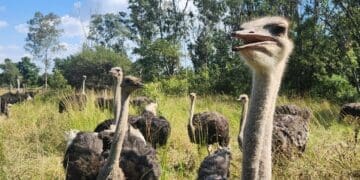


































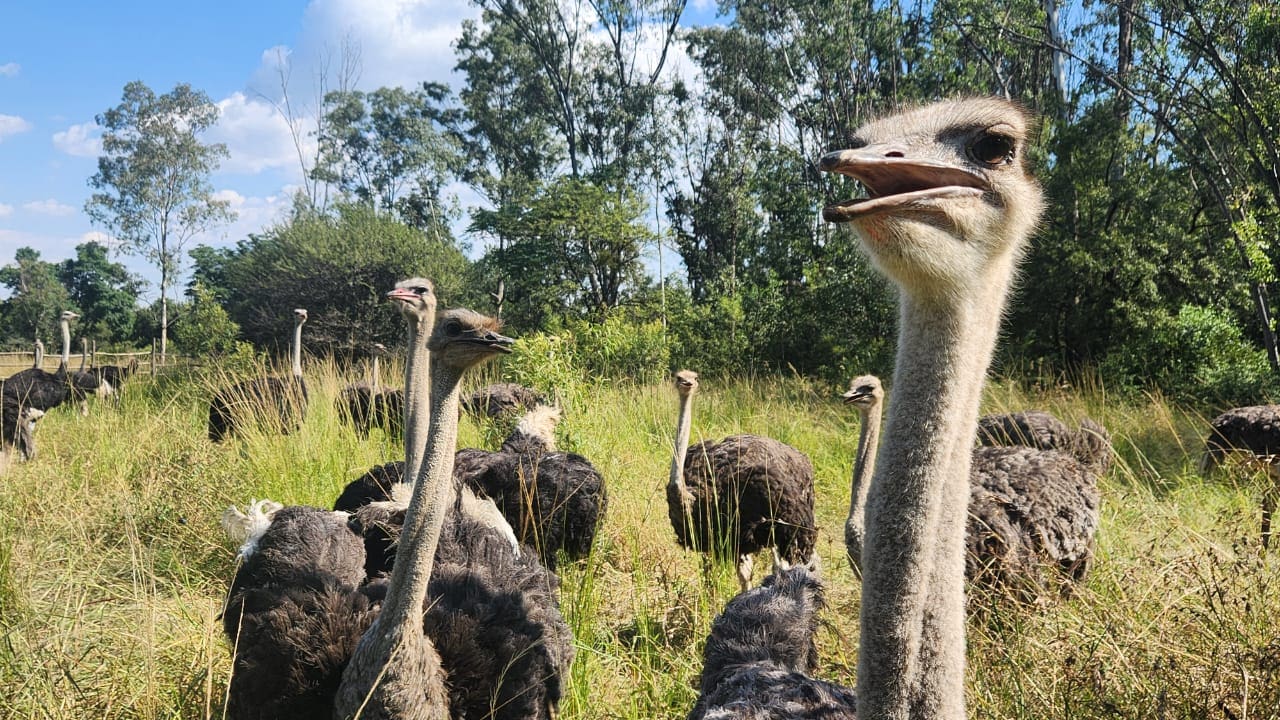
Nina Magobotla is the founder of Lenis Ostrich Farm, an agricultural business specialising in the production and sale of Black Neck ostriches and a range of ostrich-related products.
The 32-year-old entrepreneur, who was born and raised in Centurion, Pretoria, founded the business in 2013 while studying for a BA in Corporate Communications.
Lenis Ostrich Farm operates from two locations, with its customer walk-in centre situated in Randjesfontein Equestrian Estate in Midrand, Johannesburg, while its production holding is based in Tweefontien, Polokwane, Limpopo.
Magobotla said her interest in ostrich farming developed from her longstanding passion for business, agriculture and nature.
She travelled to Oudtshoorn in the Western Cape to learn more about the ostrich industry and subsequently decided to pursue the opportunity.
“I did my research and fell in love with ostriches and the practice of farming them, I was also excited by the possible business challenges I would face as a black female farmer to break this narrative,” she said.
Magobotla launched the business with financial support from her mother, Mpho Magobotla, and older sister, Lerato Magobotla, who remain minority shareholders in the company.
She said her late father, Lawrence Magobotla, also played an important role in shaping her entrepreneurial mindset and desire to build a lasting legacy.
However, entering the ostrich farming market presented significant challenges.
Magobotla said several suppliers were unwilling to sell her birds when she was starting out, forcing her to source ostriches from small-scale farmers and people who kept them as pets.
“I was being blacklisted every turn I took. Eventually, I had to purchase ostriches from small farmers around the country and those that kept them as pets to build my flock,” she said.
Today, Lenis Ostrich Farm has 142 breeding pairs and another 60 ostriches earmarked to expand its breeding groups. The farm produces between 300 and 350 chicks a month.
The business generates revenue through the sale of live ostriches across different age groups, chicks, fertile and unfertile eggs, ostrich feed, meat, feathers and shells.
Its customers include members of the public as well as international clients who import live birds and ostrich by-products.
Magobotla said customer education is an important part of the business, with Lenis Ostrich Farm also offering mentorship to customers who want to start their own ostrich operations.
She said her primary focus is to educate people first.
“We encourage people to start their own farms and we give a mentorship service to all our clients that purchase from us,” she said.
The business currently employs seven permanent workers involved in sales, administration and farm operations, as well as 10 temporary seasonal workers.
Magobotla said the business also aims to create opportunities for young people by exposing them to agriculture and encouraging them to pursue unconventional entrepreneurial opportunities.
Despite its growth, access to funding and land remains a challenge.
“Funding and acquiring land to expand our business practices are among the biggest challenges,” said Magobotla, adding that the business has largely had to fund its expansion privately.
She said the company has received business support and mentorship from entrepreneur Aubrey Tau, founder and owner of Moja Love and Tau Foods.
“Today I am the first black female ostrich farmer in South Africa without any support from the government. We are totally self funded,” she said.
Looking ahead, Magobotla wants to expand Lenis Ostrich Farm’s operations and encourage more people to enter the ostrich farming industry.
Her advice to aspiring ostrich farmers is to establish a clear business model, initially focus on two areas of the industry and ensure that veterinary, legal, land-use and building requirements are addressed before expanding.
“Start your Ostrich business today, it is possible!,” she said.
For Magobotla, the goal is not only to grow her own business, but to make ostrich farming more accessible while creating employment and developing new agricultural entrepreneurs.