





































More than 2,000 small businesses have benefited from procurement opportunities linked to the Tshwane Automotive Special Economic Zone (TASEZ), as the zone works to increase local participation in manufacturing.
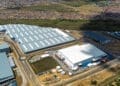
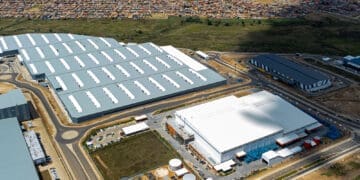
Located in Silverton, Pretoria, TASEZ is home to Ford’s Silverton plant and automotive component manufacturer Feltex Automotive Trim. The zone is aimed at strengthening the automotive manufacturing value chain and creating opportunities for local suppliers.
South Africa’s automotive industry is often associated with major manufacturers and large investments, but it also depends on smaller businesses supplying materials, components, transport, logistics, maintenance and other services.
Getting into this supply chain can help SMEs secure contracts, employ more people and grow their operations. However, access to finance, technology, skills and markets remains a challenge for many local businesses.
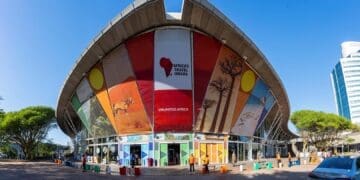
These opportunities came into focus during an industry tour of TASEZ, organised as part of the African Summit on Entrepreneurship and Innovation (ASENTI) 2026 in Pretoria.
The tour included visits to Ford and Feltex Automotive Trim, alongside a presentation by Msokoli Ntombana, TASEZ’s Business Development Executive responsible for attracting investment.
More than 2,000 SMEs benefit
Ntombana said 30,000 small and medium-sized enterprises (SMEs) had been trained in preparation for opportunities linked to the development, while 2,029 businesses had benefited from project procurement. Some had secured repeat contracts and continued working on later phases.
He said R1.7 billion had been ring-fenced for community construction procurement, with TASEZ achieving 43% against a 45% target.
Women-owned businesses accounted for 62% of reported procurement spend, black-owned businesses 80%, and businesses owned by people with disabilities 2%. These ownership categories can overlap.
The project also created 2,202 construction jobs. Women accounted for 18% of those employed, against a 10% target, while young people accounted for 60%, against a 50% target. Ntombana also cited an estimated 10,000 additional jobs across the supply chain.
Investment and support for local businesses
Ntombana outlined the government’s investment in the zone, including a national commitment of R2.7 billion and a provincial commitment of R617 million. His presentation also cited R1.12 billion for external infrastructure and R1.41 billion for internal infrastructure and top structures.
He said the zone became operational within approximately two years, with political support, a steering committee, an implementation agent and a community social compact helping drive its development.
The compact included a 70% local community employment preference, engagement with landowners, schools and transport operators, and enterprise development.
However, Ntombana identified a “lack of access to finance and credit”, technology, skills and markets as barriers facing entrepreneurs. He also stressed the importance of securing buyers, asking: “Do you have off-taker agreements?”
TASEZ supports viable projects through infrastructure facilitation, turnkey facilities, ICT, training and industry connections. Ntombana described its role as providing “the necessary infrastructure”. Businesses must have a viable business case, funding and letters of intent before infrastructure support can be considered.
Opportunities beyond vehicle production
At Feltex Automotive Trim, delegates saw how vehicle interior components, including dashboard outer sections and roof insulators, are produced.
Production specialist Treverse Mashego explained that employees are trained before being assigned to machinery.
“We don’t just take anyone. We don’t just allocate anyone,” he said.
The company also separates production offcuts for collection. Mashego said collection takes place every Wednesday.
“Every Wednesday, we collect it,” he said.
He indicated that around 40 bags of production waste are collected, sometimes more.
ASENTI 2026 highlighted the value of exposing African markets to South Africa’s automotive sector, its manufacturing capacity and the business opportunities it offers across the regional supply chain.