





























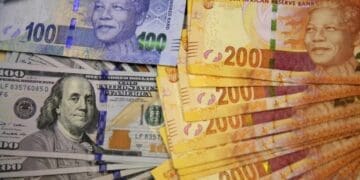















The rand has gained against the US dollar, reaching its strongest level in two weeks as the outcome of the US midterm elections, falling oil prices and South Africa’s municipal elections influence investor confidence.
The currency traded at around R16.35 to the dollar on Thursday, compared with R16.65 on Tuesday. The stronger rand offers some relief to businesses that import goods and services from overseas, as they need fewer rands to make payments to suppliers charging in dollars.
This comes at a time when many small businesses are struggling with high operating costs, including fuel, transport and stock prices. Importers buying machinery, electronic equipment, raw materials and other products from international markets could benefit from the improved exchange rate.
However, businesses that have already bought stock at higher exchange rates may not see an immediate reduction in their costs.
Andre Cilliers, currency strategist at TreasuryONE, said the rand had been supported by a weaker US dollar, firmer precious metals prices and improved appetite for emerging-market currencies.
US election result puts pressure on the dollar
The US midterm election outcome was one of the factors behind the rand’s improvement. The Democratic Party won both chambers of Congress, raising expectations of political gridlock in Washington for the remainder of President Donald Trump’s term.
Cilliers said investors were concerned that the outcome could limit the administration’s ability to push through its fiscal plans.
“Markets tend to read this combination as modestly dollar-negative, less fiscal stimulus reduces inflation and bond-supply concerns, while heightened political risk chips away at the dollar’s safe-haven appeal,” he said.
A weaker dollar generally supports emerging-market currencies such as the rand, as it makes these currencies more attractive to investors. The improvement in precious metals prices also added support, with gold rising as the dollar weakened.
Falling oil prices offer some relief
Oil prices also contributed to the improved market sentiment. Cilliers said oil had fallen by more than 10% to around $94 a barrel amid hopes that tensions between the US and Iran could move towards a resolution.
Lower oil prices are important for local businesses because fuel is a major part of transport and distribution costs. Businesses in agriculture, retail and logistics rely on fuel to move goods, deliver stock and serve customers.
Cilliers said the combination of a stronger rand and lower oil prices could help ease fuel costs and inflation if the changes continued.
“If sustained, lower oil prices and a stronger rand could translate into cheaper fuel and a better inflation outlook,” he said.
For small businesses, lower fuel costs could help reduce some of the expenses involved in running daily operations. However, the latest market movement does not mean that businesses will immediately see cheaper transport or deliveries.
Coalition stability remains key for investors
The municipal election results remain important to investors because they will determine how municipalities are governed and whether new coalition arrangements can provide stable leadership.
By Thursday evening, about 52.6% of voting districts had been counted. The ANC was leading the ward ballot with 31.6%, followed by the DA at 26.2%. These figures were still provisional, with the IEC yet to complete the counting and verification process.
The IEC set Friday, 6 November, at 5pm as the deadline for objections, with the final results expected to be announced on Sunday, 8 November.
Investors are looking for stable coalitions that can improve service delivery and address governance problems in municipalities. These issues affect businesses that depend on reliable water, electricity, roads and other municipal services.
Maarten Ackerman, chief economist at CAM Asset Management, said durable coalitions could improve investor confidence.
“We have seen in the past how unstable coalitions can undermine service delivery and governance. The market would therefore respond positively if the elections result in more durable coalitions that are able to govern effectively and begin turning around some of the country’s struggling municipalities,” he said.
The rand’s recent gains have therefore come against the backdrop of developments in both the US and South Africa, with global market conditions and local political stability remaining important to investor sentiment.