


















































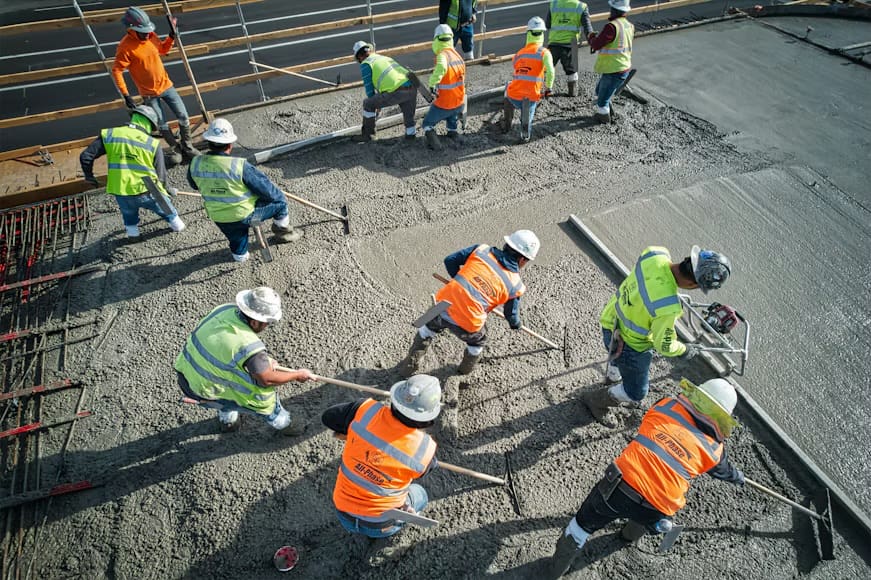
Small businesses could find new opportunities to supply building materials, transport equipment, provide maintenance and offer other services as government works to move infrastructure projects worth more than R207 billion towards implementation.
The project pipeline could open markets for small and medium-sized enterprises (SMEs) that want to supply public infrastructure projects or work as subcontractors to larger companies. The opportunities form part of government’s efforts to attract private investment, improve public services and strengthen economic growth.
Finance Minister Enoch Godongwana outlined the infrastructure plans when he tabled the 2026 Medium-Term Budget Policy Statement (MTBPS) in Parliament on Wednesday.
The Infrastructure Finance and Implementation Support Agency (IFISA), which began operating on 1 April 2026, is helping government institutions prepare projects and funding proposals to move infrastructure plans towards implementation.
Godongwana said infrastructure investment was central to government’s economic reform agenda, with public spending expected to deliver lasting benefits rather than simply increase expenditure.
“Our goal is not simply to spend more, but to spend better,” he said.
He said infrastructure spending should generate economic returns, attract private investment and improve people’s quality of life.
Infrastructure plans could create new markets for SMEs
The pipeline could create demand for businesses supplying cement, bricks, steel, plumbing and electrical materials, as well as transport, security, cleaning, catering and maintenance services. SMEs could also seek subcontracting opportunities from larger companies appointed to deliver projects.
Government’s public-private partnership pipeline contains 68 projects, including 31 at municipal level. Proposed changes to the Municipal PPP Regulations are intended to simplify procedures, reduce transaction costs and make it easier for municipalities to work with private companies.
These partnerships could create further opportunities for SMEs to supply goods and services linked to infrastructure development and municipal service delivery.
The Budget Facility for Infrastructure has approved more than R100 billion in fiscal support. Government has also raised more than R14 billion through its infrastructure bond since the first issuance in December 2025, with the proceeds earmarked for projects in the facility’s pipeline.
The funding mechanisms are intended to help move projects towards implementation. As construction and service delivery projects progress, smaller businesses could benefit from demand for supplies, transport, equipment and specialised services.
Business Leadership South Africa chief executive Busisiwe Mavuso welcomed government’s emphasis on fiscal stability, structural reforms and infrastructure investment. She said the priority was to turn the progress made through reforms into investment and economic growth.
Mavuso said faster economic growth was the best way to address unemployment and that every effort to accelerate delivery mattered, particularly structural reforms and infrastructure development.
She also welcomed the role of IFISA, the Budget Facility for Infrastructure, infrastructure bonds and municipal public-private partnerships in helping turn plans into delivered projects.
Better delivery could support business growth
The need to improve infrastructure delivery is highlighted by the R887 billion transferred by national government through infrastructure conditional grants to provinces and municipalities between the 2017/18 and 2023/24 financial years.
Despite the spending, some projects were delayed, left incomplete or failed to deliver their intended benefits. Government is reviewing the grant system to improve planning, accountability and oversight.
Godongwana said funds transferred to provinces and municipalities needed to result in completed projects, functioning infrastructure and reliable services.
Reliable infrastructure and improved municipal services can help businesses operate more effectively, while completed projects can create demand for local suppliers and service providers.
Mavuso also highlighted the importance of improving local government. She said requiring municipalities to demonstrate that their budgets were genuinely funded, alongside a review of the local government funding model, addressed problems that had prevented many municipalities from delivering services.
She said South Africa needed capable local government to achieve faster economic growth and that business was ready to assist government where it could.