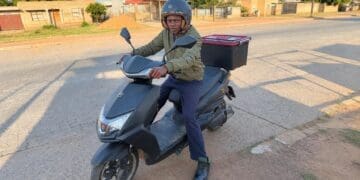

















































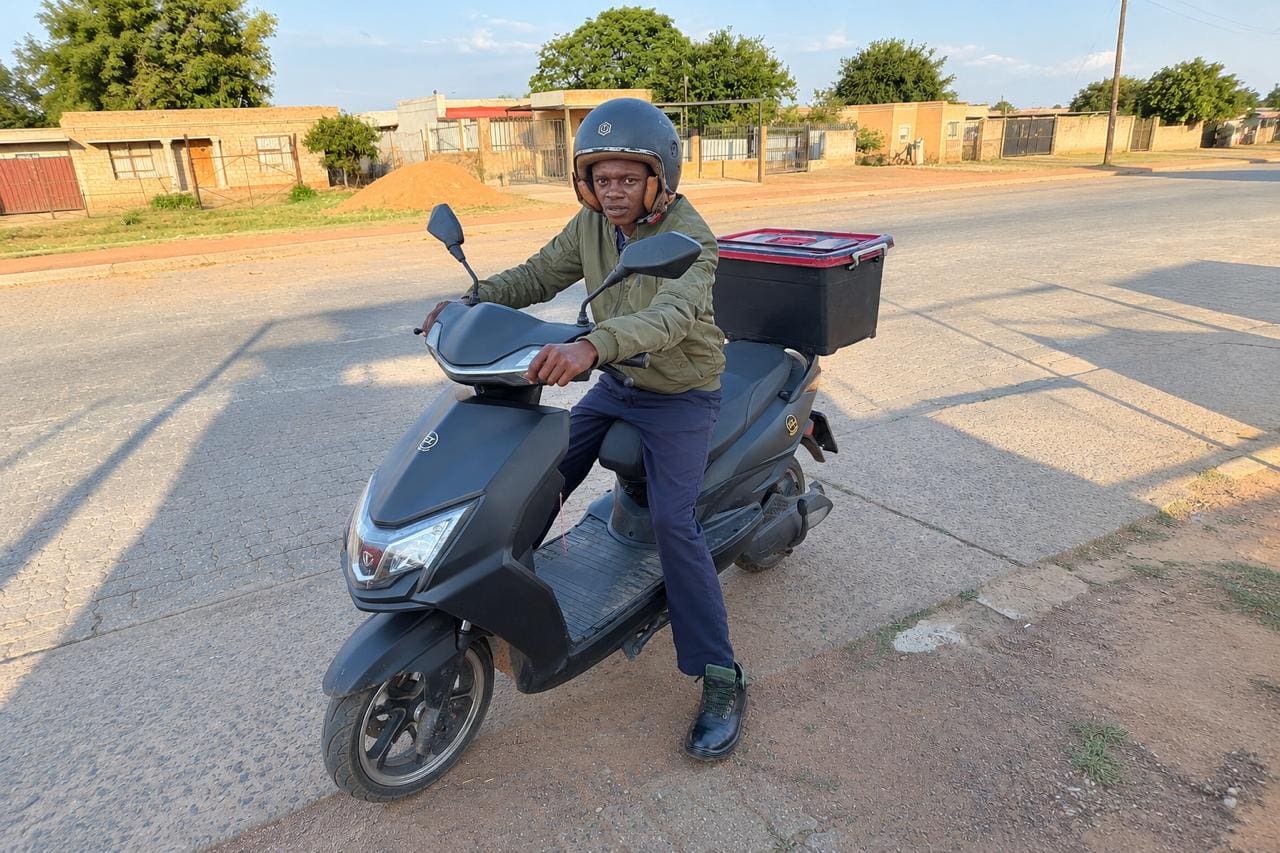
Young delivery entrepreneur Mduduzi Mahlangu, who lives in Mabopane in the City of Tshwane has turned to an electric bike to cut expenses in the wake of rising fuel costs.
Mahlangu works as a security guard at Tshwane North TVET College. He started offering delivery services as his side hustle early this year.
He provides delivery services in Soshanguve and surrounding areas to deliver items such as food from local businesses, medication, clothing, documents and other items.
He also works with other delivery companies, including Kazieats, which was launched in February 2026.
“Depending on one salary in this economy is not enough. A side hustle helps me cover day-to-day costs,” Mahlangu said.
Mahlangu decided to switch to an electric bike to lower his business expenses, particularly amid rising petrol prices. As a delivery entrepreneur, keeping operating costs low is important to ensure that his business remains sustainable and profitable. Using an electric bike allows him to reduce his reliance on petrol, which can help him save money on daily deliveries.
“An electric bike is cheaper to maintain and use, especially with fuel prices constantly rising, although it has a limited range per charge. Charging the bike is very cheap. It costs less than a cup of coffee because, per month, it can be just below R200, travelling about 60km daily,” Mahlangu said.
He believes the business is doing well, particularly since he started working with KaziEats and was introduced to several other delivery companies that he now works with. Through these partnerships, he can provide delivery services to many customers while earning additional income alongside his job as a security guard.
Despite the benefits of using an electric bike, Mahlangu faces challenges with battery life and charging time. The battery takes between three and six hours to reach a full charge, meaning he must plan his deliveries around the time needed to recharge it.
This can be inconvenient when he has deliveries as a low battery may limit how far he can travel before needing to recharge. Power interruptions, including load-shedding, can also make charging more difficult and potentially delay deliveries.
“Battery life and charging are challenges because you need to wait three to six hours for a full charge, which might be a problem during load-shedding or a power outage,” said Mahlangu.
Mahlangu also raised concerns about the poor condition of some roads he uses while making deliveries. He said the roads can damage the bike’s tyres and other components, forcing him to spend additional money on repairs and maintenance.
These unexpected costs can make it harder for him to reduce operating costs, while taking the bike in for servicing can also cost him valuable time that could otherwise be spent completing deliveries.
Despite these challenges, Mahlangu believes buying an electric bike was the right decision for him. He encourages other small businesses that deliver products to consider electric bikes to manage their operating costs.
“Small businesses would benefit from using electric bikes. With petrol prices going up, electric bikes are more convenient and can save them a lot of money,” Mahlangu said.