

































By Dikeledi Molobela
South Africa is positioning itself to become an active participant in the global artificial intelligence (AI) revolution, with plans to harness emerging technologies to attract investment, create jobs and strengthen the country’s economic competitiveness.
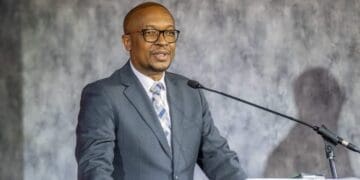
President Cyril Ramaphosa says South Africa wants to move beyond being a consumer of AI technologies and play an active role in shaping the future of the rapidly developing sector.
“We want to be part of this revolution that is taking place and be part of crafting it, and that’s why I brought 27 university postgraduates, who are well versed in AI and a number of startups from South Africa; about 24 of them.”
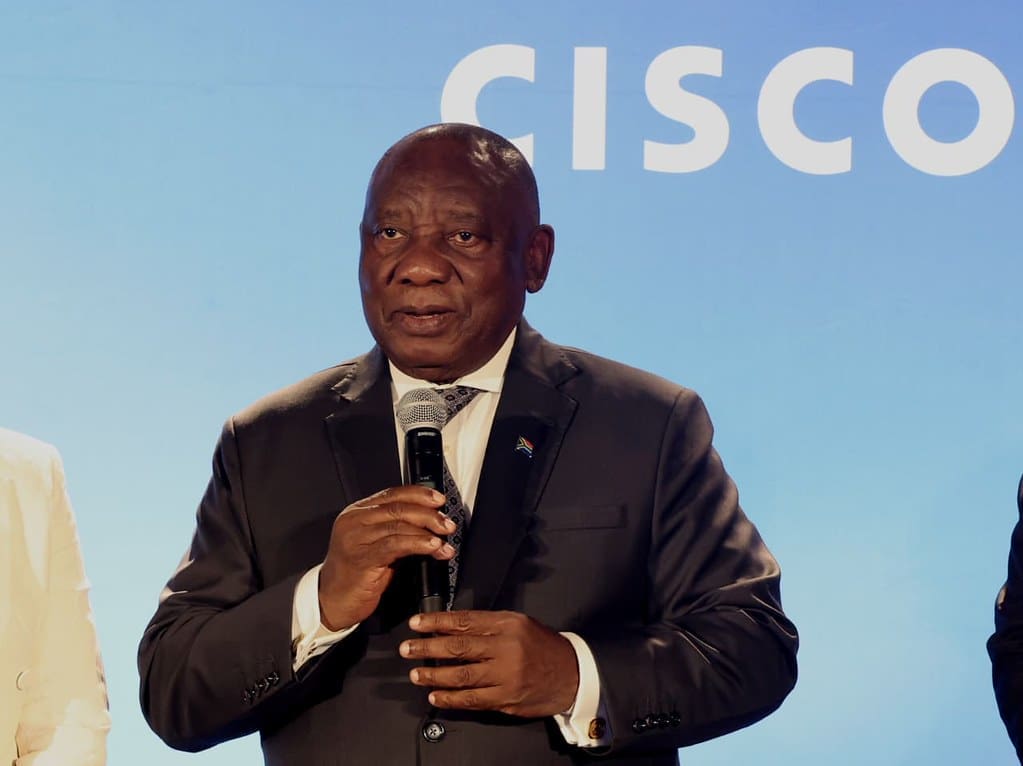
The President was speaking during a moderated conversation with ABC News Chief Washington Correspondent, Jonathan Karl, in Silicon Valley, California, where was leading a multi-stakeholder South African delegation on a high-level working visit from 15 – 21 November 2026.
The delegation comprising approximately 300 South Africans from government, business, academia, research institutions and the technology sector – was in the United States to engage global technology leaders, exchange knowledge and explore investment and partnership opportunities.
The visit sought to strengthen South Africa’s technological capabilities and position the country as a competitive AI hub on the African continent.
Ramaphosa said the delegation was on a journey of discovery to understand the technology, its potential applications and how South Africa could use it to advance its economy.
He highlighted the importance of using AI to support economic growth, improve education and healthcare, advance agriculture and increase productivity.
He said South Africa is particularly interested in ensuring that the adoption of AI contributes to job creation rather than job losses.
“We don’t want AI that is going to destroy jobs. We often see the risks that are inherent in AI as being job destroyers. We want AI to be a revolution that will help to create more jobs that will help us to have more advanced education and advance our economy, healthcare, agriculture, and a whole number of other disciplines, and to increase productivity in our country,” Ramaphosa said.
Data centres and investment
On the growing establishment of data centres in South Africa, Ramaphosa said the country has become an important destination for the infrastructure underpinning AI development. He noted that South Africa is now home to almost 70% of the data centres established on the African continent.
“… We have a number of US companies that have established or built data centres in South Africa, and there are some South African companies now that are doing so. We are now home to almost 70% of data centres that have been established on the African continent …”
He said this presents an opportunity for South Africa to participate more meaningfully in the development and application of AI, while ensuring that the technology also benefits the local economy.
The President emphasised that data centres should not only serve as storage facilities for information from different parts of the world but should also be used to advance South Africa’s development priorities.
The working visit included engagements with major technology companies, including Microsoft, as well as investors and emerging technology businesses.
“We’re also going to meet investors in companies. We brought emerging tech companies, and we want them to form partnerships, partnerships that will advance the development of digital technology and AI in South Africa.”
The delegation included Ministers from key government departments, including Finance; Trade, Industry and Competition, alongside postgraduate students and representatives of South African businesses.
The engagements also sought to encourage more United States companies to invest in South Africa, adding to the approximately 600 American companies already operating in the country.
While highlighting the opportunities presented by AI, President Ramaphosa cautioned against the risks associated with technology operating beyond human control.
He said South Africa supports the development of governance frameworks and international safeguards to ensure that AI remained accountable and served humanity.
“We should not have an AI future where humanity is the victim, [a future] that is [completely] out of the control of humans. We, therefore, agree with [assertions that] there needs to be governance. Let’s find a way where we can agree on some guardrails,” he said, while cautioning against undesirable outcomes, including the development of autonomous weapons. – www.vukuzenzele.gov.za