













































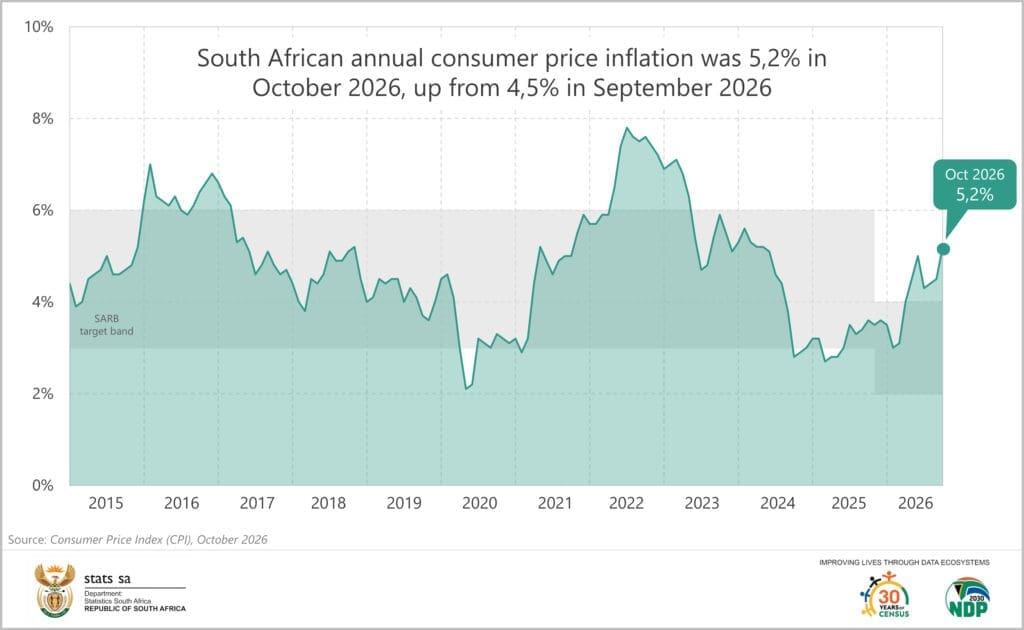
South Africa’s annual consumer inflation accelerated to 5.2% in October, with higher fuel prices driving transport costs upwards and adding pressure to businesses navigating weaker demand and supply-chain constraints.
Statistics South Africa (Stats SA) reported on Wednesday that headline consumer inflation increased from 4.5% in September, marking its highest level in almost two-and-a-half years.
The consumer price index increased by 0.7% between September and October, with transport inflation recording an annual increase of 15.2% and contributing 2.1 percentage points to the overall inflation rate.
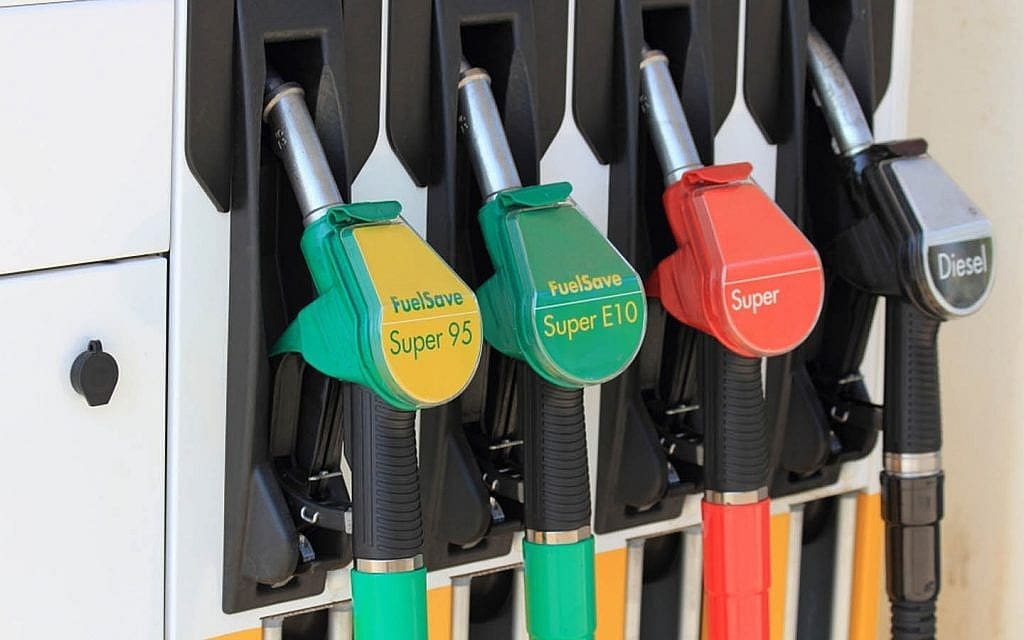
Fuel was the primary driver of the increase, with prices rising by 42.9% over the 12 months to October, compared with 27.9% in September. Fuel prices also increased by 11.8% between September and October.
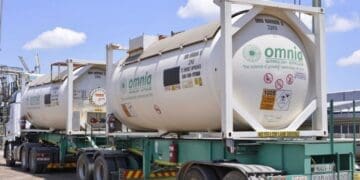
Businesses dependent on road transport, logistics and the distribution of goods, higher fuel prices add to operating expenses and create pressure on purchasing costs.
David Owen, principal economist at S&P Global Market Intelligence, said rising fuel prices had already affected purchasing costs and business activity.
“September’s downturn was also influenced by a sharp rise in fuel prices across the South African economy. This was the main driver of higher purchase costs, with purchase price inflation ticking up to the highest since June,” he said.
Owen said businesses were also experiencing changes in customer spending and delivery arrangements.
“There were also indications that customers had subsequently cut spending, while some vendors chose to delay deliveries until they could send items in larger batches. As global oil and fuel markets remain volatile due to the Middle East conflict, elevated prices may continue to dampen activity in the final quarter of the year.”
The comments followed S&P Global’s September Purchasing Managers’ Index (PMI), which fell to 49 from 50.5 in August, indicating a contraction in private-sector business activity.
Inflation outlook and consumer pressure
The latest inflation figures also raise questions about how higher fuel costs could affect the prices of other goods and services.
Food and non-alcoholic beverage inflation increased for a third consecutive month to 1.4% in October. Vegetable inflation accelerated to 8.1%, from 3.5% in September, while transport remained the largest contributor to headline inflation.
Standard Bank Group’s head of South African macroeconomic research, Elna Moolman, said the absence of convincing evidence that higher fuel costs were feeding into broader inflation was an important consideration for monetary policy.
“There has been no indication of worsening second-round inflation pressure in response to the fuel price shock, and oil prices have retreated,” she said.
Moolman added that the bank’s concerns about economic growth had increased relative to its inflation concerns.
“Since the previous MPC meeting, our growth concerns have increased more than our inflation concerns.”
Interest-rate decision in focus
The inflation figures come as the South African Reserve Bank’s Monetary Policy Committee (MPC) prepares to announce its final interest-rate decision of the year on Thursday.
The repo rate currently stands at 7.25%, following a 25-basis-point increase in September.
Moolman said the committee could nevertheless consider another increase if it remained concerned about the possibility of higher fuel costs spreading into broader inflation.
“While we expect the Sarb to pause, the committee may err on the side of caution by hiking again because it will likely remain concerned about the likelihood of second-round inflation pressure from the oil price spike,” she said
“The [central] bank will likely also be concerned about the potential inflationary impact of the rand’s recent relapse.”
The decision will be important because interest rates influence the cost of borrowing, financing and investment for businesses.