







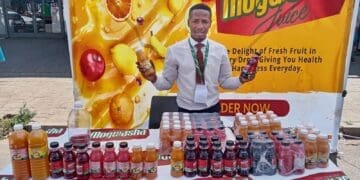







































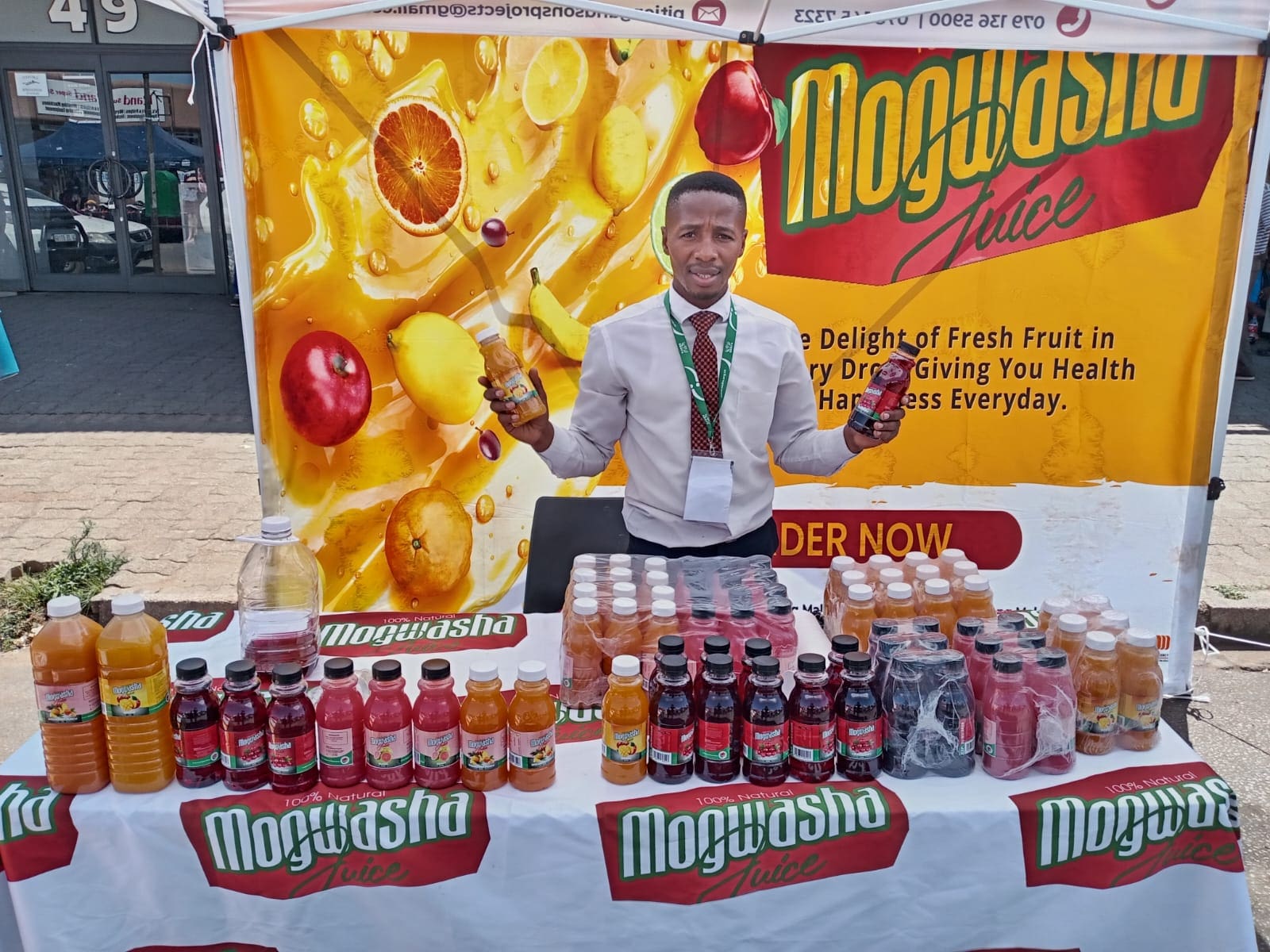
Malose Clifford, 29, founded Mogwasha Juice in 2017 while still a student and the business has since established a presence in retail outlets across Mokopane, Polokwane and surrounding areas in Limpopo.
Pitjeng, who hails from Ga Molekane village in Mapela, Limpopo, said he started the business, which operates under Pitjeng And Sons Projects (Pty) Ltd, with limited resources and a vision to build a South African beverage brand capable of competing in the broader market.
“I was inspired by my desire to become an entrepreneur, build something of my own, and create opportunities for myself and others,” he said.
Mogwasha Juice produces beverages in six flavours, mango, breakfast punch, cranberry, guava, apple and orange. Its customers include supermarkets, butcheries, wholesalers, filling stations and independent retailers.
Pitjeng said the brand has a presence in outlets associated with SPAR, Roots Butchery, Nesta Foods, Foodzone and Astron Energy.
The business uses social media, word-of-mouth, promotional activities and direct engagement with retailers to market its products and expand its distribution network. However, increasing input costs are putting pressure on the business as it seeks to scale up operations.
“Rising costs are a major challenge for small beverage manufacturers. The prices of ingredients, bottles, caps, labels, packaging materials, transportation, and production equipment affect our operating costs and ability to expand,” Pitjeng said.
Access to funding is another obstacle, particularly as the entrepreneur seeks to acquire modern machinery to improve efficiency and increase manufacturing capacity.

“Access to funding remains important because I want to acquire modern production machinery, increase manufacturing capacity, and meet the growing demand for our products,” he said.
Pitjeng said he manages these pressures through careful production planning, stock management, monitoring expenses and maintaining relationships with suppliers. He also reinvests in the business where possible while exploring funding opportunities and strategic partnerships.
Despite the challenges, he remains focused on growing the company and increasing its contribution to employment in the province.
Mogwasha Juice currently employs one person, but Pitjeng hopes to create additional positions in production, packaging, marketing, sales, quality control and distribution as the business expands.
“For me, business success is not only about making profits. It is also about creating opportunities for other people and contributing to the development of our communities,” he said.
His ambitions extend beyond the Limpopo market. He plans to strengthen the company’s distribution network, expand its product range and supply more retail outlets across South Africa, with the long-term goal of entering other African markets.
He added that building a competitive brand requires consistency, strong customer relationships and a commitment to product quality.
“I believe Mogwasha Juice should build its own identity rather than simply imitate other brands,” he said.
Pitjeng also encouraged aspiring juice manufacturers to research their target markets, develop business plans, understand food safety and regulatory requirements, and calculate production costs before starting operations.
“Start at a manageable scale and work with the resources available to you. Do not wait until everything is perfect before taking the first step,” he said.
For Pitjeng, the business represents an opportunity to demonstrate the potential of rural entrepreneurship while contributing to local manufacturing and economic development.
“Most importantly, remain patient and consistent. Building a business takes time, sacrifice, and determination,” he added.