












































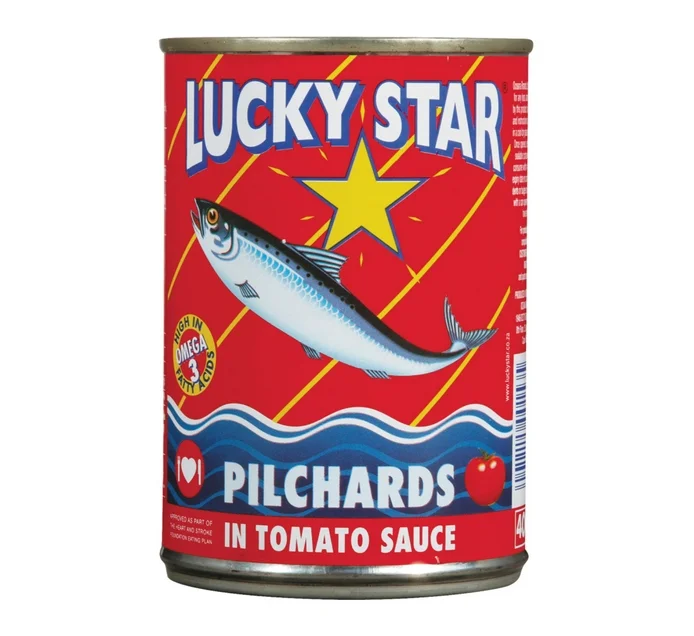
A shortage of frozen fish is putting pressure on Lucky Star’s production and sales, while processors and other businesses linked to the fishing industry are also dealing with limited supplies.
Oceana Group, which owns Lucky Star, said canned fish sales volumes fell by 9% in the 11 months to the end of August 2026, while total sales volumes declined by 5%.
Limited inventory meant the company could not fully meet demand for canned pilchards.
Local canning production also fell by 60%, increasing the cost of producing each unit because fixed manufacturing costs were spread across lower production volumes.
“Shortages of frozen fish raw material constrained canned pilchard availability and slowed sales momentum,” Oceana said.
The shortage is not simply a local sardine problem.
Brimstone CEO Mustaq Brey said about 85% of the fish used in Lucky Star cans is imported and that Oceana is being short-supplied worldwide.
Short supply hits processors
The pressure on fish supplies has also reached other processors.
In July, Michael Copeland, chairperson of the South African Pelagic Fishing Industry Association, said a shortage of sardines west of Cape Agulhas had forced several processors to exhaust their quotas and reduce production.
One West Coast processing factory had already stopped operating, while several others were expected to close by the end of July if additional quota was not made available.
Industry stakeholders warned that the shortage was putting pressure on coastal communities that depend on the small-pelagic sector for employment and income.
The sector includes businesses involved in catching and processing small pelagic fish such as sardines and anchovies.
The Department of Forestry, Fisheries and the Environment increased the sardine total allowable catch west of Cape Agulhas by 6,000 tonnes in July, taking the annual allocation from 30,500 tonnes to 36,500 tonnes.
Copeland estimated that the additional catch could generate about R500 million in direct, indirect and induced economic benefits.
He also said significant volumes of frozen pilchards are imported to meet market demand and that increased local catches could ease supply-chain constraints.
Lower production raises costs
The shortage is affecting more than the amount of fish available to canners.
Oceana said the 60% decline in local canning production pushed up per-unit costs because fixed costs were not fully absorbed.
Higher net realised selling values, lower freight and inventory holding costs, a better sales mix and increased volumes of locally caught pilchards helped offset some of the pressure.
Strong canned meat sales also partly cushioned the decline in canned fish volumes.
Inventory closed significantly lower than the previous period because of the constrained fish supply.
The pressure has also reached Oceana’s African fishmeal and fish oil operations. Production volumes fell by 73%, while sales volumes declined by 72%.
Oceana attributed the lower production to reduced industrial fish landings and fewer pilchard trimmings following lower cannery production.
The figures show how limited fish supplies can move through different parts of the value chain, affecting canning, processing and related operations.
Local sardine pressure continues
South Africa is also dealing with a sardine mortality event, although it should not be treated as the sole explanation behind Lucky Star’s shortage.
DFFE said on 21 September that no renewed widespread mortality had been reported, but a precautionary fishing measure remained in place.
Each fishing right holder may land no more than 25% of its outstanding 2026 directed sardine total until 2 October.
The department said strong winds had prevented recent fishing west of Cape Agulhas, while weather also limited fishing opportunities in Algoa Bay.
Only one sardine catch, totalling 26 tonnes, had been taken since the beginning of September.
Pilchard herpesvirus remains the strongest identified biological factor associated with the mortality event, according to DFFE.
For smaller businesses linked to fishing and processing, the length of the supply squeeze will matter. Transport operators, maintenance contractors, suppliers and other service businesses that depend on activity in the sector could feel the effects if production remains below normal.
Oceana said group revenue remained in line with the previous period while operating profit increased during the 11 months, helped by stronger performances from Lucky Star, its US fishmeal and fish oil business and wild-caught seafood.
The company is expected to release its full financial results by 26 November 2026.