












































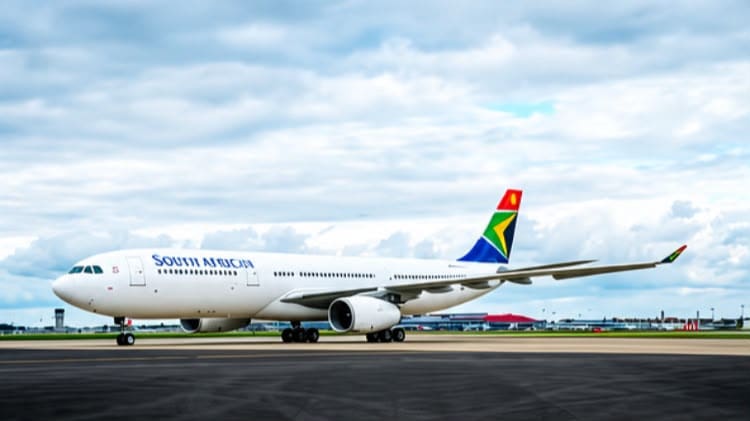
The expansion of the codeshare partnership between Emirates and South African Airways (SAA) is expected to strengthen South Africa’s tourism sector while creating new opportunities for small businesses that rely on domestic, regional and international travellers.
Announced on Wednesday, the reciprocal agreement allows Emirates to place its code on SAA-operated domestic and regional flights for the first time, adding nine routes across South Africa and neighbouring countries.
The agreement replaces the previous unilateral arrangement under which SAA placed its code on Emirates-operated flights between Dubai and Johannesburg, Cape Town and Durban, while providing travellers with access to 68 Emirates destinations worldwide via Dubai.
Under the expanded partnership, Emirates customers will be able to connect seamlessly to Johannesburg, Cape Town, Durban and Gqeberha, as well as regional destinations including Kinshasa, Gaborone, Windhoek, Lusaka, Harare and Victoria Falls.
Passengers will benefit from single-ticket bookings, coordinated flight schedules and through-checked baggage to their final destination.
New opportunities for tourism SMEs
The improved connectivity is expected to make it easier for international visitors to travel beyond South Africa’s major cities, creating opportunities for tourism-dependent SMEs including guesthouses, hotels, restaurants, shuttle operators, tour guides, car rental companies, travel agencies and local craft businesses.
Greater regional connectivity could also encourage visitors to extend their trips by combining South Africa with neighbouring destinations, increasing tourism spending across the region.
The partnership also strengthens Johannesburg’s position as a gateway into Africa, making it easier for business and leisure travellers to access multiple destinations through a single booking.
Emirates Deputy President and Chief Commercial Officer Adnan Kazim said the expanded partnership reflects the airline’s confidence in Africa’s long-term growth.
“This reciprocal codeshare partnership with South African Airways is a natural evolution of a relationship that has served our customers well for many years,” he said.
“By placing our code on SAA’s domestic and regional network, we are opening seamless access to destinations across South Africa and neighbouring countries. It reinforces our long-term commitment to South Africa and the wider region, and our confidence in the continent’s continued growth.”
Better connectivity supports business growth
Beyond tourism, improved air connectivity is expected to benefit entrepreneurs and SMEs by making it easier to travel between regional markets, meet clients, attend trade exhibitions and explore investment opportunities.
SAA Acting Group CEO Matshela Seshibe said the partnership marks an important milestone in the airline’s strategy to strengthen connectivity across Africa while enhancing access to global markets.
“The expansion of our partnership with Emirates marks an important milestone in SAA’s strategy to strengthen connectivity across Africa while enhancing access to global markets,” he said.
Seshibe explained that the agreement expands the relationship from a traditional point-to-point arrangement to a “beyond” partnership.
“It expands the codeshare from a point-to-point partnership to a ‘beyond’ partnership, so a customer will buy one ticket, check in once, with your luggage checked through to your final destination.”
He said stronger partnerships between airlines are becoming increasingly important.
“The future of aviation is not going to be built by airlines operating alone, but through connecting carriers to connect people, markets and opportunities.”
Seshibe added that combining SAA’s growing African network with Emirates’ global reach will strengthen Johannesburg’s role as a gateway for travel, trade and tourism while creating greater value for customers.
Emirates and SAA have partnered since 1997, making it one of the airline’s longest-standing commercial relationships. Emirates currently operates 56 weekly flights to Johannesburg, Cape Town and Durban.
For South Africa’s tourism and SME sectors, the expanded partnership is expected to improve market access, attract more international visitors and support businesses that depend on a growing flow of travellers across the region.