





































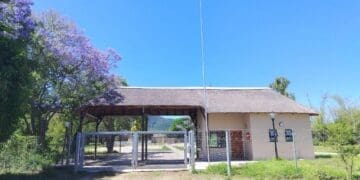






In Bende village outside Pafuri Gate, piles of dry leaves, plastic bottles and discarded organic waste are being transformed into products designed to solve two challenges at once: unemployment and environmental waste.
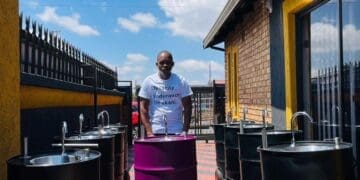
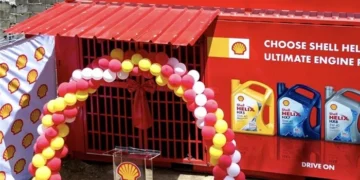
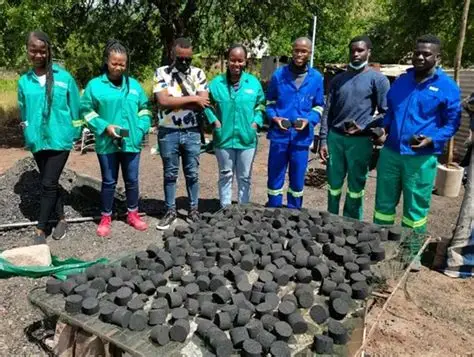
The Dziphathu Green Tech Bio Briquette Project has received infrastructure and equipment support worth R800 000 from SANParks and Total South Africa, helping to expand operations that convert waste into eco-briquettes for cooking and heating.
But beyond the handover ceremony lies a more difficult business question: can community green enterprises become commercially sustainable businesses rather than donor-supported projects?
The answer may determine whether initiatives like Dziphathu become long-term rural employers or short-lived development experiments.
From waste collection to value creation
At the centre of Dziphathu’s model is the idea that materials traditionally treated as rubbish can become economic inputs.
The enterprise collects leaves, twigs and other organic waste to manufacture eco-briquettes. It has since expanded to include paving bricks made from recycled plastic and handmade brooms made from repurposed soft-drink bottles.
Phathutshedzo Mudau, the founder of the project, said the shift happened after recognising that waste streams themselves could create economic opportunities.
“We started seeing that what communities throw away still has value. The briquettes provide an alternative energy source while the recycled products create additional income opportunities. We wanted to create something that links environmental responsibility with livelihoods.”
The project also creates opportunities for local collection networks where community members gather recyclable materials that feed production.
“Our goal is not simply to produce goods. We want people to see waste collection as economic participation, when communities begin earning from collecting materials, recycling becomes part of local development.” Said Mudau
Tourism may become the missing market
While production capacity matters, market access could prove more important. Situated near the Pafuri tourism corridor, the enterprise hopes that proximity to visitors and tourism operators creates demand for environmentally conscious products.
Kruger National Park communications manager, Reynold Thakhuli, said support for enterprises like Dziphathu forms part of broader efforts to strengthen economic participation in communities neighbouring protected areas.
“We are supporting initiatives that combine conservation outcomes with enterprise development; the objective is not only environmental awareness but creating opportunities for communities to participate meaningfully in local economic activity,” Thakhuli said.
Tourism-linked demand may provide an important test. Eco-lodges, guest facilities and visitors increasingly seek products that align with sustainability goals, creating opportunities for locally manufactured alternatives.
Experts say funding is only the beginning
Small business and circular economy specialists warn that many community projects struggle after grant funding ends. Access to customers, logistics, pricing and consistent demand often become greater challenges than obtaining equipment.
Independent SMME development consultant Samkelo Mbangul said long-term sustainability depends on building predictable markets.
“Development support can unlock production, but customers ultimately sustain businesses. Green enterprises need repeat buyers, distribution channels and strong operational systems if they want to scale.”
Mokoena also said projects that combine environmental outcomes with clear commercial value tend to perform better over time.
“Products must compete on usefulness and affordability, not only on their social impact.”
South Africa’s transition to a greener economy is creating new conversations around how rural communities generate income.
For businesses like Dziphathu, success may ultimately be measured less by the value of donated infrastructure and more by whether waste collection can become a functioning local economy.
If that happens, enterprises built around leaves, plastic and discarded materials may become examples of how rural communities build businesses from resources that were once overlooked.