














































A new agricultural trading hub in Mpumalanga is expected to connect thousands of small-scale farmers to domestic and international buyers, potentially transforming subsistence agriculture into sustainable businesses.
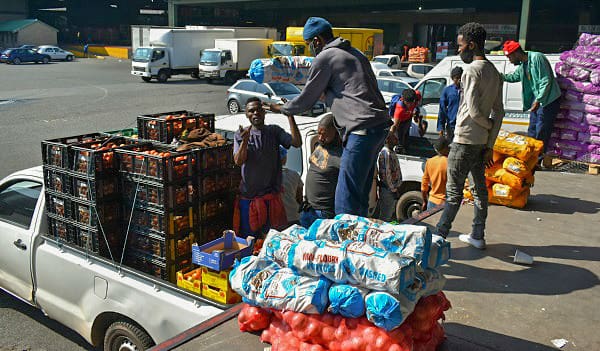
The Mpumalanga International Fresh Produce Market is being developed as a central marketplace where farmers can sell fruit, vegetables and other produce directly to wholesalers, retailers and exporters.
Provincial officials say the facility is expected to create 156 jobs on the market floor, while opening trading opportunities for about 150,000 subsistence and small-scale farmers across the province.
The project forms part of the Mpumalanga Provincial Government’s strategy to expand agricultural exports and strengthen participation of small enterprises in the province’s food economy.
Turning subsistence farming into viable businesses
For many farmers in rural Mpumalanga, accessing formal markets has long been one of the biggest barriers to growth. Without stable buyers or logistics networks, many small-scale producers remain trapped in subsistence farming.
Farmer organisations say the new market could change that. Sibusiso Mabuza, a small-scale vegetable farmer from Mbombela, said the structured trading platforms are critical for small producers seeking to scale their operations.
“Markets like these are important because they bring buyers and farmers into the same space. When farmers have guaranteed market access, they can plan production, invest in better inputs and operate as businesses rather than survival farmers,” Mabuza said.
The market will allow farmers to sell produce through registered trading agents, wholesalers, and export buyers operating within the facility.
Opportunities for SMEs across the value chain
Beyond primary production, the market is expected to create opportunities for SMEs across the agricultural value chain.
Small businesses could participate in produce aggregation and distribution, transport and logistics services, cold storage and warehousing, packaging and branding, and export facilitation.
According to provincial estimates, about 1,600 SMEs could benefit from trading opportunities linked to the market.
Dr Siyabonga Ndlala, from the South African Farmers Development Association (SAFDA), said the facility could help bridge the gap between small producers and formal retail markets.
“Many emerging farmers struggle to access large buyers because they lack the infrastructure or volumes required. A central market allows farmers to combine supply and meet the demand of larger buyers,” Ndlala said.
How farmers can participate
Farmers interested in trading through the Mpumalanga International Fresh Produce Market will need to follow several steps once the facility becomes operational.
According to agricultural organisations, participation will generally involve:
Registration: Farmers must register as producers with the market authority or through approved trading agents.
Quality compliance: Produce must meet the grading, packaging and food safety standards required by buyers.
Logistics coordination: Farmers will either deliver produce directly to the market or work through cooperatives and aggregators that transport produce from rural areas.
Market participation: Produce is sold through traders, wholesalers or auction-style trading platforms operating within the facility.
Farmer organisations say training and extension support will be essential to help small producers meet these requirements.
Export ambitions, skills and job creation
The market is also designed to support agricultural exports from Mpumalanga by linking farmers to international buyers. Officials said the facility will serve as an aggregation hub where produce from across the province can be sorted, graded and prepared for export to regional and global markets.
Industry stakeholders believe this could position Mpumalanga as a stronger player in South Africa’s fresh produce sector.
In addition to supporting farmers, the market is expected to generate employment in areas such as produce handling, logistics, quality control and market administration.
Agricultural organisations say the facility could also create opportunities for youth entrepreneurs, particularly in logistics, digital trading platforms and agricultural services.
For many small farmers, however, the biggest opportunity lies in something simpler: reliable market access.
“If farmers know there is a market waiting for their produce, they can farm with confidence; that’s what ultimately turns small farms into real businesses,” said Mabuza.