















































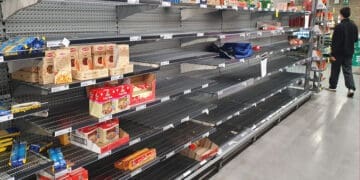

Small businesses say the latest fuel price increase has pushed them into one of the toughest trading weeks of the year, with many adjusting operations overnight to protect shrinking margins.
The Department of Mineral and Petroleum Resources announced the adjustment of fuel prices based on current local and international factors, with effect from December 3.
The department noted that the country’s fuel prices are adjusted monthly, informed by international and local factors.
It also highlighted that international factors include the fact that the country imports both crude oil and finished products at a price set at the international level, including importation costs and shipping costs. among others.
The higher fuel cost has filtered quickly through transport, stock collection and generator use, creating a ripple effect that entrepreneurs say is impossible to ignore.
In Johannesburg’s inner city, delivery-based businesses were the first to feel the strain. Courier operator Mpho Matlala said the increase forced him to reduce the number of daily rounds he completes.
“I plan my routes like a puzzle now because every unnecessary kilometre costs me,” he told Vutivi Business News. “I used to take small, once-off jobs without thinking about it, but now I have to calculate if the fuel is worth the attempt.”
Retailers who travel to wholesalers for stock are also tightening their movements. Soweto shop owner Lindiwe Mkhabela said she has changed her stock buying pattern entirely.
“I used to go to the cash and carry twice a week, but now I stretch it as far as possible,” she said. “If I make too many trips, the fuel cost wipes out the profit.”
Businesses that rely on generators during power cuts have been hit even harder. Small butcher and cold meat supplier Joseph Ramathe said generator use has become his biggest operational risk.
“A few months ago, I could still manage it, but the new increase is frightening,” he said. “If the power goes off for hours, the generator protects my stock, but the fuel bill destroys my profit.”
Economist Thandi Mavuso said the impact on SMEs is direct because they absorb rising transport costs long before consumers feel them.
“Fuel increases raise the cost of moving goods, collecting stock and operating backup power,” she said. “Small firms have limited room to adjust prices and often take the financial hit immediately.”
The challenge for many entrepreneurs now is endurance while hoping for a more favourable adjustment next month. Matlala said the increase has changed his outlook for the festive period.
“I expected my busiest season to start now,” he said. “Instead, I am trying to figure out how to cut costs without losing customers.”
Mkhabela said even a small reduction would give her room to plan.
“The fuel price decides everything,” she said. “If it comes down, we can breathe. If it climbs again, I do not know how far we can stretch.”
With thin margins and unpredictable costs, small businesses say the latest increase has become a reminder of how vulnerable they are to global price movements. Many enter December hoping that the pressure eases before it becomes unsustainable.
lazola@vutivibusiness.co.za