

















































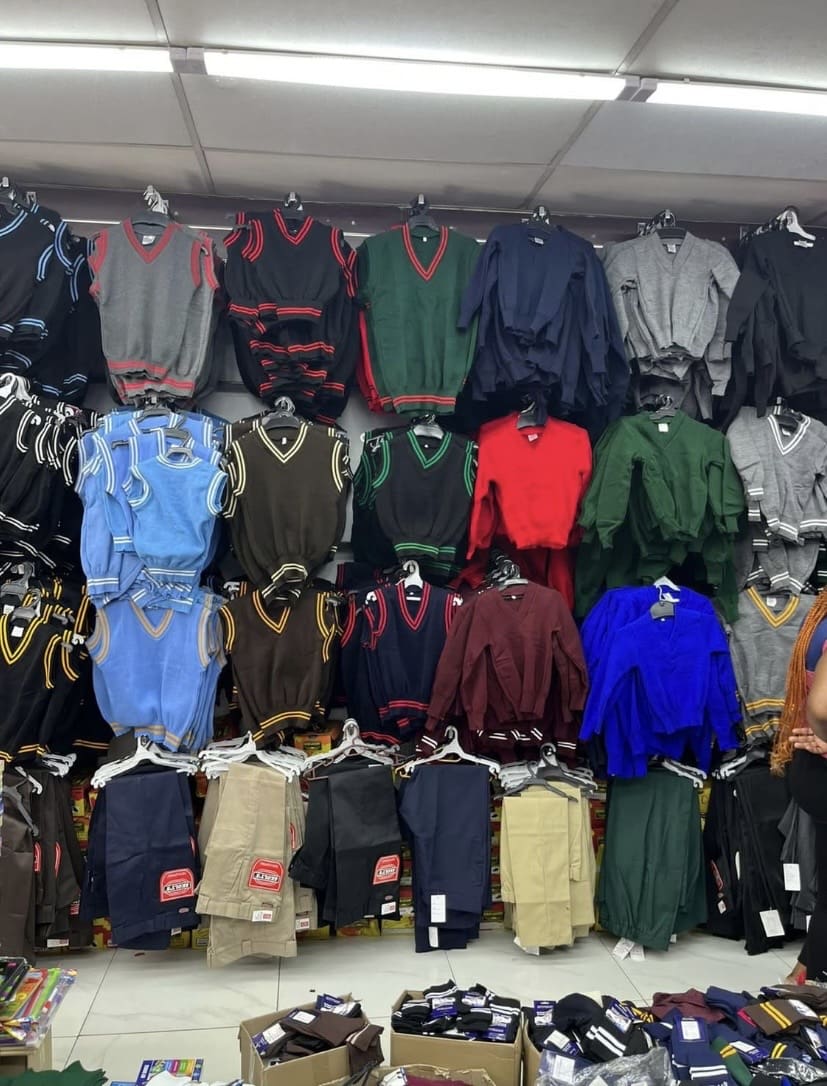
January’s back-to-school season is once again placing pressure on small retailers, as rising education costs collide with constrained household budgets and aggressive pricing from national chains. While demand for uniforms and stationery remains steady, township retailers say the way parents are spending has shifted, making the period more financially demanding than previous years.
Retail analysts say the pattern reflects broader household pressure. Economist Thandi Mavuso said January spending is being shaped by weak disposable income growth. “Education costs are non-negotiable, but households are stretching payments across time. That directly affects small retailers’ cash flow,” she said.
Competition from national retail chains continues to weigh heavily on township businesses. Large retailers are offering bundled uniform deals, extended lay-by options and loyalty discounts that smaller traders struggle to match. While township shops benefit from convenience and proximity, they often absorb higher per-unit costs from wholesalers.
A stationery wholesaler supplying small shops in Gauteng said traders are ordering smaller quantities this year. “Retailers are cautious. They don’t want to overstock because January money moves slowly,” he said.
Uniform sellers and stationery traders report that customers are prioritising compulsory items while spreading purchases over several visits. This has slowed cash turnover at a time when small businesses rely on rapid sales to recover December stock investments.
A basic primary school uniform set now costs between R450 and R700 at township retailers, depending on fabric quality and supplier pricing. Stationery packs range from R250 to R500 for primary school learners, while high school packs can exceed R800 once calculators and specialised items are included. Retailers say these costs reflect higher fabric prices, transport expenses and electricity tariffs passed down the supply chain.
Soweto-based uniform trader Zanele Dlamini said parents are increasingly selective.
“Most customers start with shirts and trousers. Jerseys and blazers come later, if they come at all,” she said. “That means stock stays longer on the shelves.”
Stationery trader Kabelo Moeketsi in Tembisa said sales volumes are stable but transaction sizes have fallen. “People buy what the school checks first. Pens and books sell every day, but full packs move slower than before,” he said.
Parents confirm that back-to-school spending has become fragmented. Alexandra resident Thabiso Mokoena said households are forced to stagger purchases. “You can’t buy everything at once anymore. Transport, food and school fees come first, then uniforms,” he said.
Some small retailers are adapting by focusing on fast-moving essentials and reducing exposure to slower items. Others are renegotiating supplier terms to ease payment pressure during the first quarter of the year.
lazola@vutivibusiness.co.za