















































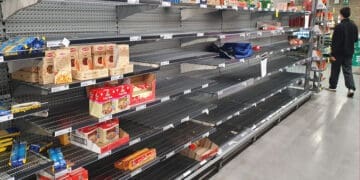

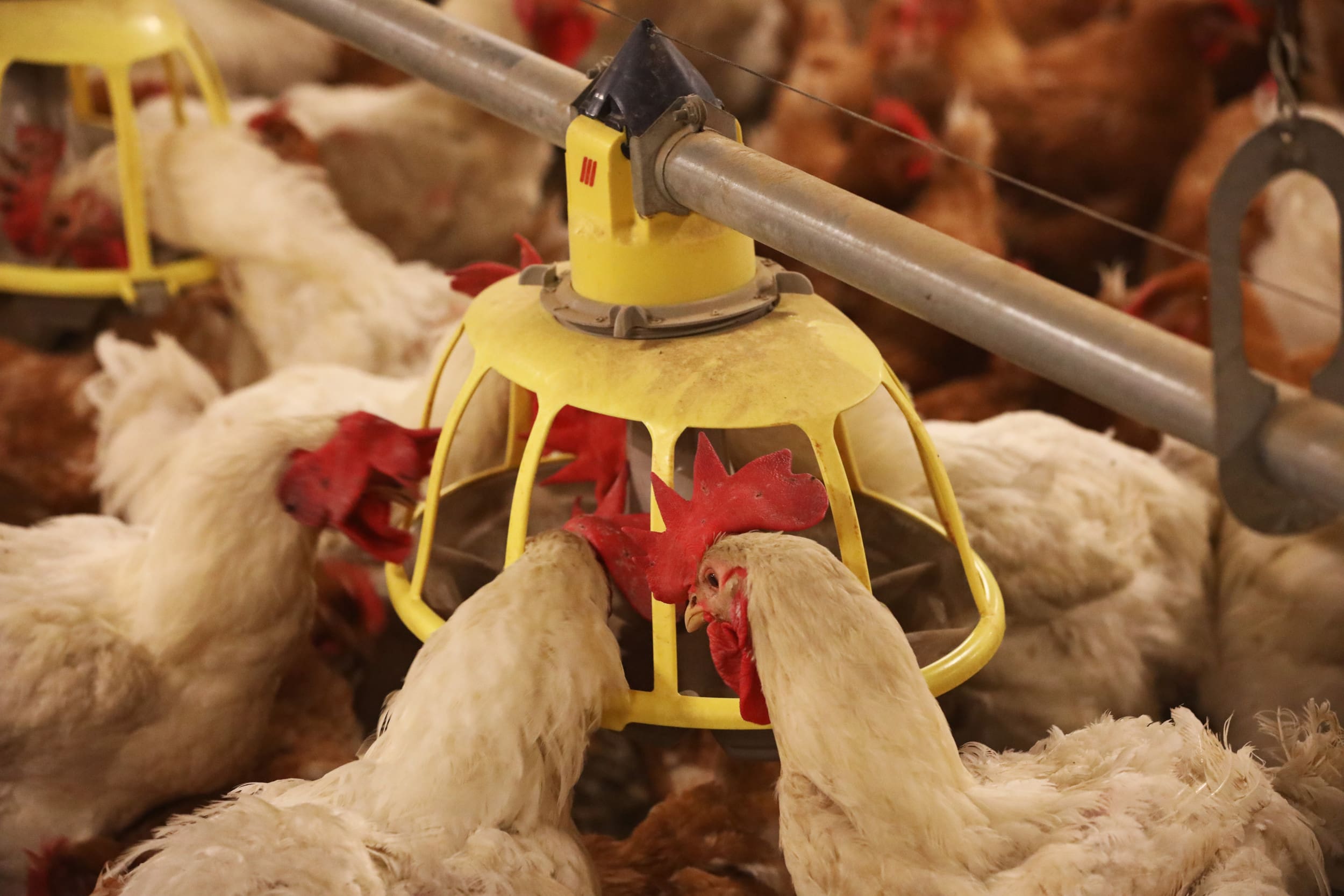
Uncertainty around the availability of United States chicken imports has raised concern among South African poultry farmers, many of whom say small retailers and informal traders have started making more enquiries for a stable local supply.
While no formal changes to import quotas have been announced, fluctuating orders and mixed signals from retailers have created confusion in the market.
The South African Poultry Association’s General Manager, Izaak Breitenbach, has previously warned that imported chicken continues to enter the country at prices that undermine local producers.
In his recent public remarks, he noted that persistent reliance on low-priced leg quarters from the United States makes it difficult for domestic farmers to expand production or increase employment. His comments reflect a broader industry concern that any disruption in import volumes could shift demand back to South African producers.
For small-scale farmers, that shift already appears to be underway. Mpumalanga poultry farmer Thabo Maseko, who supplies chicken to township retailers, says the number of enquiries has grown in the past week.
“Two of my regular clients told me their usual importer could not confirm the next shipment, so they asked if I could step in,” he said. “I cannot say it is a long-term change, but more people are checking our availability.”
Johannesburg based poultry processor Zanele Nkosi says she is seeing similar behaviour among her customers, many of whom supply takeaway outlets and informal traders.
“Some traders are asking if we can increase our December volumes because they are not certain about imported stock,” she said. “If this continues, even for a short period, it will help us plan ahead and keep more staff on.”
Agricultural economist Wandile Sihlobo believes the market reaction is typical when uncertainty surrounds major import categories. He said small producers often feel the impact first.
“Retailers and traders may diversify their sourcing temporarily if they cannot rely on imported supply,” he explained. “This can create useful openings for local farmers, but long term growth depends on formalised supply agreements rather than once off orders.”
The government has not announced any adjustments to import arrangements under the African Growth and Opportunity Act, and the Department of Agriculture has not issued new directives. Retailers contacted for comment have attributed any temporary changes to shipping schedules and global pricing movements rather than policy decisions.
Even so, small farmers are preparing carefully in case demand strengthens. Maseko believes the opportunity will only matter if retailers commit beyond the festive season.
“If we know the demand is steady, we can plan production better,” he said. “Our biggest challenge is uncertainty.”
Nkosi said processors in township economies could benefit significantly if reliance on imports eases.
“It is difficult for small processors to compete with imported prices,” she said. “If retailers are forced to look local, it will keep more money circulating in our communities.”
For now, producers are closely monitoring the market. Whether the uncertainty converts into meaningful long term gains will depend on how retailers manage their supply chains in the weeks ahead.
lazola@vutivibusiness.co.za
lazola@vutivibusiness.co.za