



















































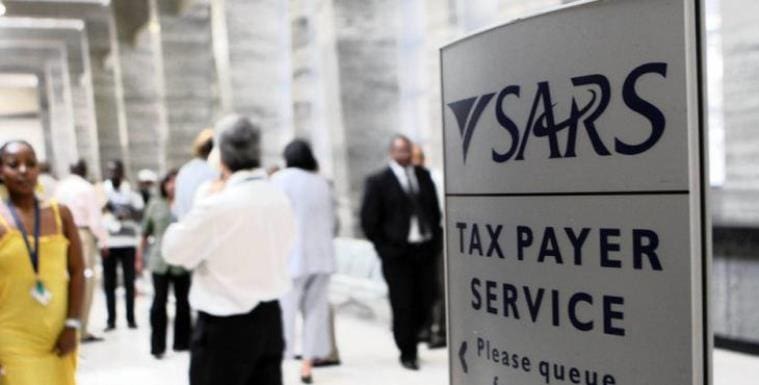
The South African Revenue Service has continued to innovate in improving compliance and accuracy by incorporating third-party data from banks, employers, and other financial institutions.
In a statement, SARS says it has been independently verifying taxpayer declarations with the use of this information in order to enhance the integrity of the country’s tax system. SARS further explains that third-party data pertains to the financial and employment data that regulated parties provide under Section 26 of the Tax Administration Act.
Deputy commissioner: and taxpayer engagement and operations at SARS, Johnstone Makhubu said banks, insurance companies, health schemes, and employers have been asked to provide returns on their IT3(b), IT3(c), and IRP5 forms to record interest income, dividends, remuneration, and PAYE payments made by taxpayers.
He also clarified that the main reason for collecting third-party data is to verify the data submitted by taxpayers, as well as flag discrepancies.
“SARS pairs data from the third party with the data from the small business tax, VAT, and PAYE returns filed by taxpayers. When discrepancies arise, the computer systems could produce a list of questions about the supporting documentation, changes or filed returns,” he said.
Makhubu also said data analytics capabilities have enabled the agency to focus its efforts more efficiently, instead of relying exclusively on the data filed by taxpayers. However, with all these developments and concerns, questions have been raised in the industry about how small businesses can adapt to the increasing role of data.
Tax consultants have indicated that the more common basis on which small businesses engage in raising compliance and professional costs is in attempting to sort out differences arising from their records and data reported to SARS by third parties.
Head of strategic engagement and compliance at Tax Consulting SA, Jashwin Baijoo, said the increased pace of SARS’s reliance on data analytics means discrepancies are raised faster, but the process of resolving them usually requires more time, documentation, and advisory support from taxpayers.
This is also a concern voiced by Unicus Tax in its industry commentary, where it says that, in cases of discrepancies between the taxpayer’s declarations and the figures reported by banks or other financial institutions, SARS normally demands that the taxpayer take responsibility for such differences to regularise and correct them.
Unicus Tax emphasised that even where discrepancies are sourced from third-party reporting, taxpayers are expected to get confirmations and supporting evidence from the reporting institutions to respond to SARS queries.
There have also been public misconceptions over the use of third-party data by SARS, where the use is perceived to be a real-time monitoring function, but the tax authority and a tax professional have confirmed that this is not the case. SARS gets data from the third party in periodic submissions, and there is no real-time monitoring being done.
Head of the SARS Liaison Unit, Dr Giorgio Raesich, calls upon entrepreneurs to compare their files with the information from third-party reports so as to avoid unjustified differences. In their increasing emphasis on data-based compliance, small businesses are left with a few key fundamentals to concentrate on: being financially sound and up-to-date in their bookkeeping habits and being as open and prompt as possible in answering any queries related to their finances by or on behalf of the government’s tax agency, the SARS.
“While the policy promotes an honest and balanced system in the assessment and collection of taxes, it does tend to burden the smaller companies as well, making it an absolute need to be financially sound in the first place in an effort to deal with the increasing risks associated with the data reconciliation by third-party organisations,” he said Raesich.
Emily@vutivibusiness.co.za