
















































Franchising is increasingly being positioned as a structured pathway for SMEs to scale sustainably.
Industry leaders, policymakers and enterprise development stakeholders have highlighted the model’s potential to combine established operating systems with stronger financial governance and targeted skills development.
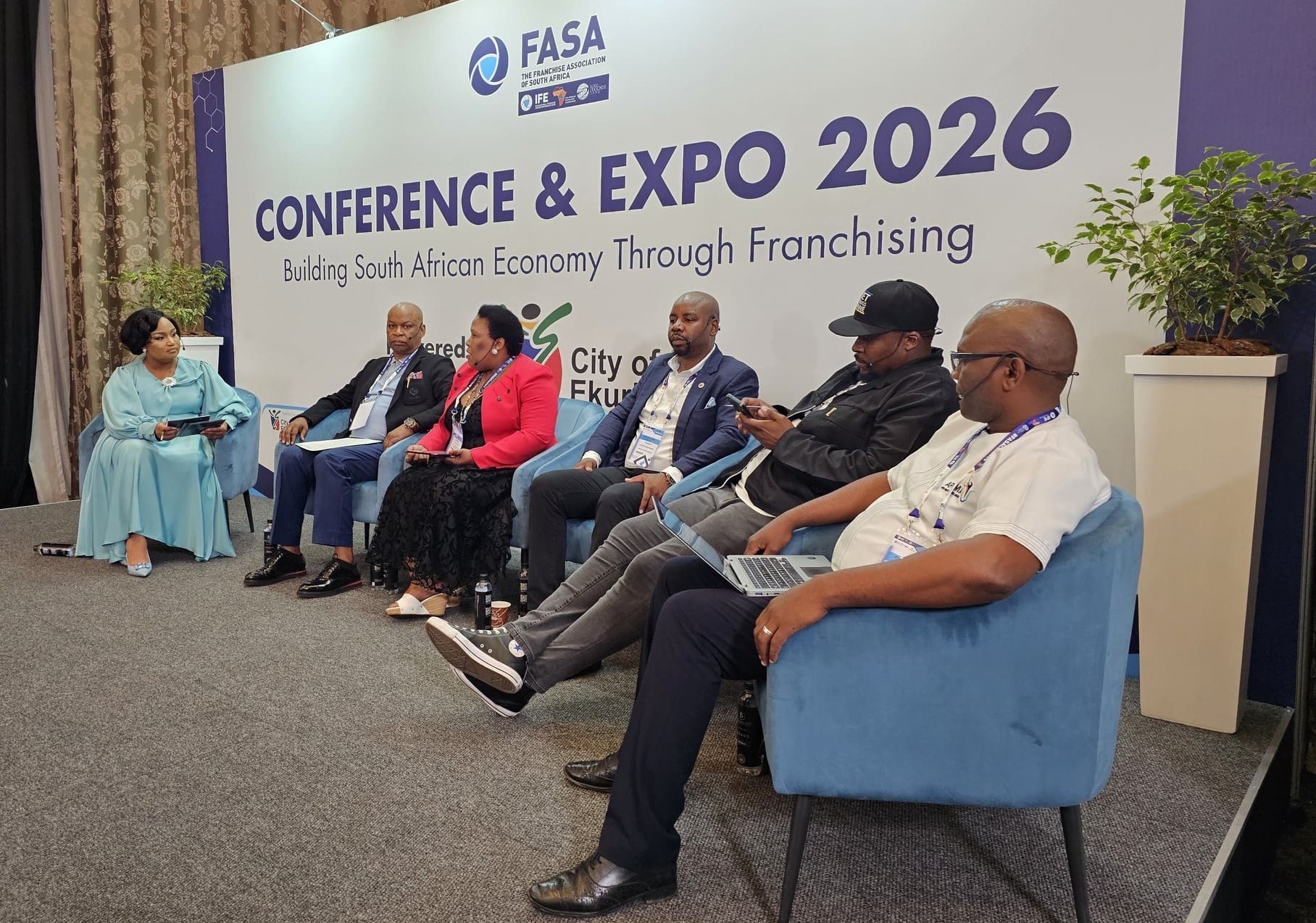
Discussions at the recent Franchise Association of South Africa’s (FASA) conference and expo in Johannesburg centred on how franchise-led expansion could address persistent constraints faced by SMEs.
The challenges include limited access to capital, compliance pressures and inconsistent operational management.
Stakeholders also noted that franchise models offer predefined business frameworks, centralised procurement and brand recognition, elements that can reduce the risks associated with starting and scaling independent enterprises.
These features were repeatedly linked to improved revenue predictability and operational discipline, which in turn influence how lenders assess the bankability of smaller businesses operating within formalised franchise networks.
The conference also underscored that franchising should not be viewed as a replacement for independent entrepreneurship but rather as one of several structured entry points into established markets.
Delegates described the model as especially relevant in consumer-facing sectors such as retail, food services and personal care, where consistent service delivery, brand trust and operational efficiency are closely tied to profitability and long-term sustainability.
Structured franchise systems and access to finance
FASA Chief Executive Freddy Makgato said franchising enables entrepreneurs to operate within proven systems while building independently owned businesses. He noted that access to established supply chains, marketing support and standardised operational procedures can help reduce early-stage failure risks often associated with stand-alone SMEs.
Industry participants indicated that these structured systems can shape funding decisions, as financial institutions typically regard franchise businesses as comparatively lower-risk due to defined governance frameworks and ongoing franchisor oversight.
John Dludlu, Chief Executive of the Small Business Institute, said structured business formats could improve SME survival rates when aligned with appropriate financing mechanisms and enterprise support initiatives. He said coordinated backing from industry bodies, financiers and development partners is essential to ensure entrepreneurs are equipped to manage compliance requirements, cost controls and performance monitoring.
Skills development and operational capability within franchise networks
Skills development emerged as a parallel theme in discussions on franchise sustainability, particularly regarding financial management and operational discipline.
Mamabele Motla, executive manager for strategy and insight at Services SETA, said targeted training linked to franchising and retail operations is designed to strengthen core business capabilities among participating enterprises.
“The qualification also trains employees to uphold brand standards and strengthens capability in financial management, budgeting, profitability, and operational sustainability,” she said.
Her remarks reflected broader discussions highlighting that structured training pipelines, alongside access to established franchise systems, can enhance operational consistency and improve long-term viability for SMEs operating within branded networks.
Infrastructure planning and enterprise expansion opportunities
Local government leaders also pointed to the importance of infrastructure planning in supporting franchise-led enterprise growth.
Executive mayor of the City of Ekurhuleni, Nkosindiphile Xhakaza, said the municipality has identified more than 100 potential business sites aimed at stimulating enterprise development and job creation.
Structured franchise operators were highlighted as potential occupants of these sites due to their established operating models and capacity to scale more rapidly than informal start-ups.
Stakeholders indicated that coordinated planning between municipalities, franchisors and financial institutions could help address location and infrastructure constraints that often limit SME expansion. Access to suitable trading sites, coupled with operational support and structured training, was described as a combination that can improve enterprise stability and accelerate rollout in high-footfall areas.
Franchising was identified by stakeholders as a link to stronger financial discipline, citing built-in mechanisms such as standardised reporting, royalty-based revenue tracking and centralised procurement systems. These features were described as tools that can improve budgeting accuracy, cash flow management and cost control, all of which remain critical determinants of SME sustainability.